Brain & Cognitive Sciences Department, University of Rochester, NY, USA.
Cogn Neuropsychol. 2012;29(1-2):149-73. doi: 10.1080/02643294.2012.707122. Epub 2012 Sep 12.
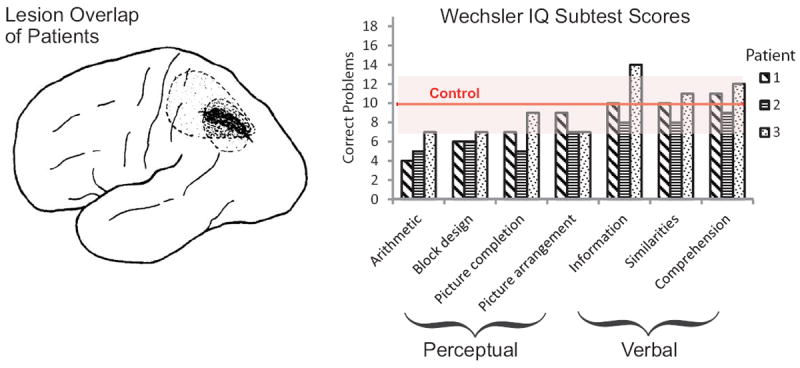
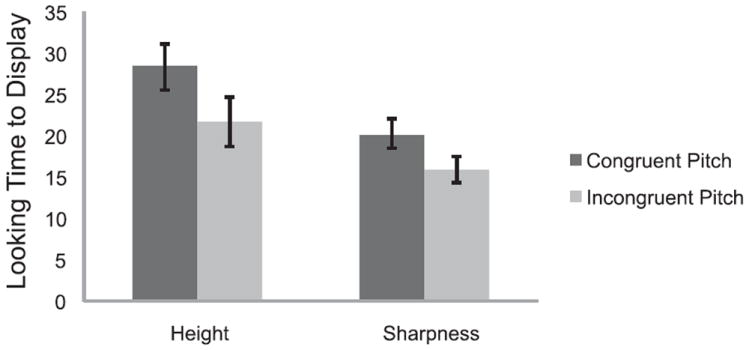
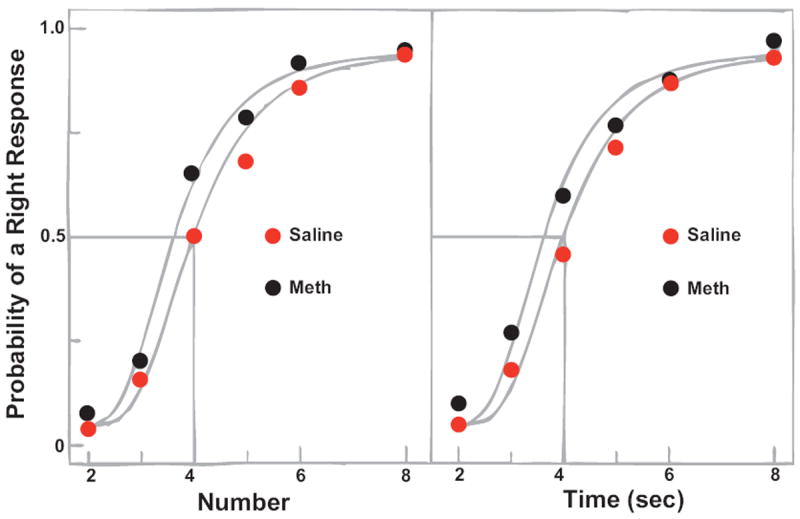
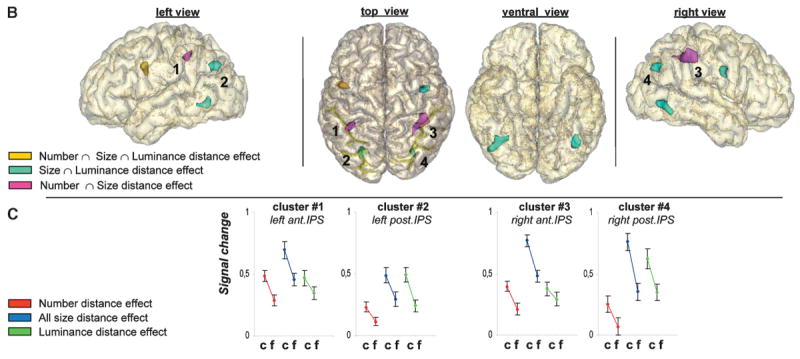
"Number" is the single most influential quantitative dimension in modern human society. It is our preferred dimension for keeping track of almost everything, including distance, weight, time, temperature, and value. How did "number" become psychologically affiliated with all of these different quantitative dimensions? Humans and other animals process a broad range of quantitative information across many psychophysical dimensions and sensory modalities. The fact that adults can rapidly translate one dimension (e.g., loudness) into any other (e.g., handgrip pressure) has been long established by psychophysics research (Stevens, 1975 ). Recent literature has attempted to account for the development of the computational and neural mechanisms that underlie interactions between quantitative dimensions. We review evidence that there are fundamental cognitive and neural relations among different quantitative dimensions (number, size, time, pitch, loudness, and brightness). Then, drawing on theoretical frameworks that explain phenomena from cross-modal perception, we outline some possible conceptualizations for how different quantitative dimensions could come to be related over both ontogenetic and phylogenetic time scales.
“数量”是现代人类社会中最具影响力的单一定量维度。它是我们追踪几乎所有事物的首选维度,包括距离、重量、时间、温度和价值。“数量”是如何在心理上与所有这些不同的定量维度联系在一起的?人类和其他动物在许多心理物理维度和感觉模式下处理广泛的定量信息。事实上,成年人可以通过心理物理学研究(Stevens,1975)快速将一个维度(例如,响度)转换为任何其他维度(例如,手握压力)。最近的文献试图解释数量维度之间相互作用的计算和神经机制的发展。我们回顾了不同定量维度(数量、大小、时间、音高、响度和亮度)之间存在基本认知和神经关系的证据。然后,借鉴解释跨模态感知现象的理论框架,我们概述了不同定量维度如何在个体发生和系统发生的时间尺度上产生关联的一些可能概念化。