Department of Anatomy and Neurobiology, Northeast Ohio Medical University, Rootstown, Ohio, United States of America.
PLoS One. 2012;7(9):e44550. doi: 10.1371/journal.pone.0044550. Epub 2012 Sep 7.
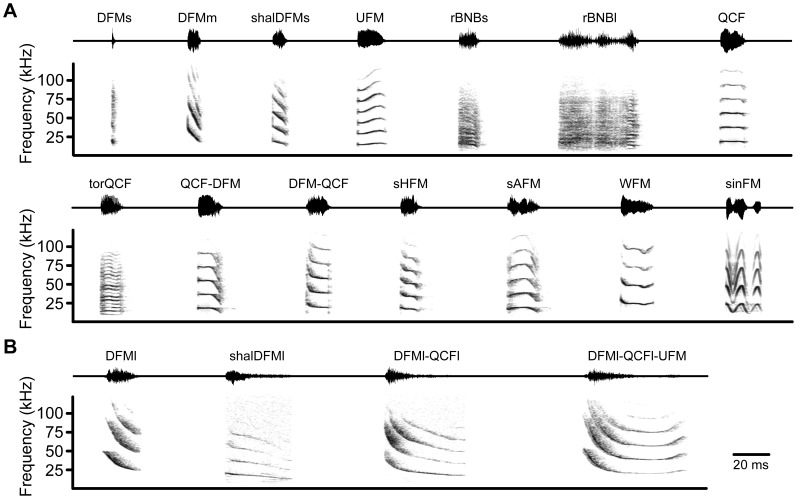
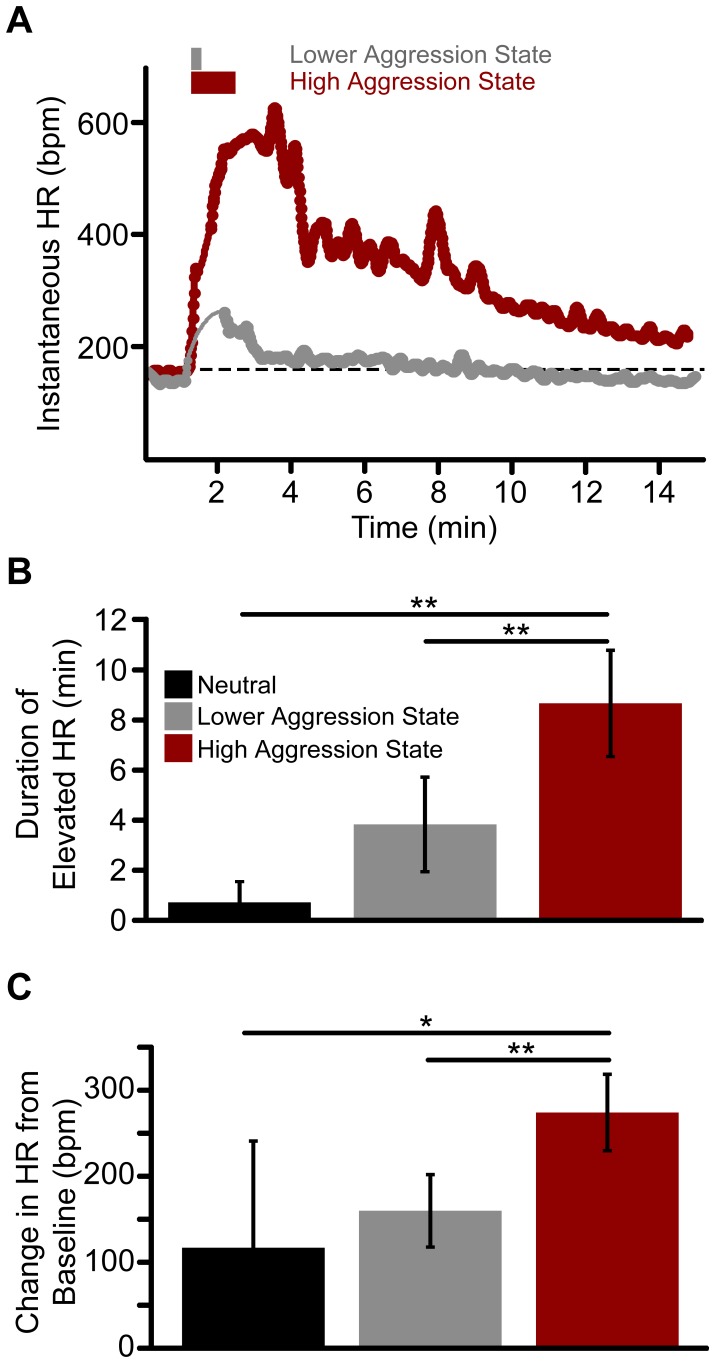
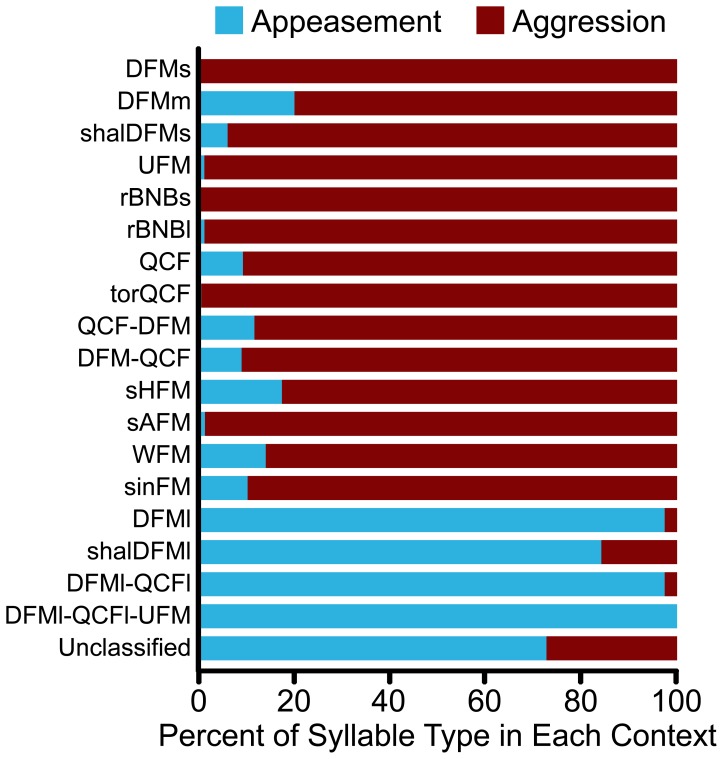
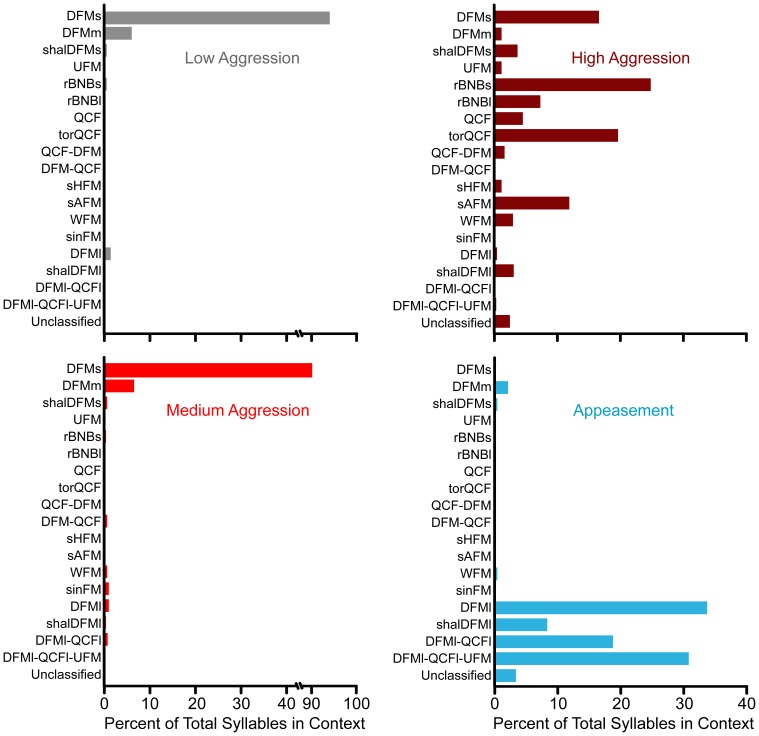
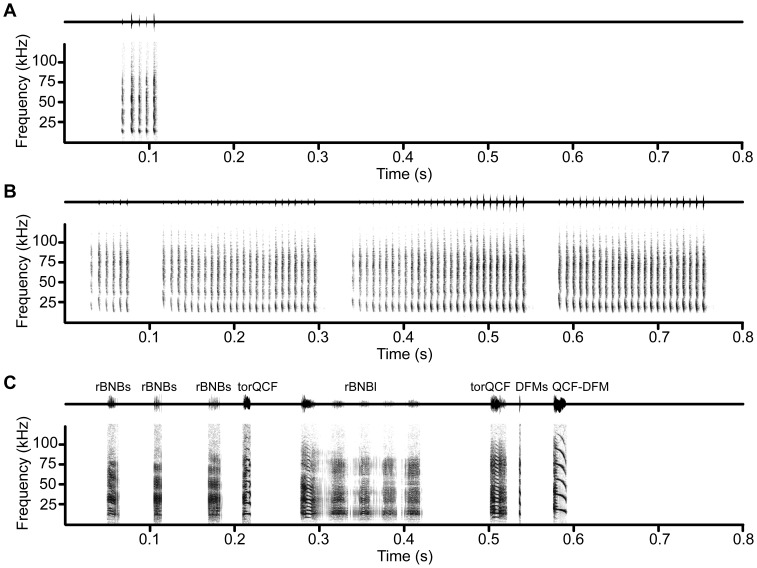
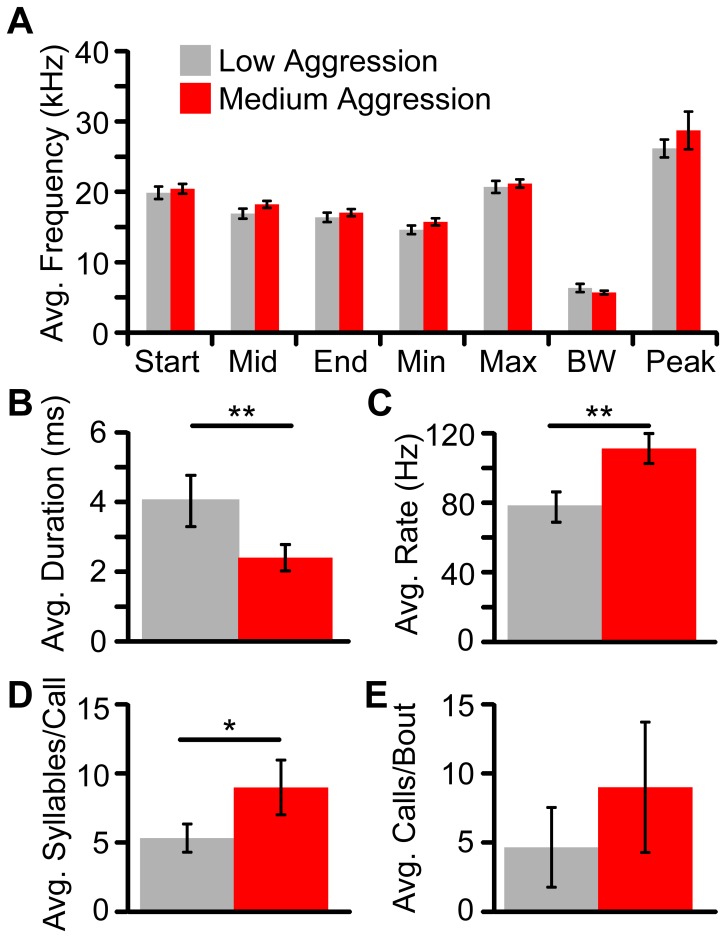
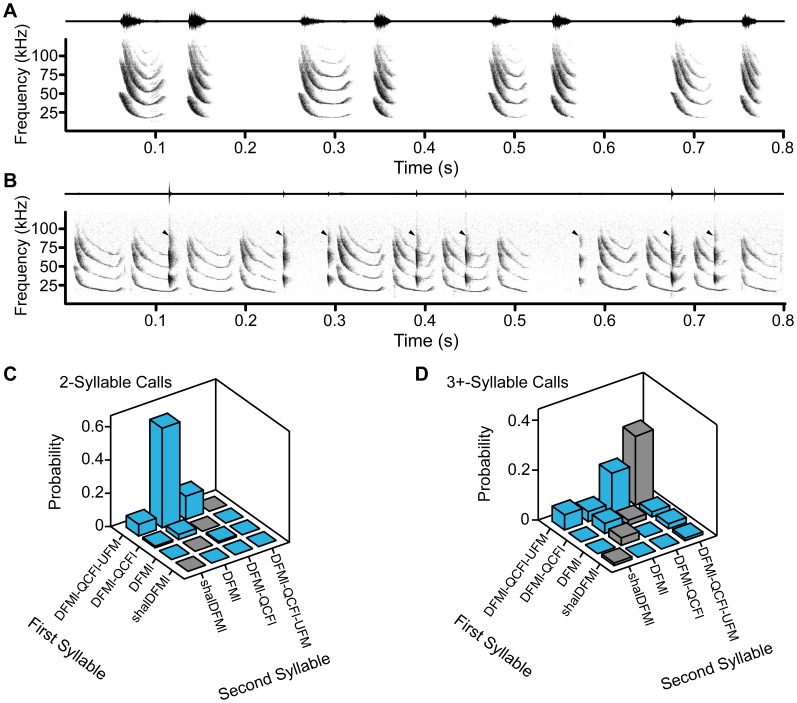
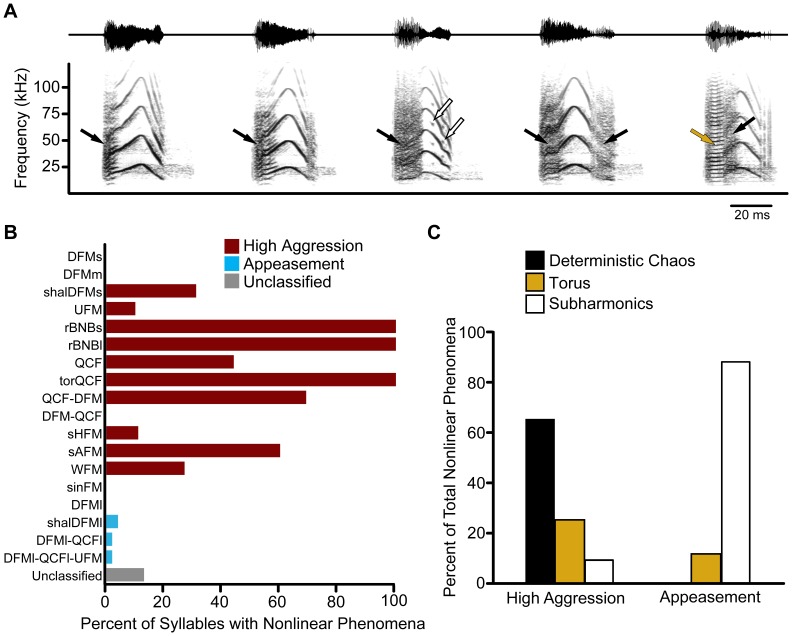
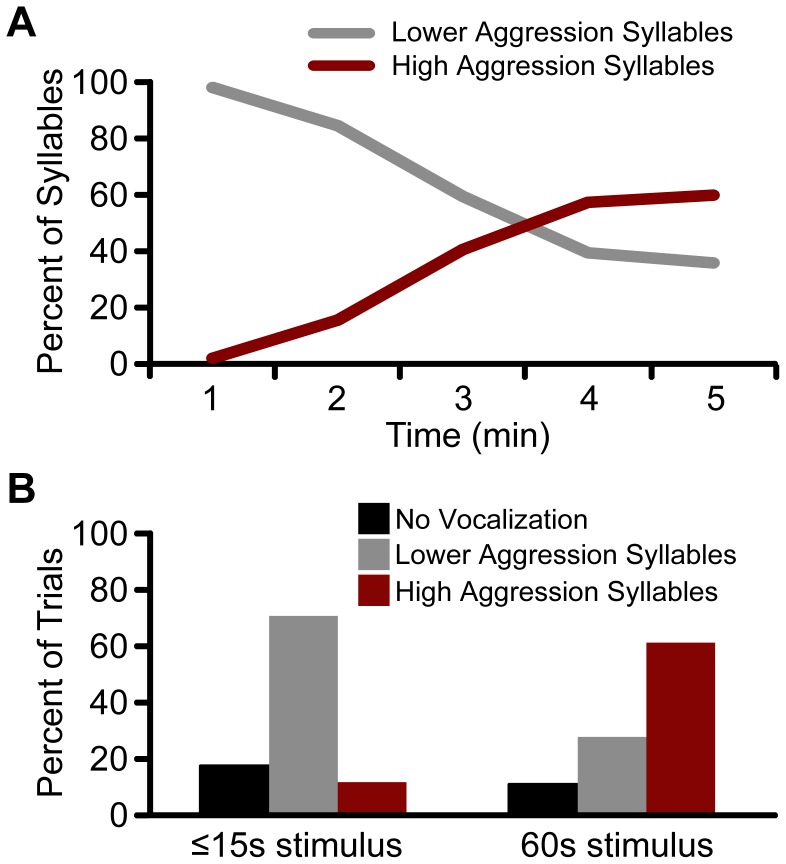
Bats are among the most gregarious and vocal mammals, with some species demonstrating a diverse repertoire of syllables under a variety of behavioral contexts. Despite extensive characterization of big brown bat (Eptesicus fuscus) biosonar signals, there have been no detailed studies of adult social vocalizations. We recorded and analyzed social vocalizations and associated behaviors of captive big brown bats under four behavioral contexts: low aggression, medium aggression, high aggression, and appeasement. Even limited to these contexts, big brown bats possess a rich repertoire of social vocalizations, with 18 distinct syllable types automatically classified using a spectrogram cross-correlation procedure. For each behavioral context, we describe vocalizations in terms of syllable acoustics, temporal emission patterns, and typical syllable sequences. Emotion-related acoustic cues are evident within the call structure by context-specific syllable types or variations in the temporal emission pattern. We designed a paradigm that could evoke aggressive vocalizations while monitoring heart rate as an objective measure of internal physiological state. Changes in the magnitude and duration of elevated heart rate scaled to the level of evoked aggression, confirming the behavioral state classifications assessed by vocalizations and behavioral displays. These results reveal a complex acoustic communication system among big brown bats in which acoustic cues and call structure signal the emotional state of a caller.
蝙蝠是群居且发声最多的哺乳动物之一,一些物种在各种行为环境下表现出多样化的音节。尽管对大棕蝠(Eptesicus fuscus)生物声纳信号进行了广泛的描述,但对成年社交发声的详细研究却很少。我们在四个行为环境下记录和分析了圈养大棕蝠的社交发声和相关行为:低攻击性、中攻击性、高攻击性和安抚。即使仅限于这些环境,大棕蝠也拥有丰富的社交发声 repertoire,使用声谱图互相关程序自动分类了 18 种不同的音节类型。对于每个行为环境,我们根据音节声学、时间发射模式和典型音节序列来描述发声。通过特定于上下文的音节类型或时间发射模式的变化,在呼叫结构中可以明显看出与情绪相关的声学线索。我们设计了一种范式,可以在监测心率的同时引发攻击性发声,作为内部生理状态的客观测量。心率升高的幅度和持续时间的变化与诱发的攻击性程度相匹配,这证实了通过发声和行为表现评估的行为状态分类。这些结果揭示了大棕蝠之间复杂的声学通讯系统,其中声学线索和叫声结构表明了发声者的情绪状态。