INSERM U872, Programmed cell death and physiopathology of tumor cells. Team n° 19, Centre de Recherche des Cordeliers, Paris, France.
Cell Death Dis. 2012 Sep 13;3(9):e390. doi: 10.1038/cddis.2012.120.
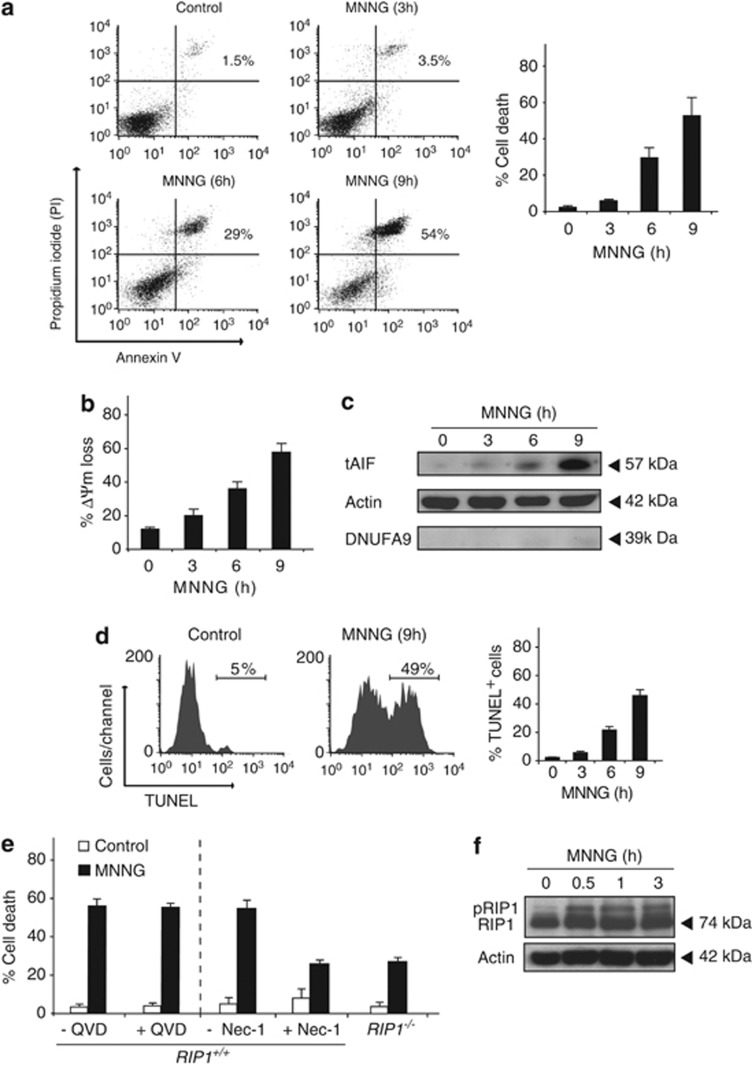
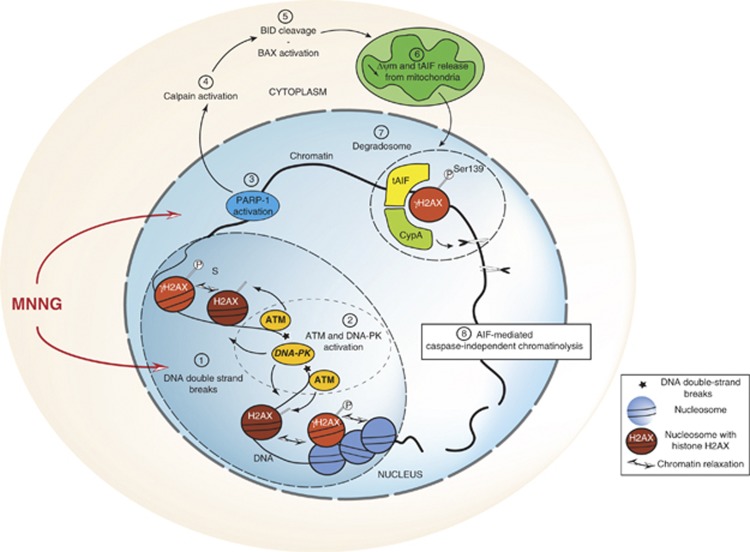
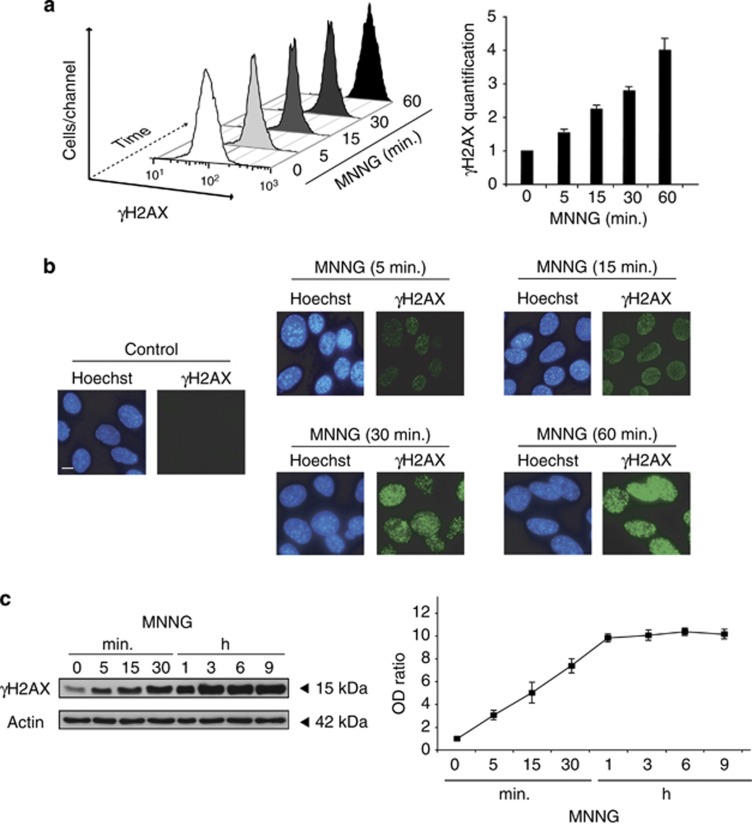
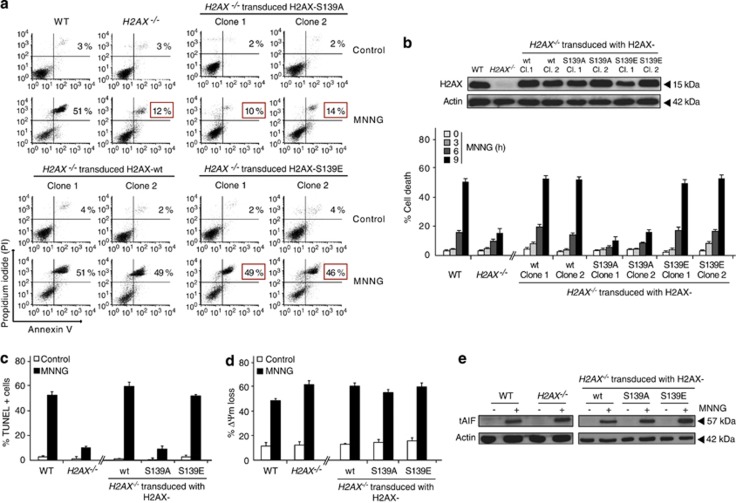
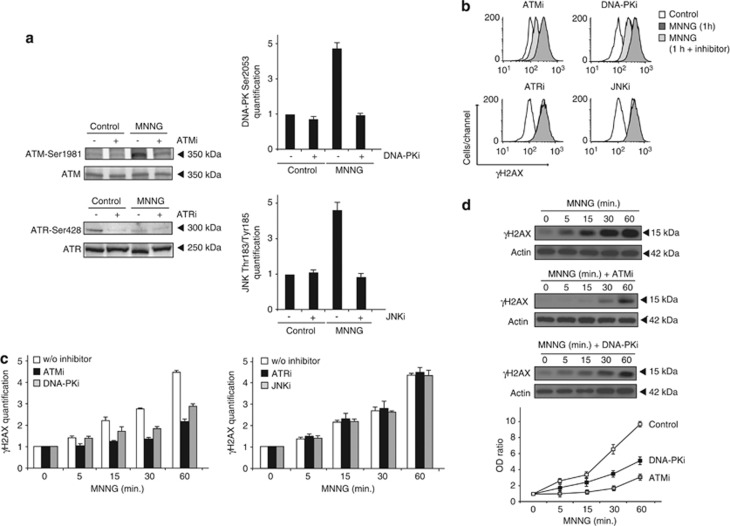
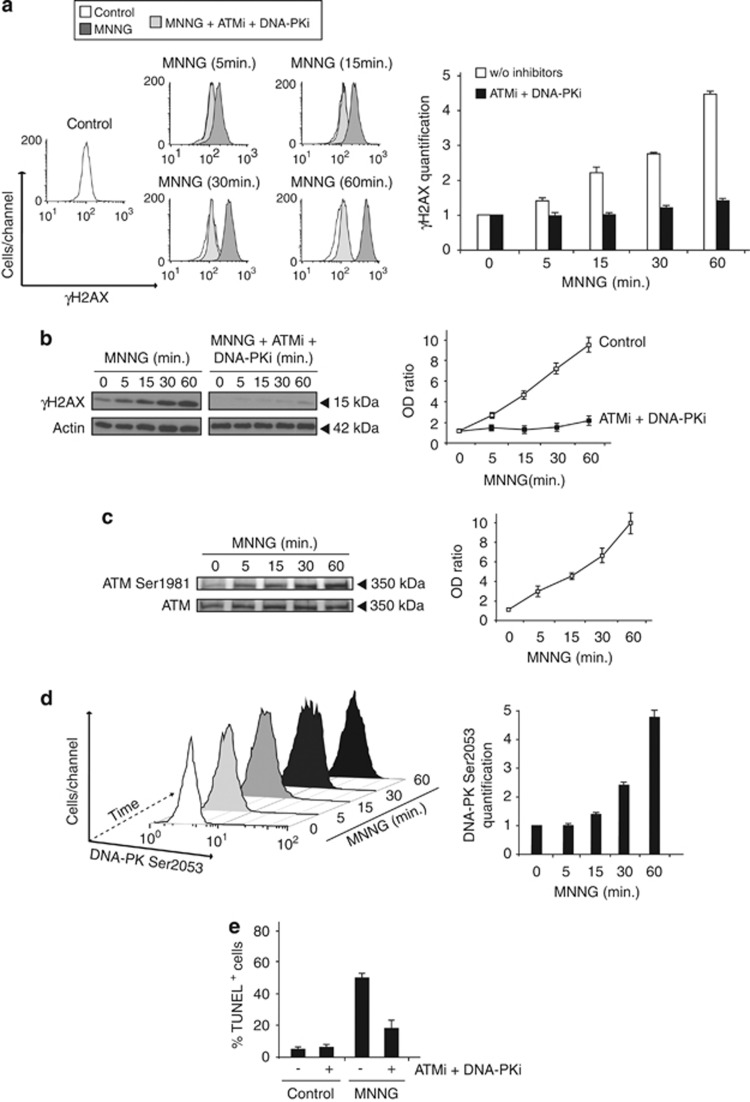
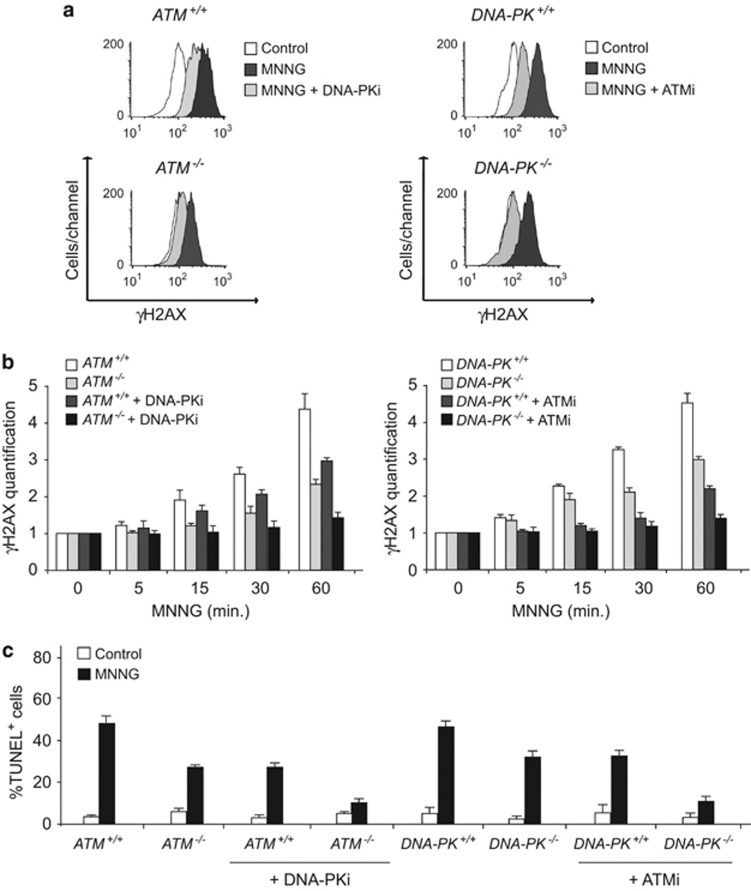
The alkylating DNA-damage agent N-methyl-N'-nitro-N-nitrosoguanidine (MNNG) induces a form of caspase-independent necroptosis implicating the mitochondrial flavoprotein apoptosis-inducing factor (AIF). Following the activation of PARP-1 (poly(ADP-ribose) polymerase-1), calpains, BID (BH3 interacting domain death agonist), and BAX (Bcl-2-associated X protein), the apoptogenic form of AIF (tAIF) is translocated to the nucleus where, associated with Ser139-phosphorylated histone H2AX (γH2AX), it creates a DNA-degrading complex that provokes chromatinolysis and cell death by necroptosis. The generation of γH2AX is crucial for this form of cell death, as mutation of H2AX Ser139 to Ala or genetic ablation of H2AX abolish both chromatinolysis and necroptosis. On the contrary, reintroduction of H2AX-wt or the phosphomimetic H2AX mutant (H2AX-S139E) into H2AX(-/-) cells resensitizes to MNNG-triggered necroptosis. Employing a pharmacological approach and gene knockout cells, we also demonstrate in this paper that the phosphatidylinositol-3-OH kinase-related kinases (PIKKs) ATM (ataxia telangiectasia mutated) and DNA-dependent protein kinase (DNA-PK) mediate γH2AX generation and, consequently, MNNG-induced necroptosis. By contrast, H2AX phosphorylation is not regulated by ATR or other H2AX-related kinases, such as JNK. Interestingly, ATM and DNA-PK phosphorylate H2AX at Ser139 in a synergistic manner with different kinetics of activation. Early after MNNG treatment, ATM generates γH2AX. Further, DNA-PK contributes to H2AX Ser139 phosphorylation. In revealing the pivotal role of PIKKs in MNNG-induced cell death, our data uncover a milestone in the mechanisms regulating AIF-mediated caspase-independent necroptosis.
烷化 DNA 损伤剂 N-甲基-N'-硝基-N-亚硝基胍 (MNNG) 诱导一种不依赖于胱天蛋白酶的坏死细胞凋亡,涉及线粒体黄素蛋白凋亡诱导因子 (AIF)。在聚(ADP-核糖)聚合酶-1 (PARP-1)、钙蛋白酶、BH3 相互作用域死亡激动剂 (BID) 和 Bcl-2 相关 X 蛋白 (BAX) 激活后,AIF 的凋亡形式 (tAIF) 易位到细胞核,与 Ser139 磷酸化组蛋白 H2AX (γH2AX) 结合,形成一种 DNA 降解复合物,通过坏死细胞凋亡引发染色质溶解和细胞死亡。γH2AX 的产生对于这种形式的细胞死亡至关重要,因为将 H2AX Ser139 突变为丙氨酸或基因敲除 H2AX 可同时消除染色质溶解和坏死细胞凋亡。相反,将 H2AX-wt 或磷酸模拟突变体 (H2AX-S139E) 重新引入 H2AX(-/-) 细胞中可使 MNNG 触发的坏死细胞凋亡重新敏感。本文还通过药理学方法和基因敲除细胞证明,磷脂酰肌醇-3-OH 激酶相关激酶 (PIKKs) ATM (ataxia telangiectasia mutated) 和 DNA 依赖性蛋白激酶 (DNA-PK) 介导 γH2AX 的产生,从而导致 MNNG 诱导的坏死细胞凋亡。相比之下,ATR 或其他与 H2AX 相关的激酶,如 JNK,并不调节 H2AX 的磷酸化。有趣的是,ATM 和 DNA-PK 以协同方式以不同的激活动力学在 Ser139 上磷酸化 H2AX。MNNG 处理后早期,ATM 产生 γH2AX。此外,DNA-PK 有助于 H2AX Ser139 磷酸化。在揭示 PIKKs 在 MNNG 诱导的细胞死亡中的关键作用的同时,我们的数据揭示了调节 AIF 介导的不依赖于胱天蛋白酶的坏死细胞凋亡的机制中的一个里程碑。