Sadeghi Hamid Mirmohammad, Sabzghabaee Ali Mohammad, Mousavian Zeinab, Saadatnia Mohammad, Shirani Shahin, Moazen Fatemeh
Associate Professor, Isfahan Pharmaceutical Sciences Research Center, Isfahan University of Medical Sciences, Isfahan, Iran.
J Res Med Sci. 2011 Dec;16(12):1519-24.
Apolipoprotein E (ApoE) gene encodes an important protein in reforming injuries of central nervous system (CNS). It is assumed that various ApoE alleles may be functionally different. The purpose of this study was to investigate the distribution of ApoE genotypes in multiple sclerosis (MS) patients in a small cohort of Iranians.
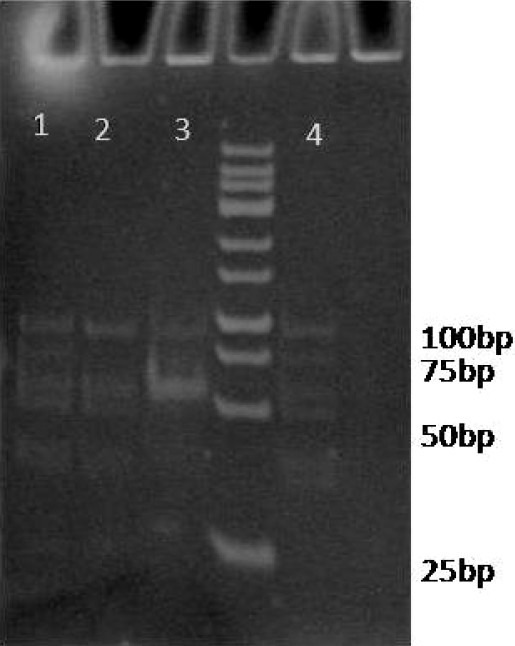
In this case-control study, blood samples of patients and healthy volunteers were collected (n = 40) from Neurology Clinic of Alzahra Medical Complex. The ApoE genotypes were determined using DNA extracted from the samples by polymerase chain reaction (PCR) techniques followed by digestion with HhaI restriction enzyme. The results were adjusted for age of MS onset, sex, expanded disability status scale (EDSS), and type of MS (primary or secondary progressive). Results were statistically analyzed using chi-square test.
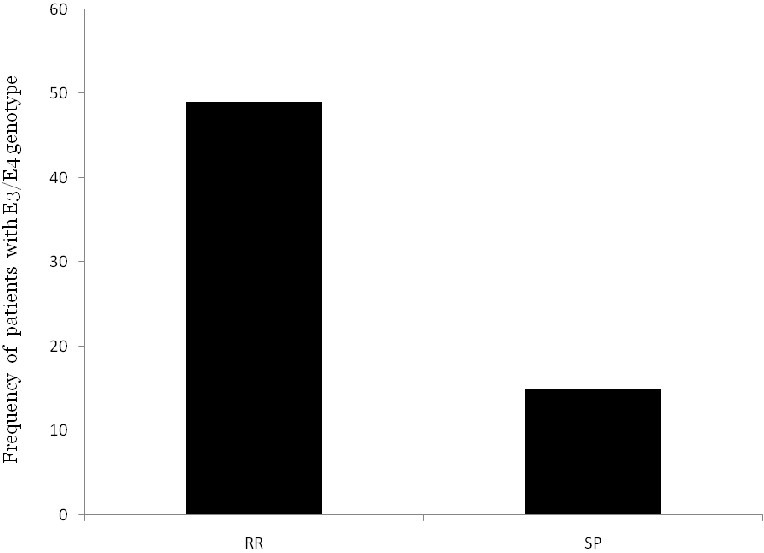
The ApoE3/E3 genotype was detected in the majority of MS patients and the control group. Frequency distribution of E4 allele did not differ significantly between the two groups. There was no difference between ApoE allele and age of disease onset, sex, expanded disability status, or type of multiple sclerosis.
We found no significant differences in genotype frequency between patients with multiple sclerosis and the control group. Despite the fact that small sample size was a limitation for our study, it seems that ApoE polymorphism may not be useful as a marker for screening patients with multiple sclerosis.
载脂蛋白E(ApoE)基因编码一种在中枢神经系统(CNS)损伤修复中起重要作用的蛋白质。据推测,不同的ApoE等位基因可能在功能上存在差异。本研究的目的是调查一小群伊朗多发性硬化症(MS)患者中ApoE基因型的分布情况。
在这项病例对照研究中,从阿尔扎赫拉医疗中心神经科诊所收集了患者和健康志愿者的血样(n = 40)。通过聚合酶链反应(PCR)技术从样本中提取DNA,随后用HhaI限制性内切酶消化,以确定ApoE基因型。对结果根据MS发病年龄、性别、扩展残疾状态量表(EDSS)和MS类型(原发或继发进展型)进行校正。使用卡方检验对结果进行统计学分析。
在大多数MS患者和对照组中检测到ApoE3/E3基因型。两组之间E4等位基因的频率分布没有显著差异。ApoE等位基因与疾病发病年龄、性别、扩展残疾状态或多发性硬化症类型之间没有差异。
我们发现多发性硬化症患者与对照组之间的基因型频率没有显著差异。尽管样本量小是本研究的一个局限性,但似乎ApoE多态性可能无法作为筛选多发性硬化症患者的标志物。