Rogha Mehrdad, Rezvani Mehran, Khodami Ali Reza
Assistant Professor, Department of Otolaryngology-Head and Neck Surgery, School of Medicine, Isfahan University of Medical Sciences, Isfahan, Iran.
J Res Med Sci. 2011 Sep;16(9):1217-23.
Tinnitus is a chronic and bothering problem which in some patients may lead to some psychological reactions. While tinnitus may be caused due to some definable structural abnormalities, sometimes no structural etiologic defect can be found. This study aimed to evaluate the therapeutic effects of acupuncture on the inner ear originated tinnitus in the latter mentioned group.
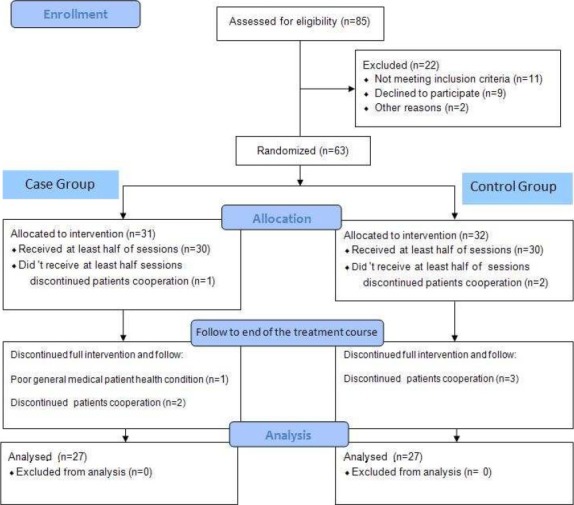
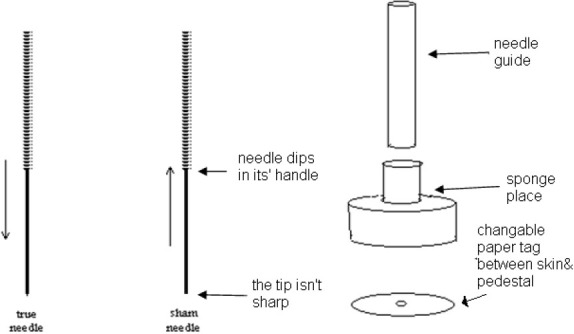
This prospective clinical trial study has been done in Alzahra and Kashani hospitals in Isfahan, Iran during 2010-2011. Simple sampling was used to select patients who were then divided into two groups of true acupuncture group and placebo group. The number of patients in each group was 27. The hospital anxiety and depression scale (HADS), tinnitus severity index questionnaire, and tinnitus loudness scale were completed by the patients. Two latter questionnaires were completed again after the 5th and 10th sessions of acupuncture treatment. The case group was treated with effective acupuncture with true acupuncture needles while the control group was treated ineffectively, i.e. similar to the usual acupuncture method but with fake needles. Independent t-test was used to compare the mean of tinnitus severity index and loudness scores between the two groups. We also used repeated measures ANOVA test to compare the mean of tinnitus severity index and loudness for different assessments in either group.
After the 5th and 10th sessions of treatment, the mean of tinnitus severity index reduced significantly only in the case group (p = 0.002, and p = 0.001, respectively). In addition, the quality of life in the case group also improved after the treatment. Moreover, the mean of tinnitus loudness also reduced significantly only in the case group after 5 and10 sessions of treatment (p = 0.001, and p < 0.001, respectively).
It seems that acupuncture can improve tinnitus in some selected patients.
耳鸣是一个慢性且困扰人的问题,在一些患者中可能会导致一些心理反应。虽然耳鸣可能由某些可明确的结构异常引起,但有时找不到结构病因缺陷。本研究旨在评估针刺对后一组内耳源性耳鸣的治疗效果。
这项前瞻性临床试验研究于2010 - 2011年在伊朗伊斯法罕的阿尔扎赫拉医院和卡尚尼医院进行。采用简单抽样选择患者,然后将其分为真针刺组和安慰剂组两组。每组患者人数为27人。患者完成医院焦虑抑郁量表(HADS)、耳鸣严重程度指数问卷和耳鸣响度量表。在针刺治疗第5次和第10次疗程后再次完成后两份问卷。病例组用真针刺进行有效针刺治疗,而对照组进行无效治疗,即采用与常规针刺方法相似但使用假针的方式。使用独立t检验比较两组之间耳鸣严重程度指数和响度评分的平均值。我们还使用重复测量方差分析检验比较两组中不同评估的耳鸣严重程度指数和响度的平均值。
在第5次和第10次治疗疗程后,仅病例组的耳鸣严重程度指数平均值显著降低(分别为p = 0.002和p = 0.001)。此外,病例组治疗后的生活质量也有所改善。而且,仅病例组在第5次和第10次治疗疗程后耳鸣响度平均值也显著降低(分别为p = 0.001和p < 0.001)。
针刺似乎可以改善一些选定患者的耳鸣症状。