Kumar Shyamesh, Kunec Dusan, Buza Joram J, Chiang Hsin-I, Zhou Huaijun, Subramaniam Sugalesini, Pendarvis Ken, Cheng Hans H, Burgess Shane C
Department of Pathobiology and Population Medicine, Mississippi State University, MS 39762, USA.
BMC Syst Biol. 2012 Sep 14;6:123. doi: 10.1186/1752-0509-6-123.
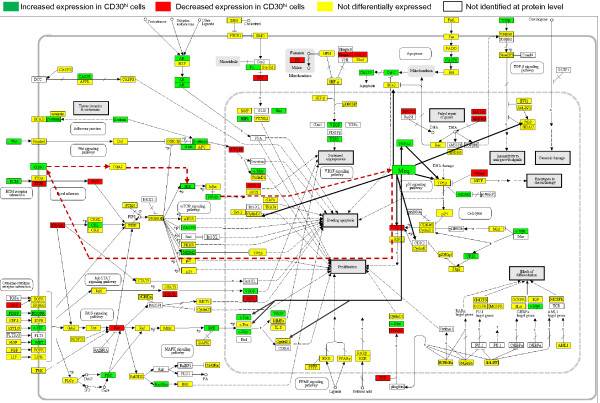
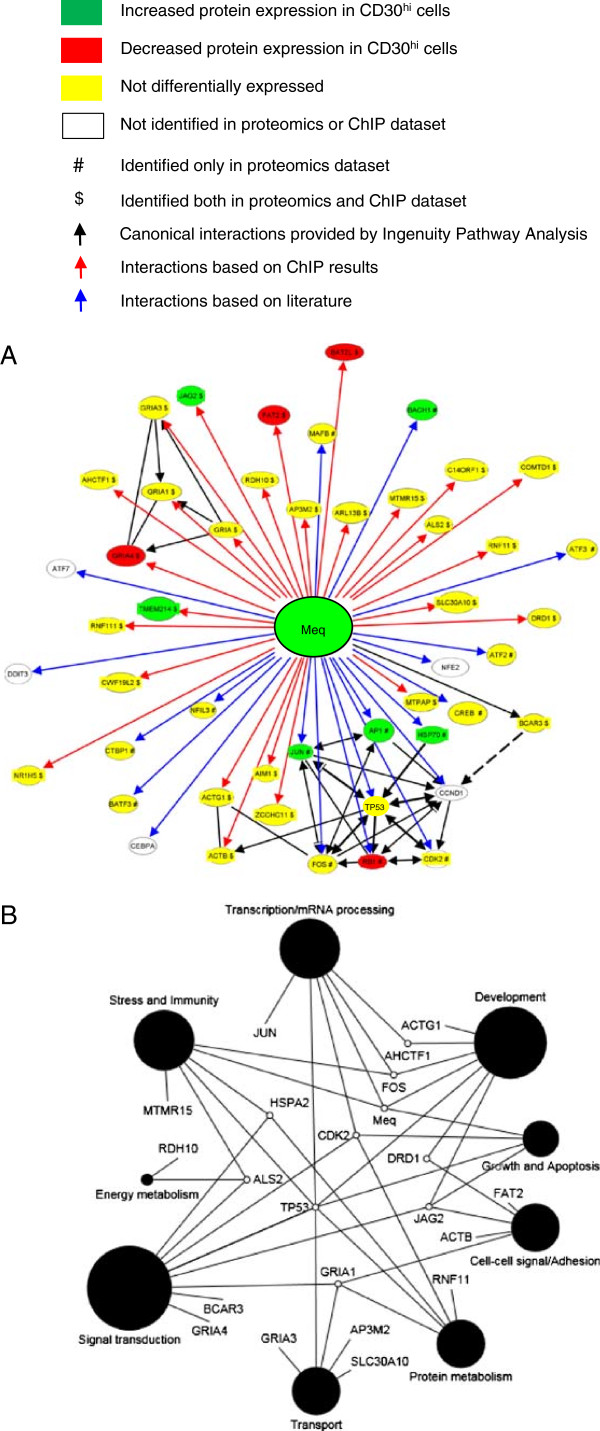
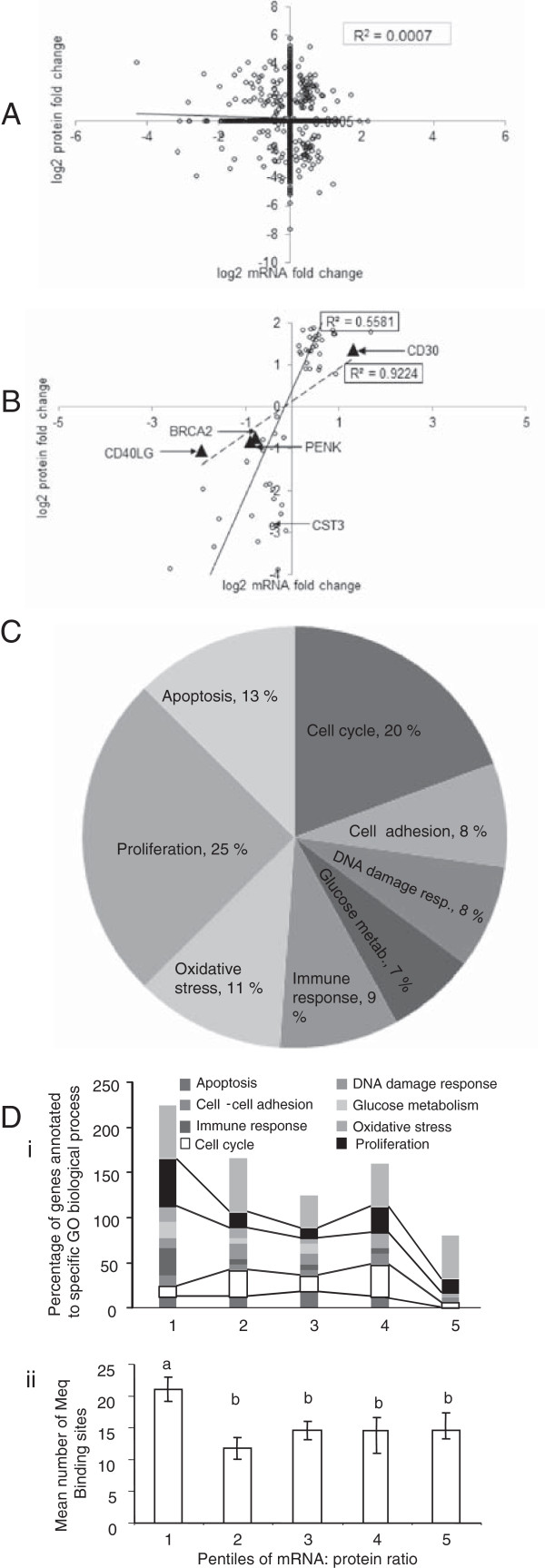
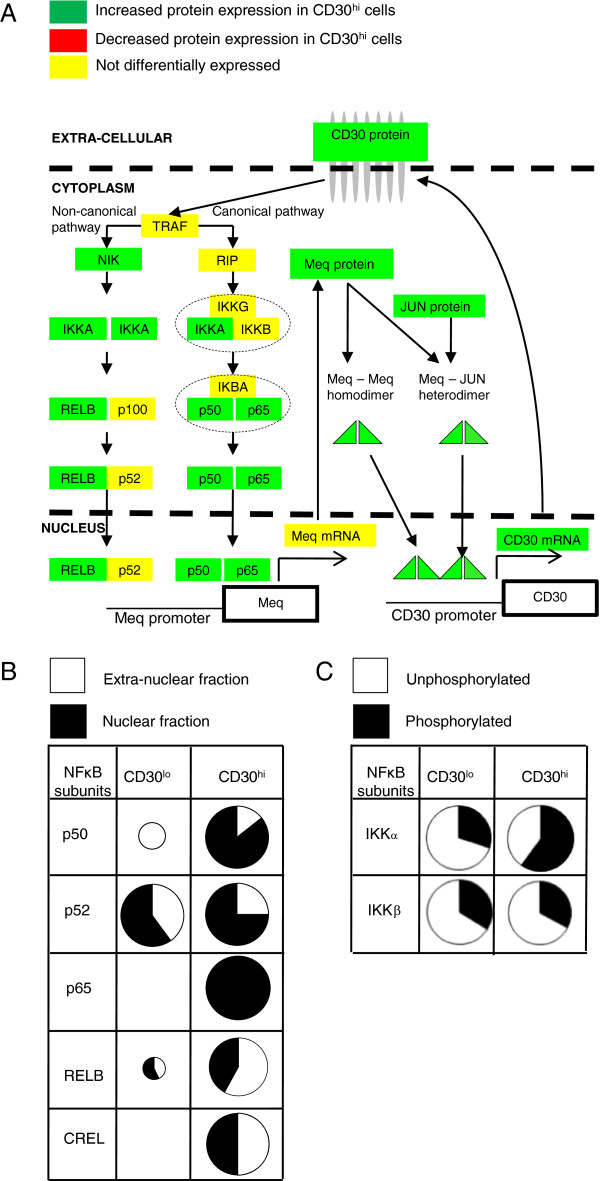
Marek's Disease (MD) is a hyperproliferative, lymphomatous, neoplastic disease of chickens caused by the oncogenic Gallid herpesvirus type 2 (GaHV-2; MDV). Like several human lymphomas the neoplastic MD lymphoma cells overexpress the CD30 antigen (CD30(hi)) and are in minority, while the non-neoplastic cells (CD30(lo)) form the majority of population. MD is a unique natural in-vivo model of human CD30(hi) lymphomas with both natural CD30(hi) lymphomagenesis and spontaneous regression. The exact mechanism of neoplastic transformation from CD30(lo) expressing phenotype to CD30(hi) expressing neoplastic phenotype is unknown. Here, using microarray, proteomics and Systems Biology modeling; we compare the global gene expression of CD30(lo) and CD30(hi) cells to identify key pathways of neoplastic transformation. We propose and test a specific mechanism of neoplastic transformation, and genetic resistance, involving the MDV oncogene Meq, host gene products of the Nuclear Factor Kappa B (NF-κB) family and CD30; we also identify a novel Meq protein interactome.
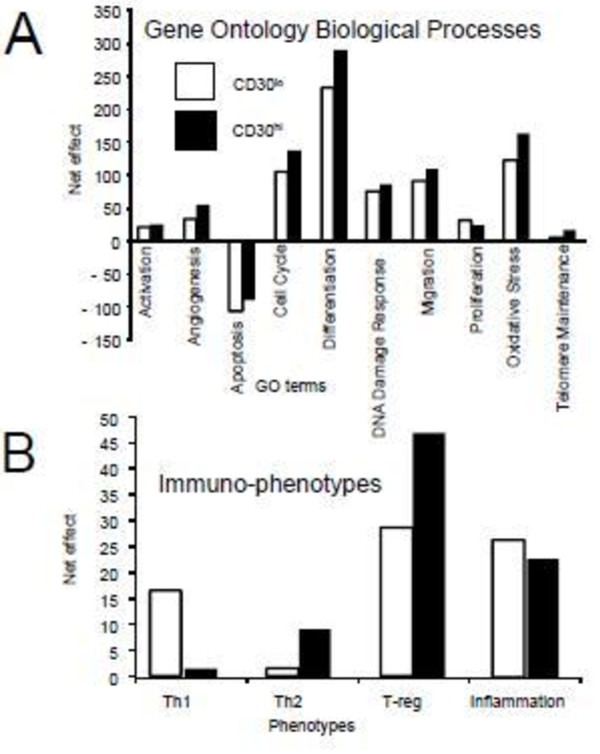
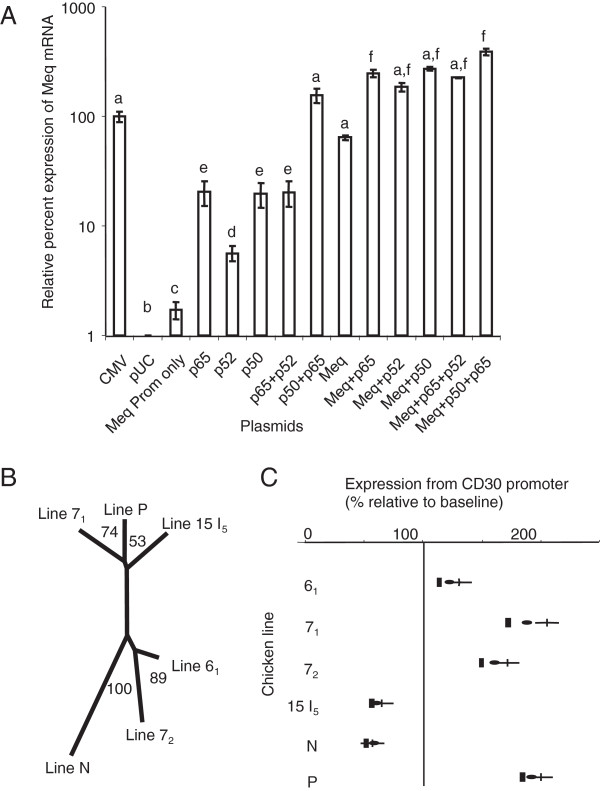
Our results show that a) CD30(lo) lymphocytes are pre-neoplastic precursors and not merely reactive lymphocytes; b) multiple transformation mechanisms exist and are potentially controlled by Meq; c) Meq can drive a feed-forward cycle that induces CD30 transcription, increases CD30 signaling which activates NF-κB, and, in turn, increases Meq transcription; d) Meq transcriptional repression or activation of the CD30 promoter generally correlates with polymorphisms in the CD30 promoter distinguishing MD-lymphoma resistant and susceptible chicken genotypes e) MDV oncoprotein Meq interacts with proteins involved in physiological processes central to lymphomagenesis.
In the context of the MD lymphoma microenvironment (and potentially in other CD30(hi) lymphomas as well), our results show that the neoplastic transformation is a continuum and the non-neoplastic cells are actually pre-neoplastic precursor cells and not merely immune bystanders. We also show that NF-κB is a central player in MDV induced neoplastic transformation of CD30-expressing lymphocytes in vivo. Our results provide insights into molecular mechanisms of neoplastic transformation in MD specifically and also herpesvirus induced lymphoma in general.
马立克氏病(MD)是由致癌性鸡疱疹病毒2型(GaHV - 2;MDV)引起的鸡的一种增殖性、淋巴瘤性肿瘤疾病。与几种人类淋巴瘤一样,肿瘤性MD淋巴瘤细胞过度表达CD30抗原(CD30高表达)且占少数,而非肿瘤性细胞(CD30低表达)占大多数。MD是人类CD30高表达淋巴瘤的独特天然体内模型,具有天然的CD30高表达淋巴瘤发生及自发消退现象。从CD30低表达表型向CD30高表达肿瘤表型转化的确切机制尚不清楚。在此,我们运用微阵列、蛋白质组学和系统生物学建模方法,比较CD30低表达和CD30高表达细胞的整体基因表达,以确定肿瘤转化的关键途径。我们提出并测试了一种涉及MDV癌基因Meq、核因子κB(NF - κB)家族的宿主基因产物和CD30的肿瘤转化及遗传抗性的特定机制;我们还鉴定了一种新的Meq蛋白相互作用组。
我们的结果表明:a)CD30低表达淋巴细胞是肿瘤前体细胞,而不仅仅是反应性淋巴细胞;b)存在多种转化机制且可能受Meq控制;c)Meq可驱动一个前馈循环,诱导CD30转录,增加CD30信号传导,激活NF - κB,进而增加Meq转录;d)Meq对CD30启动子的转录抑制或激活通常与CD30启动子中的多态性相关,这些多态性区分了MD淋巴瘤抗性和易感鸡基因型;e)MDV癌蛋白Meq与淋巴瘤发生核心生理过程中涉及的蛋白质相互作用。
在MD淋巴瘤微环境背景下(可能在其他CD30高表达淋巴瘤中也是如此),我们的结果表明肿瘤转化是一个连续过程,非肿瘤性细胞实际上是肿瘤前体细胞,而不仅仅是免疫旁观者。我们还表明NF - κB是MDV在体内诱导表达CD30的淋巴细胞发生肿瘤转化的核心因素。我们的结果为MD中肿瘤转化的分子机制提供了见解,也为一般疱疹病毒诱导的淋巴瘤提供了见解。