Institute of Molecular Virology, Ulm University Medical Center, 89081 Ulm, Germany.
Cell Host Microbe. 2012 Sep 13;12(3):373-80. doi: 10.1016/j.chom.2012.07.008.
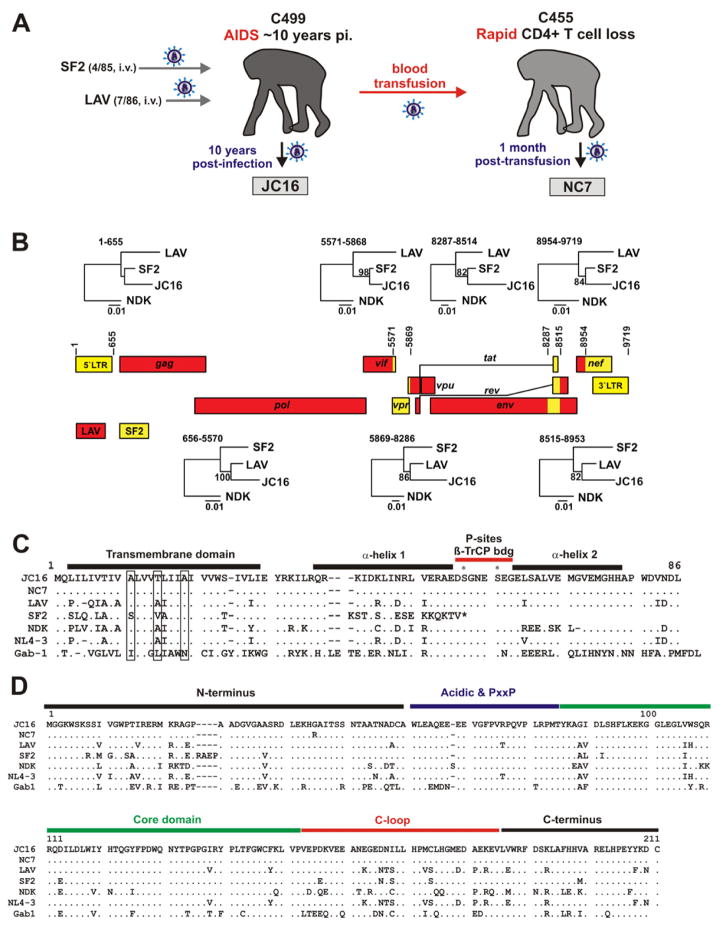
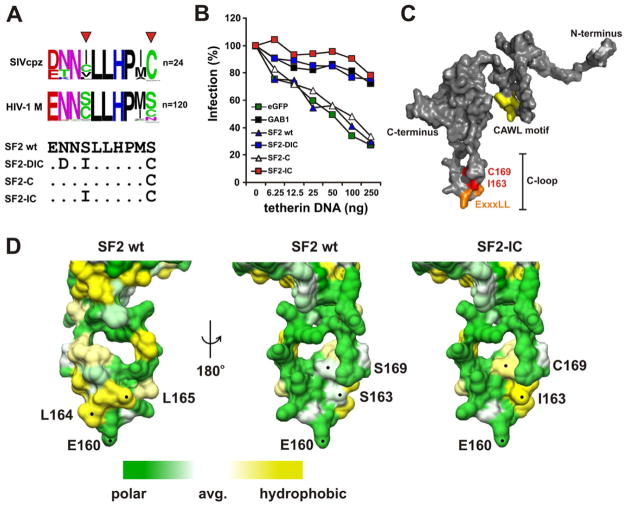
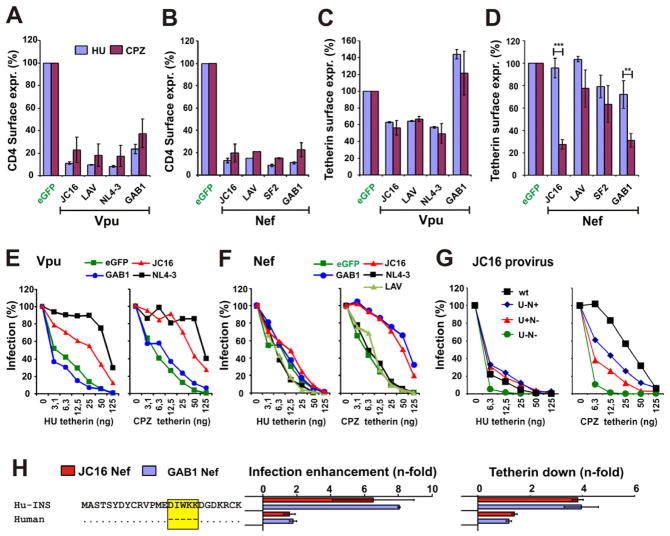
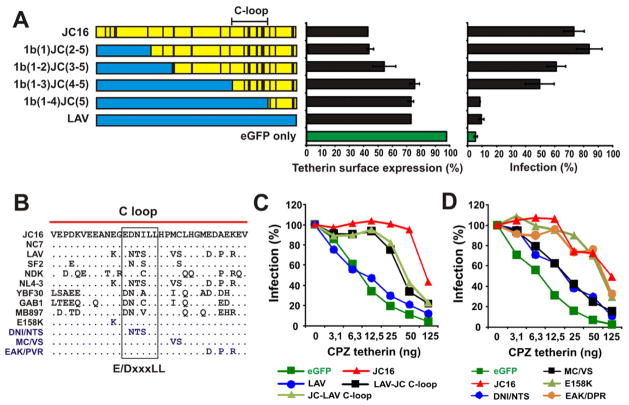
The interferon-induced host restriction factor tetherin poses a barrier for SIV transmission from primates to humans. After cross-species transmission, the chimpanzee precursor of pandemic HIV-1 switched from the accessory protein Nef to Vpu to effectively counteract human tetherin. As we report here, the experimental reintroduction of HIV-1 into its original chimpanzee host resulted in a virus that can use both Vpu and Nef to antagonize chimpanzee tetherin. Functional analyses demonstrated that alterations in and near the highly conserved ExxxLL motif in the C-terminal loop of Nef were critical for the reacquisition of antitetherin activity. Strikingly, just two amino acid changes allowed HIV-1 Nef to counteract chimpanzee tetherin and promote virus release. Our data demonstrate that primate lentiviruses can reacquire lost accessory gene functions during a single in vivo passage and suggest that other functional constraints keep Nef ready to regain antitetherin activity.
干扰素诱导的宿主限制因子 tetherin 对 SIV 从灵长类动物传播到人类构成了障碍。在跨物种传播后,大流行性 HIV-1 的黑猩猩前体从辅助蛋白 Nef 切换到 Vpu,以有效地抵抗人类 tetherin。正如我们在这里报道的,将 HIV-1 重新引入其原始的黑猩猩宿主中会导致一种能够同时使用 Vpu 和 Nef 来拮抗黑猩猩 tetherin 的病毒。功能分析表明,Nef 中 C 末端环中高度保守的 ExxxLL 基序及其附近的改变对于重新获得抗 tetherin 活性至关重要。引人注目的是,仅仅两个氨基酸的改变就使 HIV-1 Nef 能够拮抗黑猩猩 tetherin 并促进病毒释放。我们的数据表明,灵长类慢病毒可以在单个体内传代过程中重新获得丢失的辅助基因功能,并表明其他功能限制使 Nef 随时准备重新获得抗 tetherin 活性。