Pharmacology, Toxicology & Neuroscience, Louisiana State University Health Sciences Center, 1501 Kings Highway, Box 33932, Shreveport, LA 71130 USA.
Pharmacol Biochem Behav. 2012 Dec;103(2):332-7. doi: 10.1016/j.pbb.2012.09.003. Epub 2012 Sep 12.
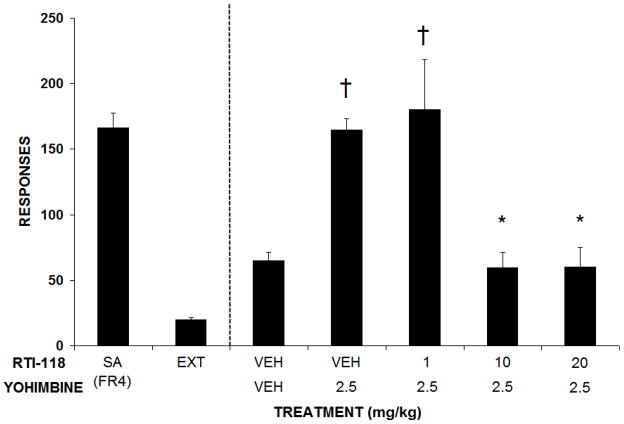
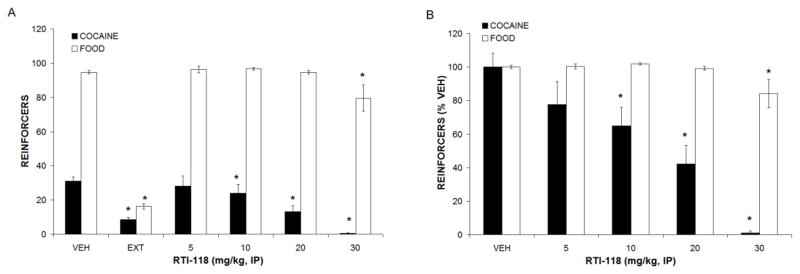
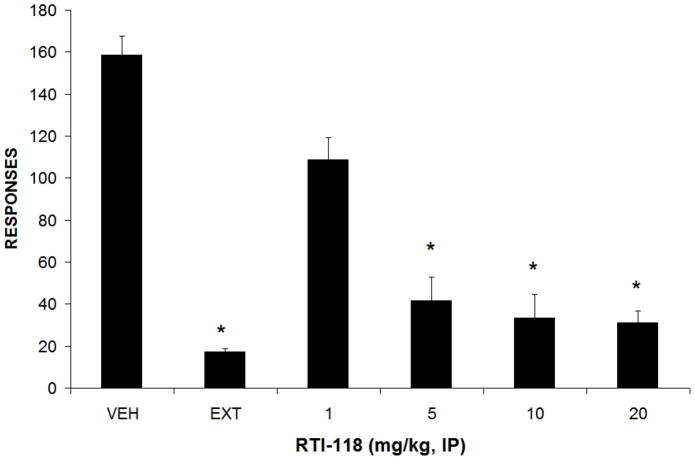
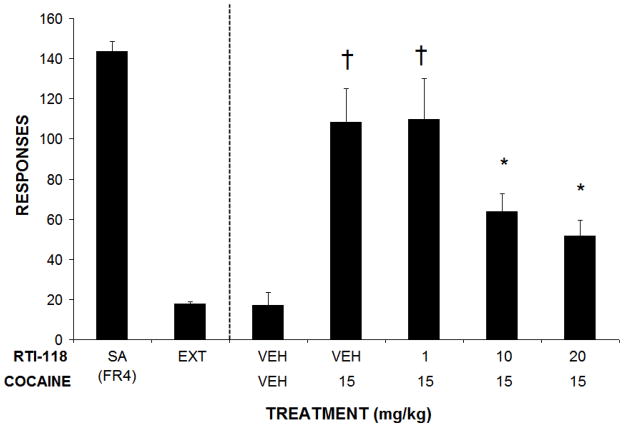
Neuropeptide S (NPS) is a neuromodulatory peptide, acting via a G-protein-coupled receptor to regulate sleep, anxiety and behavioral arousal. Recent research has found that intracerebroventricular NPS can increase cocaine and alcohol self-administration in rodents, suggesting a key role in reward-related neurocircuitry. It is hypothesized that antagonism of the NPS system might represent a novel strategy for the pharmacological treatment of cocaine abuse. To this end, a small-molecule NPSR antagonist (RTI-118) was developed and tested in animal models of cocaine seeking and cocaine taking. Male Wistar rats (n=54) trained to self-administer cocaine and food under a concurrent alternating FR4 schedule exhibited specific dose-dependent decreases in cocaine intake when administered RTI-118. RTI-118 also decreased the reinstatement of extinguished cocaine-seeking behavior induced by conditioned cues, yohimbine and a priming dose of cocaine. These data support the hypothesis that antagonism of the neuropeptide S receptor may ultimately show efficacy in reducing cocaine use and relapse.
神经肽 S(NPS)是一种神经调质肽,通过 G 蛋白偶联受体发挥作用,调节睡眠、焦虑和行为觉醒。最近的研究发现,脑室注射 NPS 可增加啮齿动物可卡因和酒精的自我给药,提示其在与奖励相关的神经回路中发挥关键作用。有人假设,拮抗 NPS 系统可能代表了可卡因滥用的一种新的药理学治疗策略。为此,开发了一种小分子 NPSR 拮抗剂(RTI-118),并在可卡因寻求和可卡因摄入的动物模型中进行了测试。在同时进行的 FR4 时间表下接受可卡因和食物自我给药训练的雄性 Wistar 大鼠(n=54),给予 RTI-118 后,可卡因摄入量呈特异性、剂量依赖性下降。RTI-118 还降低了条件线索、育亨宾和可卡因引发剂量引起的可卡因寻求行为的复燃。这些数据支持这样的假设,即拮抗神经肽 S 受体最终可能显示出减少可卡因使用和复发的疗效。