Department of Medicine, University of Washington School of Medicine, Seattle, Washington, USA.
Ann N Y Acad Sci. 2012 Sep;1268:127-33. doi: 10.1111/j.1749-6632.2012.06686.x.
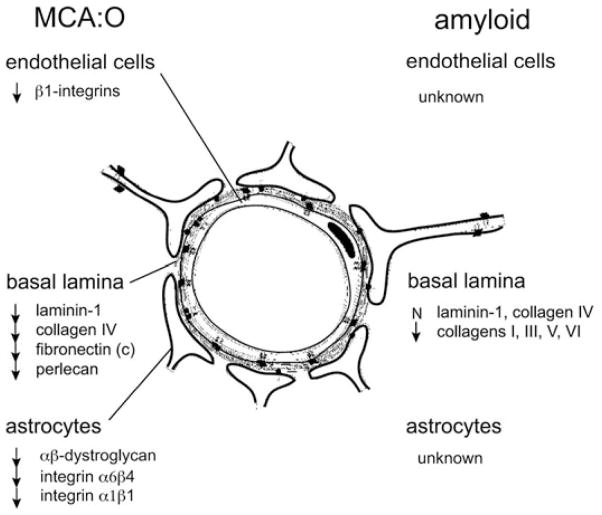
With the demonstration that acute recanalization of obstructed symptomatic cerebral arteries during ischemic stroke can result in substantial improvement in clinical outcome, the variability in clinical responses, and in hemorrhagic transformation, requires attention. This short review addresses the effect of aging and amyloid deposition disease on microvessel integrity, interactions within the neurovascular unit, cerebral tissue susceptibility to ischemic injury, and postischemic inflammation, and ultimately on the outcomes and safety of acute recanalization during ischemic stroke. Microvessels and neighboring neurons respond simultaneously to focal ischemia. The cellular components and matrix barriers of the neurovascular unit all respond to ischemia; however, their coordinate interactions are not understood. Furthermore, there is little known about the cell-cell and cell-matrix interactions within the unit, or about the effect of β-amyloid on microvessel responses during ischemia. These considerations indicate the need for a coordinated research effort to understand the origins of the variability in recanalization outcome.
随着对急性再通阻塞性症状性大脑动脉在缺血性脑卒中后可导致临床结局显著改善的证实,临床反应的可变性以及出血转化需要引起重视。本综述短评了衰老和淀粉样沉积病对微血管完整性、神经血管单元内相互作用、脑组织对缺血性损伤的易感性以及缺血后炎症的影响,并最终影响缺血性脑卒中急性再通的结局和安全性。微血管和邻近神经元同时对局部缺血做出反应。神经血管单元的细胞成分和基质屏障均对缺血有反应;然而,它们的协调相互作用尚不清楚。此外,关于单元内细胞-细胞和细胞-基质相互作用以及β-淀粉样蛋白对缺血时微血管反应的影响知之甚少。这些考虑表明需要协调研究工作,以了解再通结局可变性的起源。