School of Veterinary Medicine and Biomedical Sciences and the Nebraska Center for Virology, University of Nebraska-Lincoln, Lincoln, NE 68583-0900, USA.
Virology. 2012 Nov 25;433(2):431-9. doi: 10.1016/j.virol.2012.08.034. Epub 2012 Sep 18.
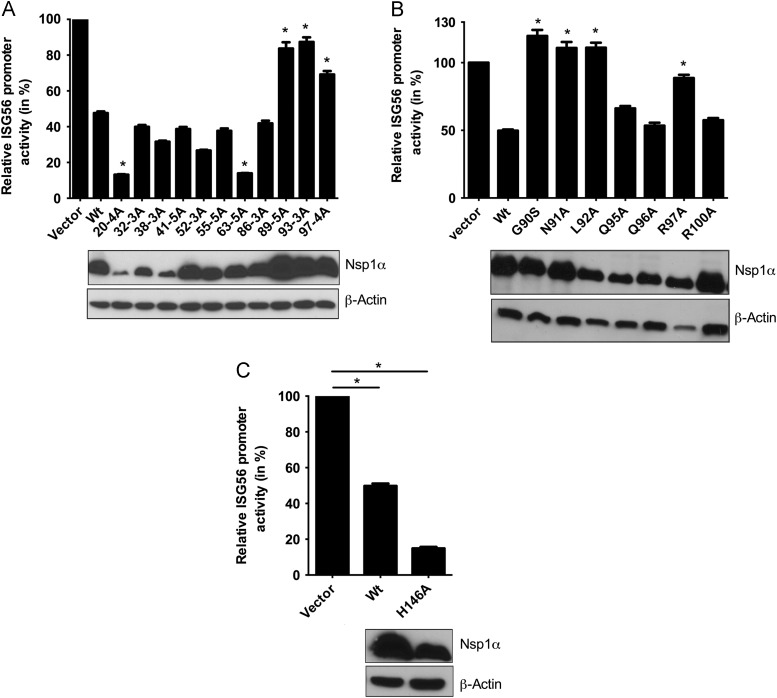
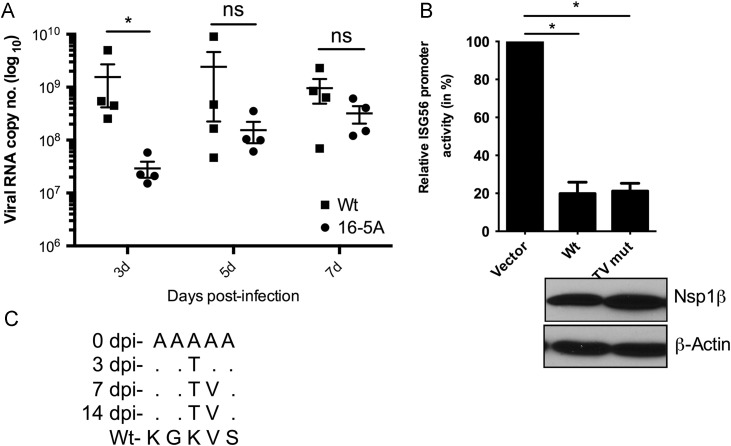
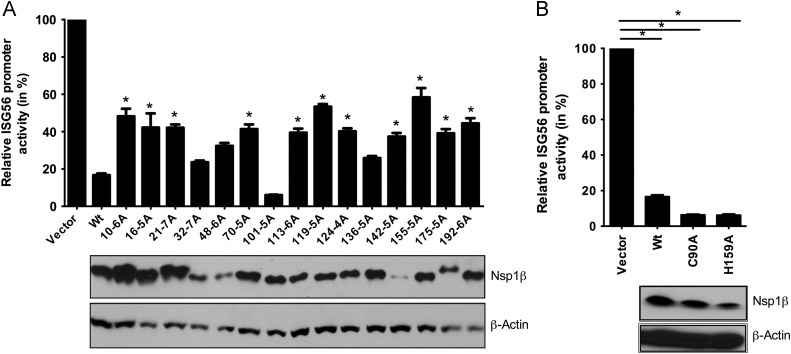
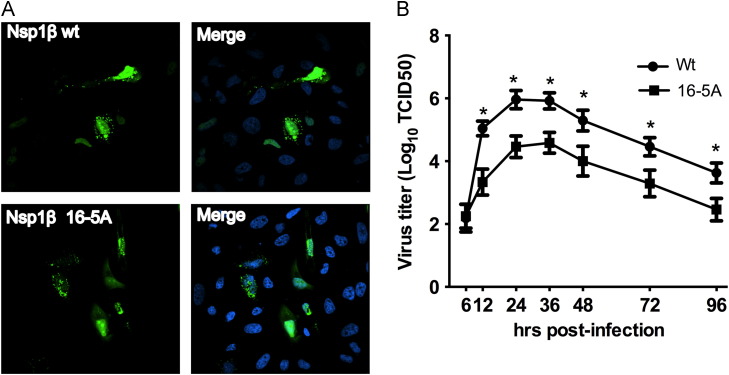
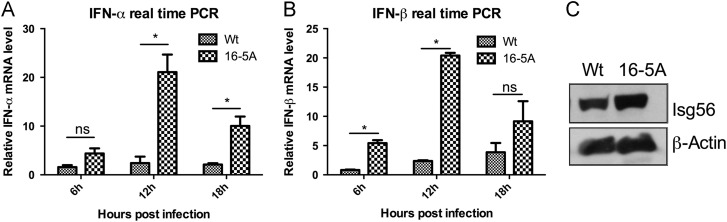
The non-structural protein 1 (nsp1) of porcine reproductive and respiratory syndrome virus is partly responsible for inhibition of type I interferon (IFN) response by the infected host. By performing alanine-scanning mutagenesis, we have identified amino acid residues in nsp1α and nsp1β (the proteolytic products of nsp1) that when substituted with alanine(s) exhibited significant relief of IFN-suppression. A mutant virus (16-5A, in which residues 16-20 of nsp1β were substituted with alanines) encoding mutant nsp1β recovered from infectious cDNA clone was shown to be attenuated for growth in vitro and induced significantly higher amount of type I IFN transcripts in infected macrophages. In infected pigs, the 16-5A virus exhibited reduced growth at early times after infection but quickly regained wild type growth properties as a result of substitutions within the mutated sequences. The results indicate a strong selection pressure towards maintaining the IFN-inhibitory property of the virus for successful propagation in pigs.
猪繁殖与呼吸综合征病毒的非结构蛋白 1(nsp1)部分负责感染宿主抑制 I 型干扰素(IFN)反应。通过进行丙氨酸扫描诱变,我们已经鉴定出 nsp1α 和 nsp1β(nsp1 的蛋白水解产物)中的氨基酸残基,当用丙氨酸取代时,显著缓解了 IFN 的抑制作用。从感染性 cDNA 克隆中恢复的编码突变 nsp1β 的突变病毒(16-5A,其中 nsp1β 的残基 16-20 被替换为丙氨酸)在体外生长时表现出明显的减毒作用,并在感染的巨噬细胞中诱导产生更高水平的 I 型 IFN 转录本。在感染的猪中,16-5A 病毒在感染后早期的生长速度较慢,但由于突变序列内的取代,很快恢复了野生型生长特性。结果表明,为了在猪中成功繁殖,病毒对维持其 IFN 抑制特性存在很强的选择压力。