Nutritional Immunology and Molecular Medicine Laboratory (www.nimml.org), Virginia Bioinformatics Institute, Virginia Tech., Blacksburg, VA 24061, USA.
J Nutr Biochem. 2013 Jun;24(6):1019-27. doi: 10.1016/j.jnutbio.2012.07.010. Epub 2012 Sep 17.
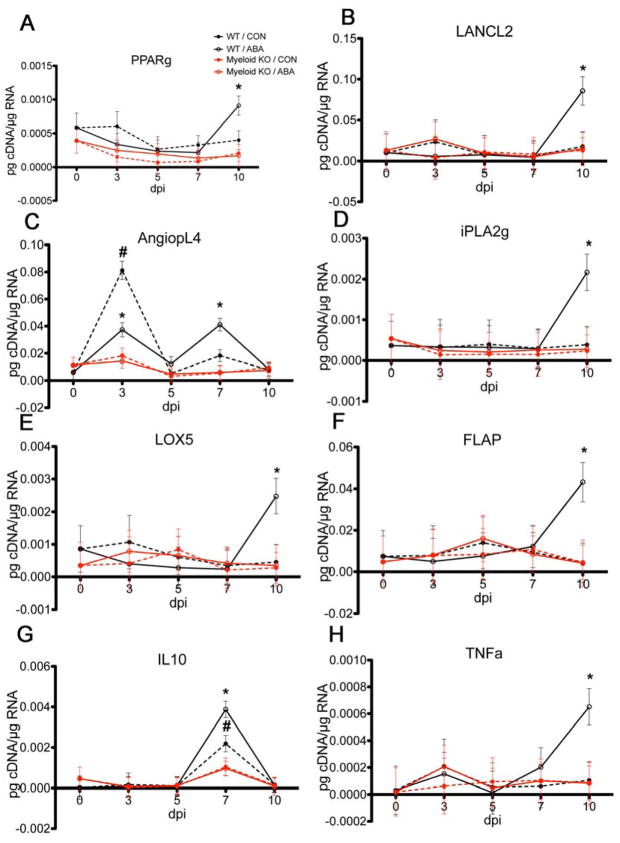
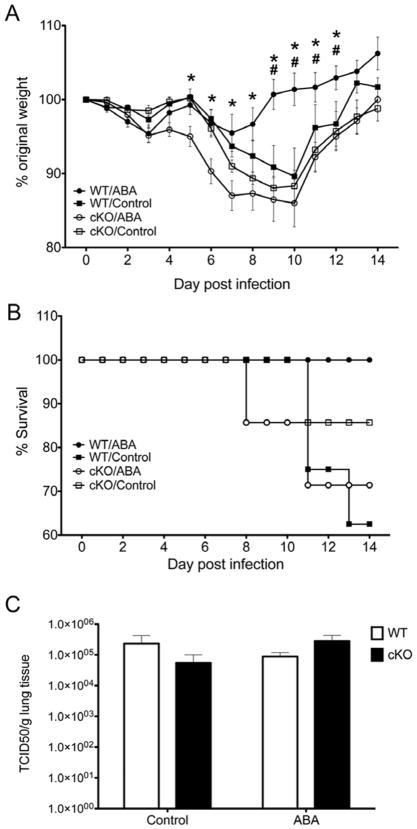
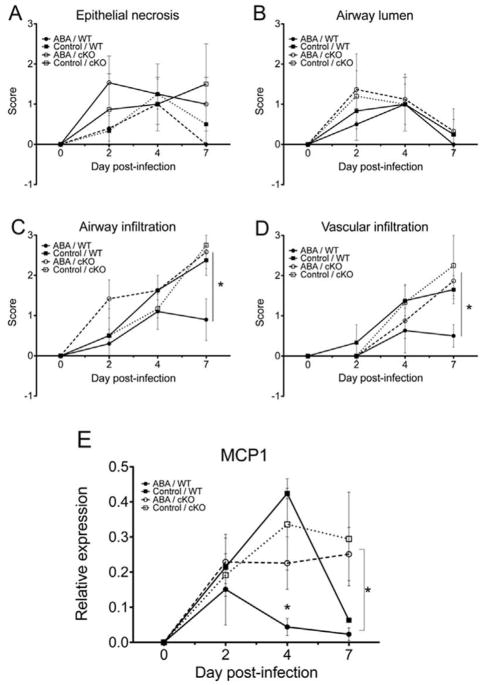
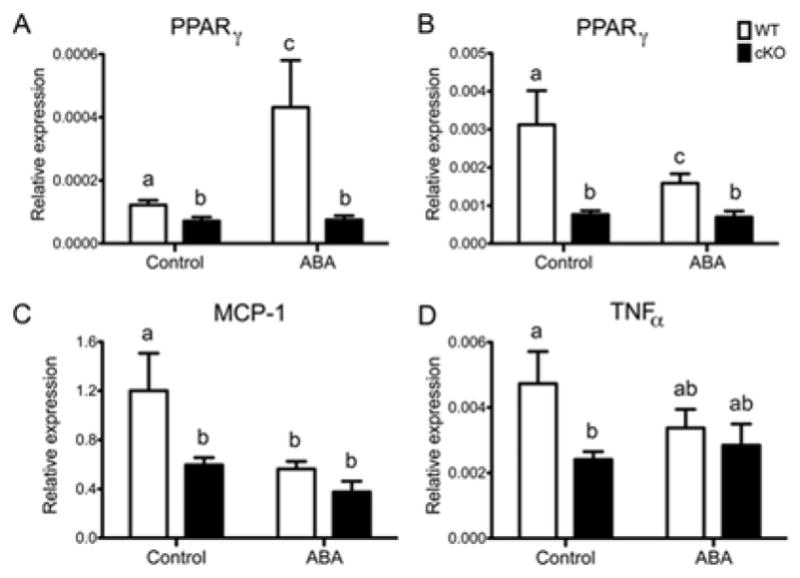
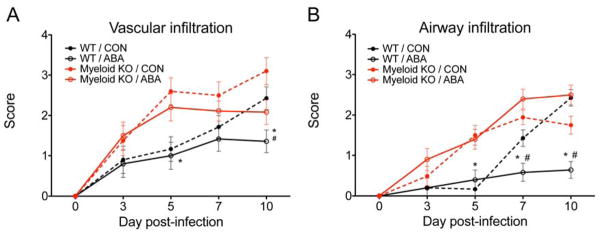
The anti-inflammatory phytohormone abscisic acid (ABA) modulates immune and inflammatory responses in mouse models of colitis and obesity. ABA has been identified as a ligand of lanthionine synthetase C-like 2, a novel therapeutic target upstream of the peroxisome proliferator-activated receptor γ (PPARγ) pathway. The goal of this study was to investigate the immune modulatory mechanisms underlying the anti-inflammatory efficacy of ABA against influenza-associated pulmonary inflammation. Wild-type (WT) and conditional knockout mice with defective PPARγ expression in lung epithelial and hematopoietic cells (cKO) treated orally with or without ABA (100 mg/kg diet) were challenged with influenza A/Udorn (H3N2) to assess ABA's impact in disease, lung lesions and gene expression. Dietary ABA ameliorated disease activity and lung inflammatory pathology, accelerated recovery and increased survival in WT mice. ABA suppressed leukocyte infiltration and monocyte chemotactic protein 1 mRNA expression in WT mice through PPARγ since this effect was abrogated in cKO mice. ABA ameliorated disease when administered therapeutically on the same day of the infection to WT but not mice lacking PPARγ in myeloid cells. We also show that ABA's greater impact is between days 7 and 10 postchallenge when it regulates the expression of genes involved in resolution, like 5-lipoxygenase and other members of the 5-lipoxygenase pathway. Furthermore, ABA significantly increased the expression of the immunoregulatory cytokine interleukin-10 in WT mice. Our results show that ABA, given preventively or therapeutically, ameliorates influenza-virus-induced pathology by activating PPARγ in pulmonary immune cells, suppressing initial proinflammatory responses and promoting resolution.
抗炎植物激素脱落酸 (ABA) 可调节结肠炎和肥胖症小鼠模型中的免疫和炎症反应。ABA 已被确定为新型治疗靶点——硫醚键合酶 C 样 2 的配体,该靶点位于过氧化物酶体增殖物激活受体 γ (PPARγ) 途径的上游。本研究的目的是研究 ABA 抑制流感相关肺炎症的抗炎功效的免疫调节机制。用或不用 ABA(100mg/kg 饮食)经口处理野生型 (WT) 和肺上皮和造血细胞中 PPARγ 表达缺陷的条件敲除 (cKO) 小鼠,然后用流感 A/Udorn (H3N2) 进行攻毒,以评估 ABA 对疾病、肺病变和基因表达的影响。饮食 ABA 可改善 WT 小鼠的疾病活动和肺炎症病理,加速恢复并提高存活率。ABA 通过 PPARγ 抑制 WT 小鼠白细胞浸润和单核细胞趋化蛋白 1 mRNA 表达,因为这种作用在 cKO 小鼠中被消除。ABA 在感染当天对 WT 进行治疗时可改善疾病,但对髓样细胞缺乏 PPARγ 的小鼠无效。我们还表明,ABA 的影响更大,在感染后 7 至 10 天之间,通过调节与解决相关的基因表达,如 5-脂氧合酶和 5-脂氧合酶途径的其他成员。此外,ABA 显著增加了 WT 小鼠免疫调节细胞因子白细胞介素 10 的表达。我们的结果表明,ABA 预防性或治疗性给药可通过激活肺免疫细胞中的 PPARγ,抑制初始促炎反应并促进解决,从而改善流感病毒引起的病变。