Kotwal Girish J, Hatch Steven, Marshall William L
University of Medicine and Health Sciences, St. Kitts, New York, NY 10001, USA.
Adv Virol. 2012;2012:131457. doi: 10.1155/2012/131457. Epub 2012 Sep 11.
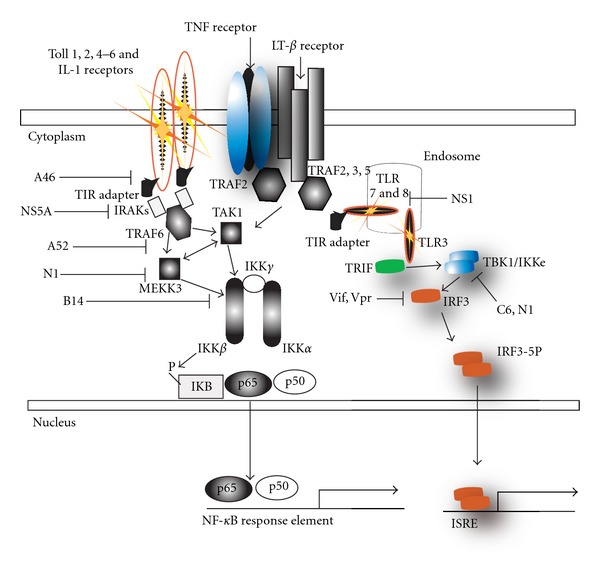
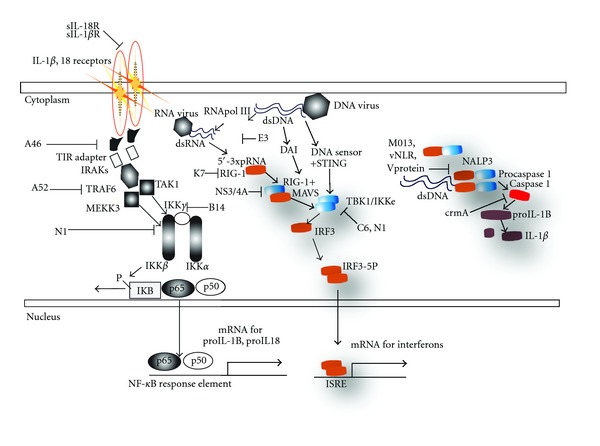
The innate immune response is initiated by the interaction of stereotypical pathogen components with genetically conserved receptors for extracytosolic pathogen-associated molecular patterns (PAMPs) or intracytosolic nucleic acids. In multicellular organisms, this interaction typically clusters signal transduction molecules and leads to their activations, thereby initiating signals that activate innate immune effector mechanisms to protect the host. In some cases programmed cell death-a fundamental form of innate immunity-is initiated in response to genotoxic or biochemical stress that is associated with viral infection. In this paper we will summarize innate immune mechanisms that are relevant to viral pathogenesis and outline the continuing evolution of viral mechanisms that suppress the innate immunity in mammalian hosts. These mechanisms of viral innate immune evasion provide significant insight into the pathways of the antiviral innate immune response of many organisms. Examples of relevant mammalian innate immune defenses host defenses include signaling to interferon and cytokine response pathways as well as signaling to the inflammasome. Understanding which viral innate immune evasion mechanisms are linked to pathogenesis may translate into therapies and vaccines that are truly effective in eliminating the morbidity and mortality associated with viral infections in individuals.
固有免疫反应由典型病原体成分与胞外病原体相关分子模式(PAMP)或胞内核酸的遗传保守受体相互作用引发。在多细胞生物体中,这种相互作用通常会使信号转导分子聚集并导致其激活,从而启动激活固有免疫效应机制以保护宿主的信号。在某些情况下,程序性细胞死亡——固有免疫的一种基本形式——会因与病毒感染相关的基因毒性或生化应激而启动。在本文中,我们将总结与病毒发病机制相关的固有免疫机制,并概述病毒在哺乳动物宿主中抑制固有免疫的机制的持续演变。这些病毒逃避固有免疫的机制为许多生物体抗病毒固有免疫反应的途径提供了重要见解。相关的哺乳动物固有免疫防御宿主防御的例子包括向干扰素和细胞因子反应途径发出信号以及向炎性小体发出信号。了解哪些病毒逃避固有免疫的机制与发病机制相关,可能会转化为真正有效消除个体中与病毒感染相关的发病率和死亡率的疗法和疫苗。