Department of Molecular Biology, Princeton University, Lewis Thomas Laboratory, Washington Road, Princeton, NJ 08544, USA.
Curr Issues Mol Biol. 2021;42:635-686. doi: 10.21775/cimb.042.635. Epub 2021 Feb 28.
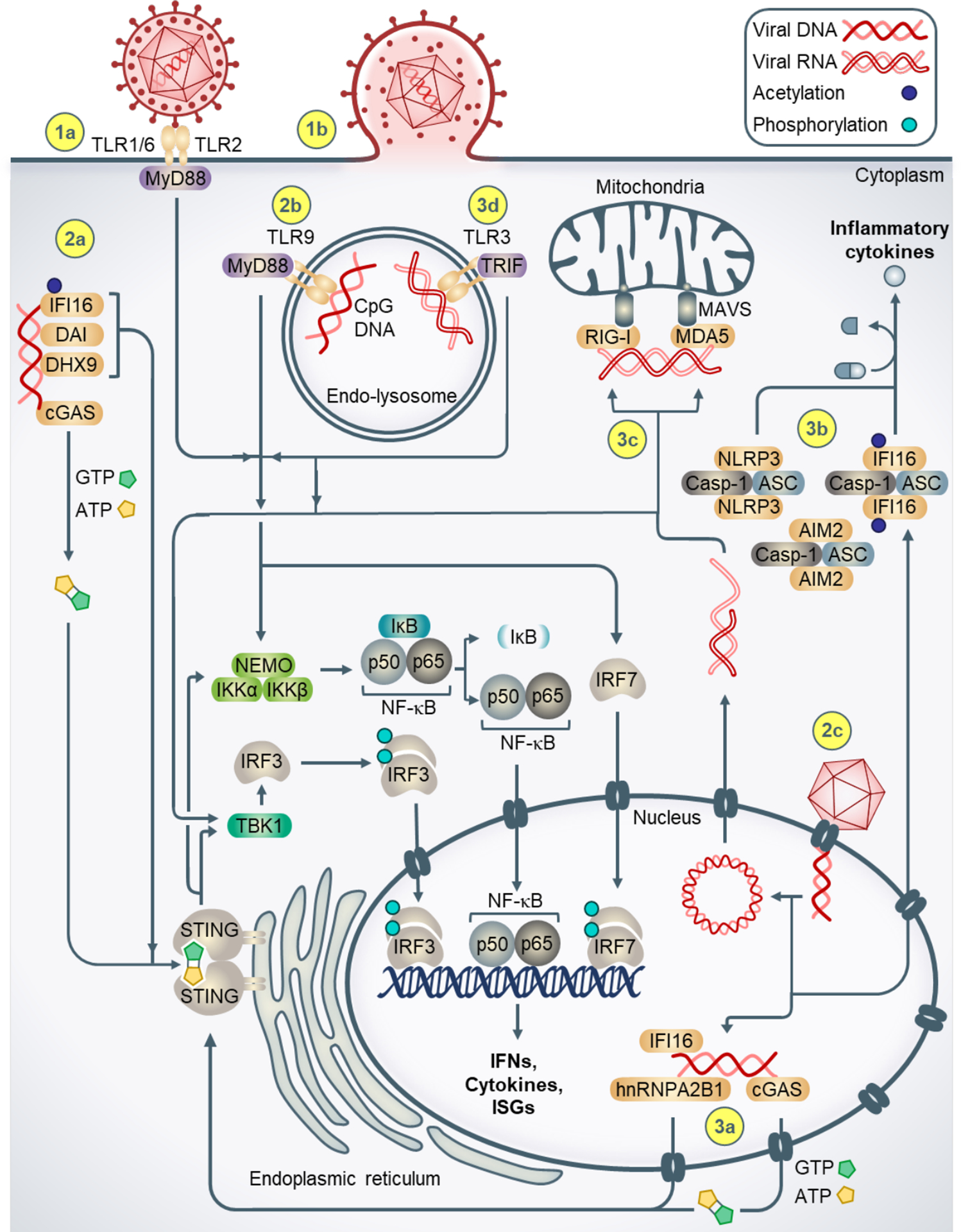
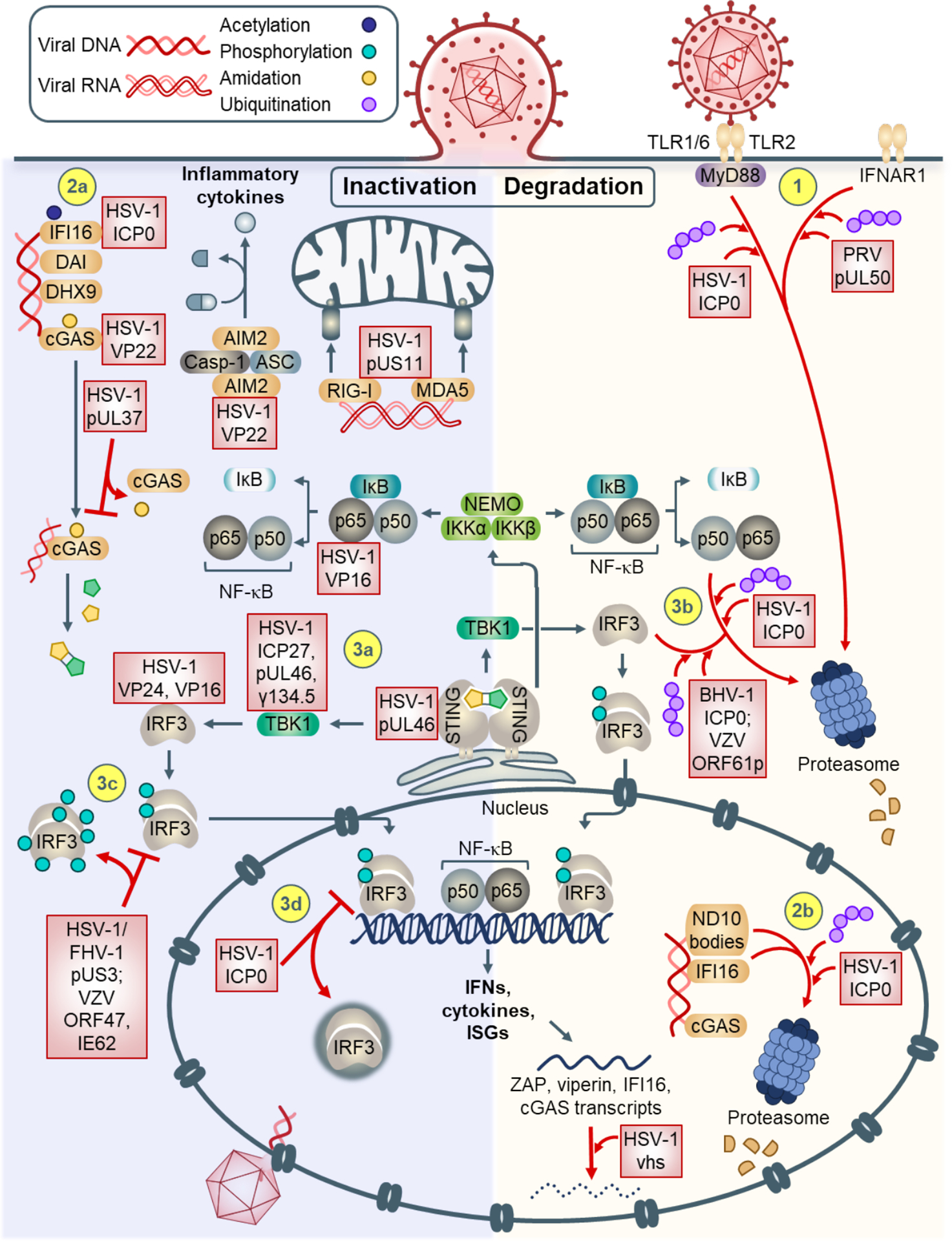
Both the development of the mammalian innate immune system and the antagonistic strategies acquired by alphaherpesviruses to dismantle it have been shaped by co-evolving virus-host interactions over millions of years. Here, we review mechanisms employed by mammalian cells to detect pathogen molecules, such as viral glycoproteins and nucleic acids, and induce innate immune signaling upon infection with alphaherpesviruses. We further explore strategies acquired by these viruses to bypass immune detection and activation, thereby supporting virus replication and spread. Finally, we discuss the contributions of advanced 'omics' and microscopy methods to these discoveries in immune signaling and highlight emerging technologies that can help to further our understanding of the dynamic interplay between host innate immune responses and virus immune evasion.
哺乳动物先天免疫系统的发展以及α疱疹病毒为瓦解该系统而采用的拮抗策略,都是在数百万年的病毒-宿主共同进化过程中形成的。在这里,我们回顾了哺乳动物细胞在感染α疱疹病毒时用于检测病原体分子(如病毒糖蛋白和核酸)并诱导先天免疫信号的机制。我们进一步探讨了这些病毒采用的策略来绕过免疫检测和激活,从而支持病毒的复制和传播。最后,我们讨论了先进的“组学”和显微镜方法在免疫信号发现中的贡献,并强调了新兴技术可以帮助我们进一步了解宿主先天免疫反应和病毒免疫逃逸之间的动态相互作用。