Departments of Pathology and Neurology, Taub Institute, Columbia University Medical Center, New York, NY 10032, USA.
Mol Neurodegener. 2012 Sep 21;7:48. doi: 10.1186/1750-1326-7-48.
Macroautophagy is an evolutionarily conserved mechanism for bulk intracellular degradation of proteins and organelles. Pathological studies have implicated macroautophagy defects in human neurodegenerative disorders of aging including Alzheimer's disease and tauopathies. Neuronal deficiency of macroautophagy throughout mouse embryonic development results in neurodevelopmental defects and early postnatal mortality. However, the role of macroautophagy in mature CNS neurons, and the relationship with human disease neuropathology, remains unclear. Here we describe mice deficient in an essential macroautophagy component, Atg7, specifically within postnatal CNS neurons.
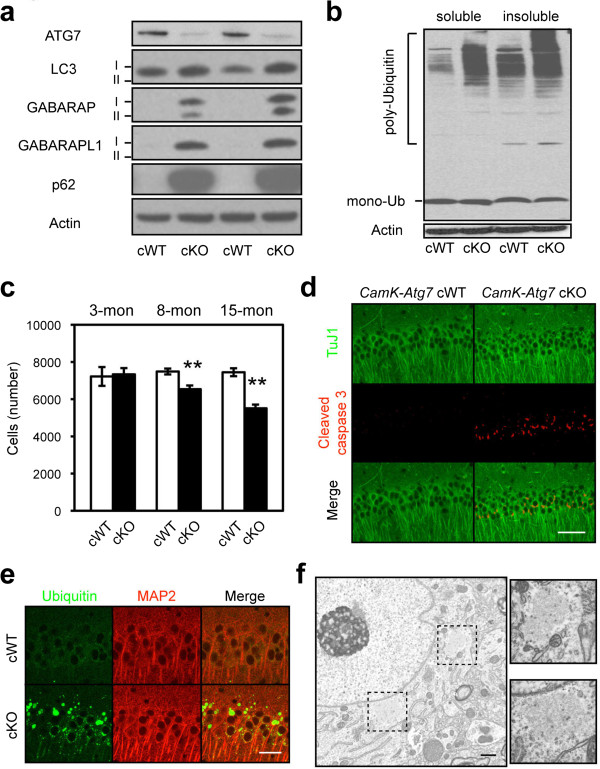
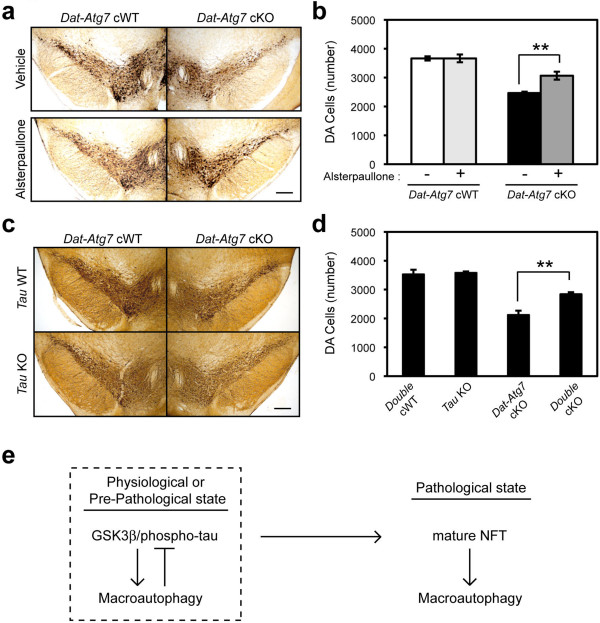
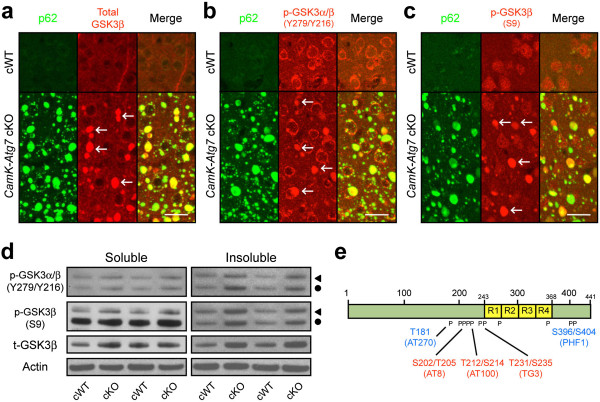
Postnatal forebrain-specific Atg7 conditional knockout (cKO) mice displayed age-dependent neurodegeneration and ubiquitin- and p62-positive inclusions. Phosphorylated tau was significantly accumulated in Atg7 cKO brains, but neurofibrillary tangles that typify end-stage human tauopathy were not apparent. A major tau kinase, glycogen synthase kinase 3β (GSK3β), was also accumulated in Atg7 cKO brains. Chronic pharmacological inhibition of tau phosphorylation, or genetic deletion of tau, significantly rescued Atg7-deficiency-mediated neurodegeneration, but did not suppress inclusion formation.
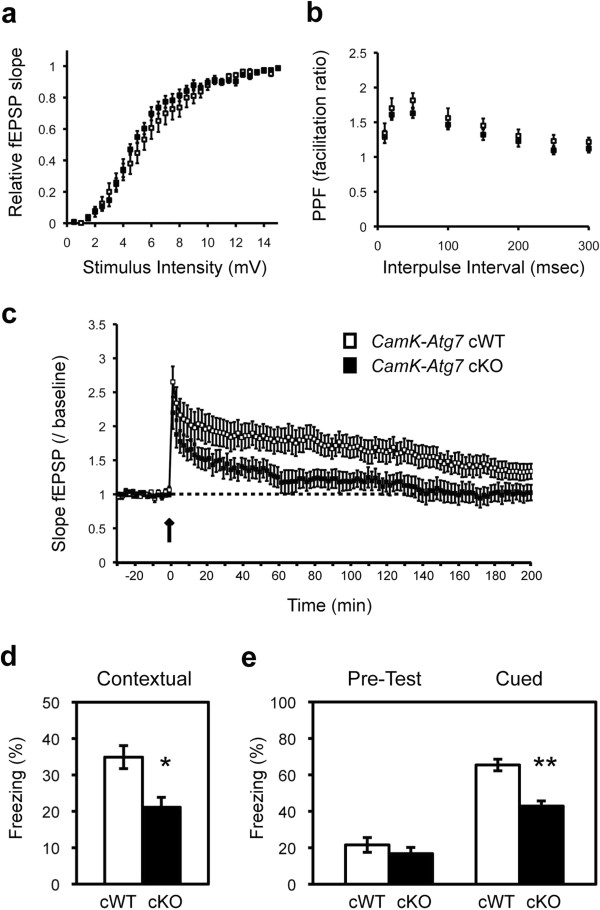
These data elucidate a role for macroautophagy in the long-term survival and physiological function of adult CNS neurons. Neurodegeneration in the context of macroautophagy deficiency is mediated through a phospho-tau pathway.
巨自噬是一种进化上保守的机制,用于大规模细胞内蛋白质和细胞器的降解。病理性研究表明,巨自噬缺陷与包括阿尔茨海默病和 tau 病在内的人类衰老相关神经退行性疾病有关。在整个小鼠胚胎发育过程中,神经元缺乏巨自噬会导致神经发育缺陷和出生后早期死亡。然而,巨自噬在成熟中枢神经系统神经元中的作用,以及与人类疾病神经病理学的关系,仍不清楚。在这里,我们描述了在出生后中枢神经系统神经元中特异性缺乏必需的巨自噬成分 Atg7 的小鼠。
出生后大脑特异性 Atg7 条件性敲除(cKO)小鼠表现出年龄依赖性神经退行性变和泛素和 p62 阳性包涵体。磷酸化 tau 在 Atg7 cKO 脑中明显积累,但典型的人类 tau 病的神经纤维缠结并不明显。一种主要的 tau 激酶,糖原合酶激酶 3β(GSK3β),也在 Atg7 cKO 脑中积累。tau 磷酸化的慢性药理学抑制,或 tau 的基因缺失,显著挽救了 Atg7 缺陷介导的神经退行性变,但不能抑制包涵体的形成。
这些数据阐明了巨自噬在成年中枢神经系统神经元的长期存活和生理功能中的作用。巨自噬缺陷引起的神经退行性变是通过磷酸化 tau 途径介导的。