Department of Pathology and Laboratory Medicine, Brown University, Providence, Rhode Island 02912, USA.
Environ Health Perspect. 2012 Dec;120(12):1711-9. doi: 10.1289/ehp.1204932. Epub 2012 Sep 26.
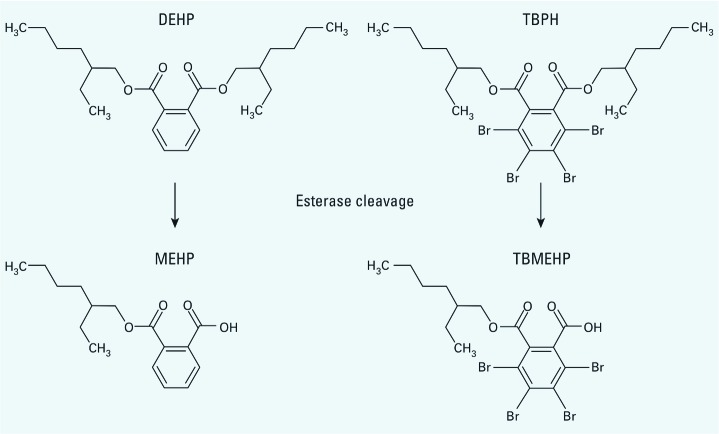
Bis-(2-ethylhexyl) tetrabromophthalate (TBPH) is widely used as a replacement for polybrominated diphenyl ethers (PBDEs) in commercial flame retardant mixtures such as Firemaster 550. It is also used in a commercial mixture called DP 45. Mono-(2-ethyhexyl) tetrabromophthalate (TBMEHP) is a potentially toxic metabolite.
We used in vitro and rodent in vivo models to evaluate human exposure and the potential metabolism and toxicity of TBPH.
Dust collected from homes, offices, and cars was measured for TBPH by gas chromatography followed by mass spectrometry. Pregnant rats were gavaged with TBMEHP (200 or 500 mg/kg) or corn oil on gestational days 18 and 19, and dams and fetuses were evaluated histologically for toxicity. We also assessed TBMEHP for deiodinase inhibition using rat liver microsomes and for peroxisome proliferator-activated receptor (PPAR) α and γ activation using murine FAO cells and NIH 3T3 L1 cells.
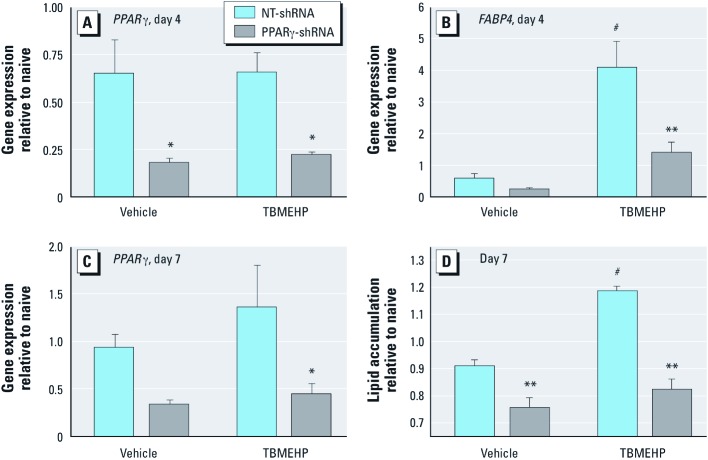
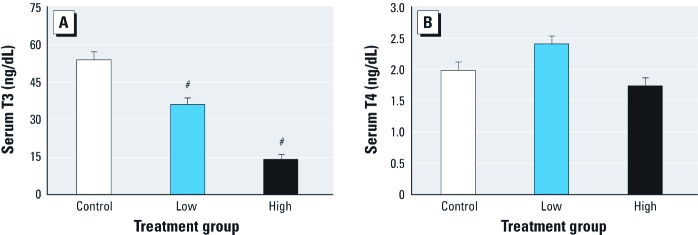
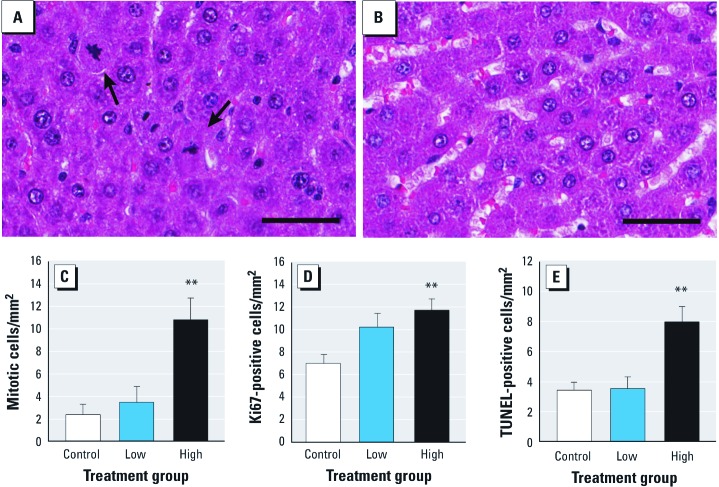
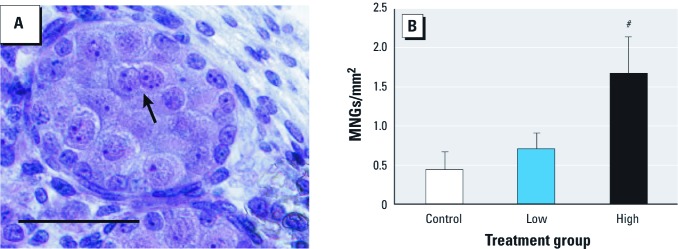
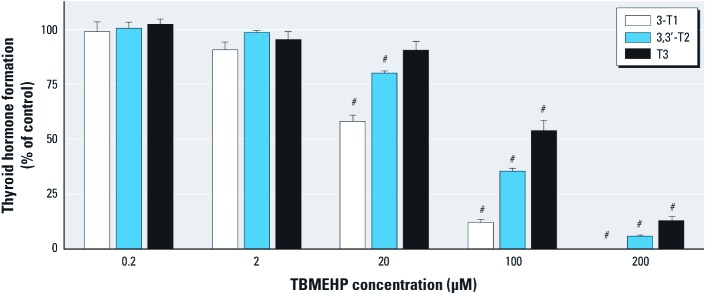
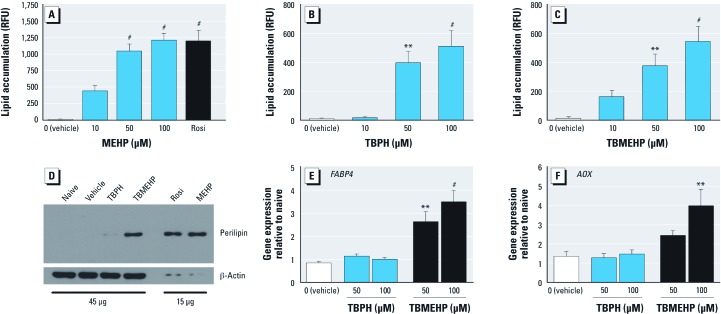
TBPH concentrations in dust from office buildings (median, 410 ng/g) were higher than in main living areas in homes (median, 150 ng/g). TBPH was metabolized by purified porcine esterases to TBMEHP. Two days of TBMEHP exposure in the rat produced maternal hypothyroidism with markedly decreased serum T3 (3,3´,5-triiodo-l-thyronine), maternal hepatotoxicity, and increased multinucleated germ cells (MNGs) in fetal testes without antiandrogenic effects. In vitro, TBMEHP inhibited deiodinase activity, induced adipocyte differentiation in NIH 3T3 L1 cells, and activated PPARα- and PPARγ-mediated gene transcription in NIH 3T3 L1 cells and FAO cells, respectively.
TBPH a) is present in dust from indoor environments (implying human exposure) and b) can be metabolized by porcine esterases to TBMEHP, which c) elicited maternal thyrotoxic and hepatotoxic effects and d) induced MNGs in the fetal testes in a rat model. In mouse NIH 3T3 L1 preadipocyte cells, TBMEHP inhibited rat hepatic microsome deiodinase activity and was an agonist for PPARs in murine FAO and NIH 3T3 L1 cells.
双-(2-乙基己基)四溴邻苯二甲酸酯 (TBPH) 作为多溴联苯醚 (PBDEs) 的替代品,广泛用于商用阻燃剂混合物中,如 Firemaster 550。它也用于一种名为 DP 45 的商用混合物中。单-(2-乙基己基)四溴邻苯二甲酸酯 (TBMEHP) 是一种潜在的有毒代谢物。
我们使用体外和啮齿动物体内模型来评估 TBPH 的人体暴露情况和潜在代谢及毒性。
通过气相色谱法和质谱法测定取自家庭、办公室和汽车的灰尘中的 TBPH 含量。在妊娠第 18 和 19 天,给怀孕的大鼠灌胃 TBMEHP(200 或 500mg/kg)或玉米油,并对母体和胎儿进行组织学毒性评估。我们还使用大鼠肝微粒体评估 TBMEHP 对脱碘酶的抑制作用,使用鼠 FAO 细胞和 NIH 3T3 L1 细胞评估对过氧化物酶体增殖物激活受体 (PPAR)α和γ的激活作用。
办公楼内灰尘中的 TBPH 浓度(中位数,410ng/g)高于家庭主要生活区域(中位数,150ng/g)。TBPH 被纯化的猪酯酶代谢为 TBMEHP。在大鼠体内暴露 2 天 TBMEHP 会导致母体甲状腺功能减退,血清 T3(3,3´,5-三碘甲状腺原氨酸)明显降低,母体肝毒性和胎儿睾丸中多核精原细胞(MNG)增加,无抗雄激素作用。体外,TBMEHP 抑制脱碘酶活性,在 NIH 3T3 L1 细胞中诱导脂肪细胞分化,并激活 NIH 3T3 L1 细胞和 FAO 细胞中的 PPARα-和 PPARγ-介导的基因转录。
TBPH a) 存在于室内环境的灰尘中(提示人体暴露),b) 可被猪酯酶代谢为 TBMEHP,c) 在大鼠模型中,TBMEHP 会导致母体甲状腺毒性和肝毒性,并导致胎儿睾丸中 MNG 增加,d) 在小鼠 NIH 3T3 L1 前脂肪细胞中,TBMEHP 抑制大鼠肝微粒体脱碘酶活性,并且是鼠 FAO 和 NIH 3T3 L1 细胞中 PPAR 的激动剂。