Department of Pediatric Endocrinology, Medical Faculty, Erciyes University, 38039 Kayseri, Turkey.
Eur J Pediatr. 2013 Jan;172(1):59-69. doi: 10.1007/s00431-012-1822-5. Epub 2012 Sep 27.
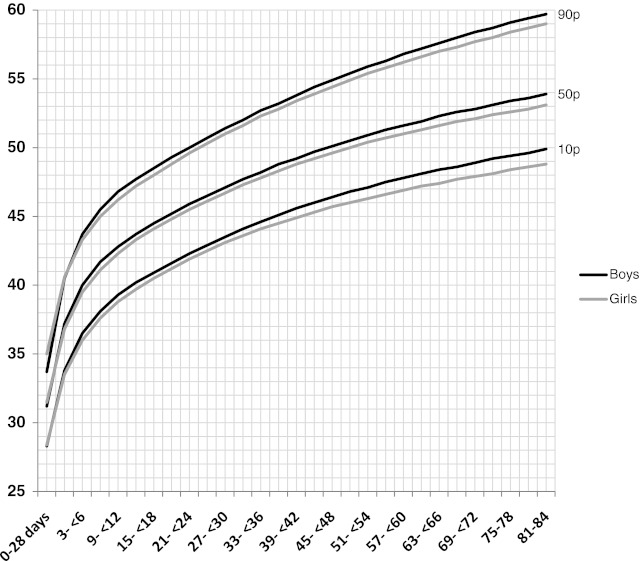
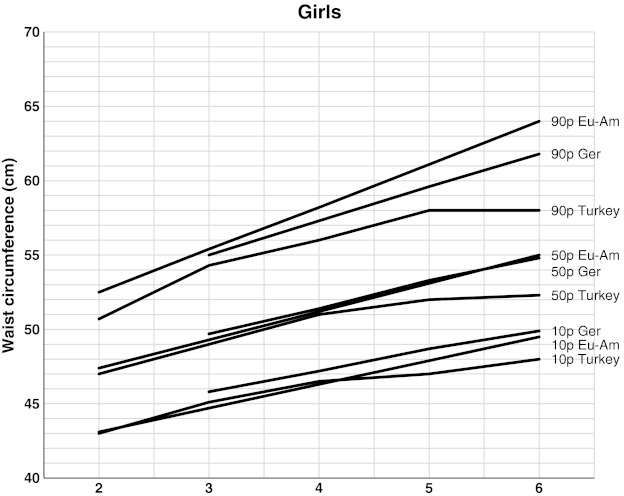
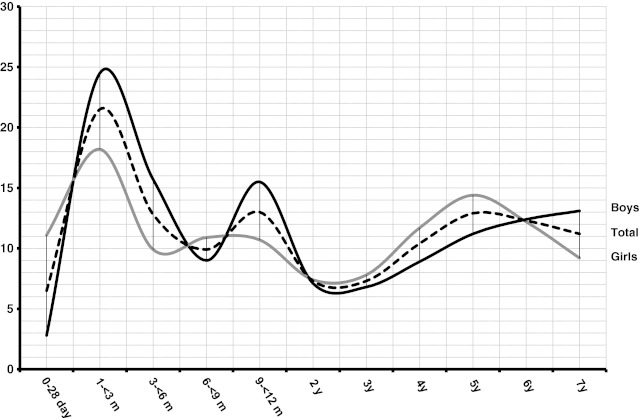
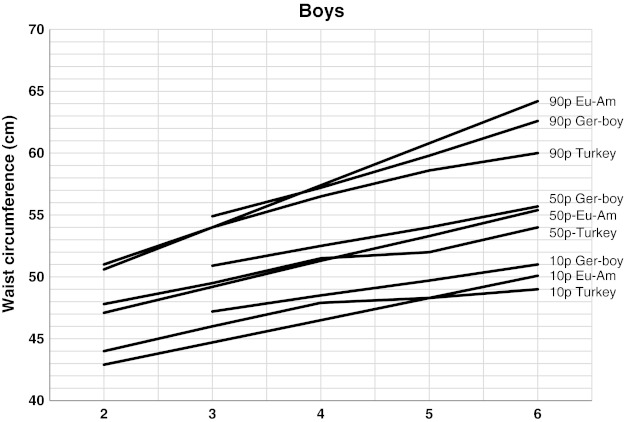
Waist circumference, a proxy measure of abdominal obesity, is associated with cardio-metabolic risk factors in childhood and adolescence. Although there are numerous studies about waist circumference percentiles in children, only a few studies cover preschool children. The aim of this study was to develop age- and gender-specific waist circumference smoothed reference curves in Turkish preschool children to determine abdominal obesity prevalence and to compare them with reference curves obtained from different countries. The design of the study was cross-sectional. A total of 2,947 children (1,471 boys and 1,476 girls) aged 0-6 years were included in the study. The subjects were divided according to their gender. Waist circumference was measured by using a standardized procedure. The age- and gender-specific waist circumference reference curves were constructed and smoothed with LMS method. The reference values of waist circumference, including 3rd, 10th 25th, 50th, 75th, 90th, and 97th percentiles, and standard deviations were given for preschool children. Waist circumference values increased with age, and there were differences between genders. The prevalence of abdominal obesity was calculated as 10.1 % for boys and 10.7 % for girls. Having compared our data with two other countries' data, we found that our waist circumference data were significantly lower. This is the first cross-sectional study for age- and gender-specific references of 0- to 6-year-old Turkish children. The gender- and age-specific waist circumference percentiles can be used to determine the risk of central obesity.
腰围是衡量腹部肥胖的一个替代指标,与儿童和青少年时期的心血管代谢危险因素有关。虽然有许多关于儿童腰围百分位的研究,但只有少数研究涵盖了学龄前儿童。本研究旨在为土耳其学龄前儿童制定年龄和性别特异性的腰围平滑参考曲线,以确定腹部肥胖的流行率,并将其与来自不同国家的参考曲线进行比较。该研究的设计是横断面研究。共有 2947 名 0-6 岁的儿童(男 1471 名,女 1476 名)纳入研究。根据性别将研究对象分为两组。腰围采用标准化程序进行测量。使用 LMS 方法构建和平滑年龄和性别特异性腰围参考曲线。给出了包括第 3、第 10、第 25、第 50、第 75、第 90 和第 97 百分位数以及标准差在内的腰围参考值,适用于学龄前儿童。腰围值随年龄增长而增加,且存在性别差异。肥胖的患病率为男孩 10.1%,女孩 10.7%。将我们的数据与另外两个国家的数据进行比较后,我们发现我们的腰围数据明显较低。这是第一项针对 0-6 岁土耳其儿童的年龄和性别特异性参考的横断面研究。性别和年龄特异性腰围百分位数可用于确定中心性肥胖的风险。