Center for Pediatric and Adolescent Medicine, University of Freiburg, 79106 Freiburg, Germany.
J Immunol. 2012 Nov 1;189(9):4582-91. doi: 10.4049/jimmunol.1200205. Epub 2012 Sep 26.
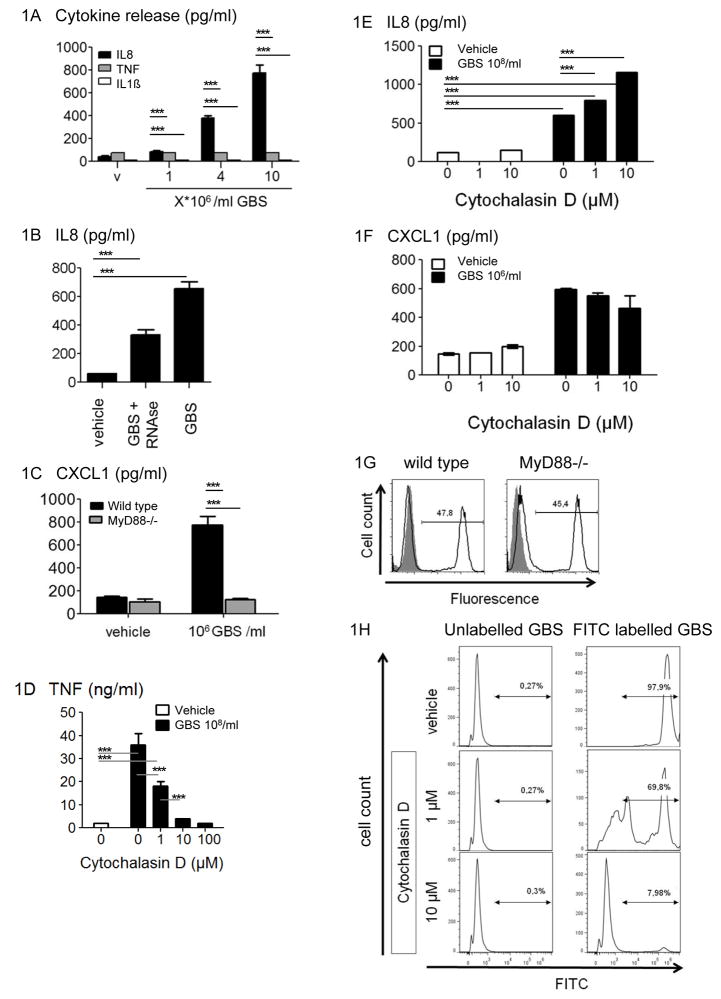
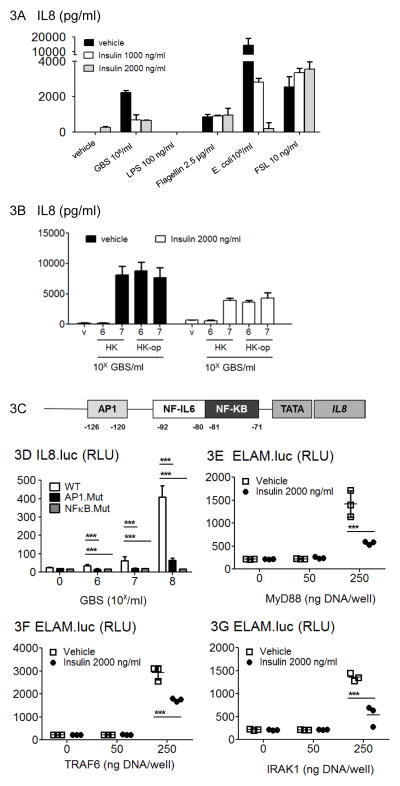
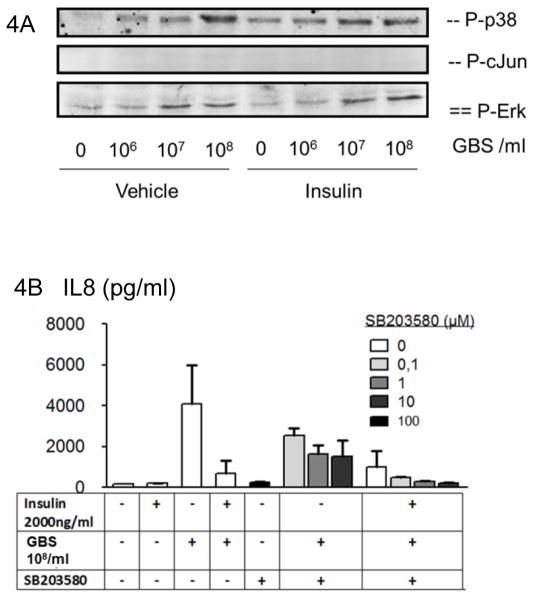
Group B streptococci (GBS; Streptococcus agalactiae) are a major cause of invasive infections in newborn infants and in patients with type 2 diabetes. Both patient groups exhibit peripheral insulin resistance and alterations in polymorphonuclear leukocyte (PML) function. In this investigation, we studied the PML response repertoire to GBS with a focus on TLR signaling and the modulation of this response by insulin in mice and humans. We found that GBS-induced, MyD88-dependent chemokine formation of PML was specifically downmodulated by insulin via insulin receptor-mediated induction of PI3K. PI3K inhibited transcription of chemokine genes on the level of NF-κB activation and binding. Insulin specifically modulated the chemokine response of PML to whole bacteria, but affected neither activation by purified TLR agonists nor antimicrobial properties, such as migration, phagocytosis, bacterial killing, and formation of reactive oxygen species. The targeted modulation of bacteria-induced chemokine formation by insulin via PI3K may form a basis for the development of novel targets of adjunctive sepsis therapy.
B 群链球菌(GBS;无乳链球菌)是导致新生儿和 2 型糖尿病患者侵袭性感染的主要原因。这两个患者群体都表现出外周胰岛素抵抗和多形核白细胞(PMN)功能的改变。在这项研究中,我们研究了 PML 对 GBS 的反应谱,重点关注 TLR 信号转导以及胰岛素对小鼠和人类中该反应的调节。我们发现,胰岛素通过胰岛素受体介导的 PI3K 诱导,特异性地下调 GBS 诱导的、MyD88 依赖性趋化因子形成。PI3K 通过抑制 NF-κB 激活和结合来抑制趋化因子基因的转录。胰岛素特异性地调节 PML 对全细菌的趋化因子反应,但不影响由纯化的 TLR 激动剂引起的激活,也不影响迁移、吞噬、杀菌和活性氧形成等抗菌特性。通过 PI3K 靶向调节胰岛素诱导的细菌诱导的趋化因子形成,可能为开发辅助脓毒症治疗的新靶点奠定基础。