Taheri Talesh Koroush, Solahaye Kahnamouii Shiva
Professor, Department of Oral and Maxillofacial Surgery, Faculty of Dentistry, Tabriz University of Medical Sciences, Tabriz, Iran.
J Dent Res Dent Clin Dent Prospects. 2011 Winter;5(1):17-22. doi: 10.5681/joddd.2011.004. Epub 2011 Mar 18.
Current infiltration techniques for achieving anesthesia in dental procedures are not applicable in posterior mandibular region because of its dense cortical bone. The aim of this study was to evaluate the efficacy of a specific infiltration anesthesia in posterior mandibular teeth instead of inferior alveolar nerve block for restorative procedures.
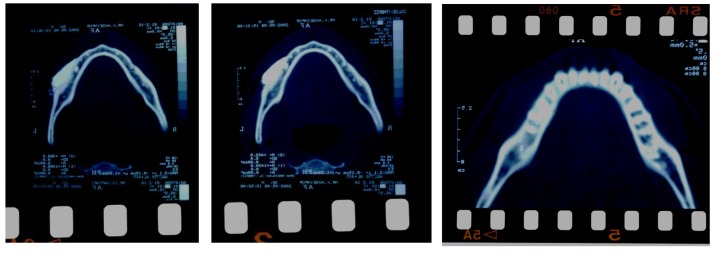
Crestal anesthesia (CA) was assessed both clinically and by computed tomography scan for its efficacy and side effects. A combination of an opaque material (Ultravist) and 2% lidocaine was used to trace the anesthetic solution. The combination was primarily injected in the gingival tissue of rabbit and was followed-up regularly for two weeks to assess any possible injury. After confirming its safety, a combination of these materials was injected to volunteers to assess efficacy and diffusion route. A total of 154 patients (77 female, 77 male) with matched bilateral posterior teeth in mandible were selected randomly and an IANB and CA were performed randomly and separately in different sessions for the contra lateral teeth. The onset of anesthesia, anesthesia duration, pain, blood pressure, pulse rate, and consumed volume of anesthetic solution was recorded for each technique. Data were analyzed using paired t-test.
There were no significant differences in clinical attachment loss, pocket depth, bone level, plaque index, and free gingival margin between the two flaps (p>0.05).
CA could be considered as a reliable and safe primary injection in posterior mandibular teeth for restorative treatments.
由于下颌后牙区皮质骨致密,目前牙科手术中实现麻醉的浸润技术不适用于该区域。本研究的目的是评估一种特定浸润麻醉在下颌后牙用于修复手术时替代下牙槽神经阻滞的效果。
通过临床评估及计算机断层扫描来评估嵴顶麻醉(CA)的效果及副作用。使用一种不透明材料(优维显)与2%利多卡因的组合来追踪麻醉溶液。该组合首先注射到兔的牙龈组织中,并定期随访两周以评估任何可能的损伤。在确认其安全性后,将这些材料的组合注射到志愿者体内以评估效果和扩散途径。总共随机选择了154例双侧下颌后牙匹配的患者(77例女性,77例男性),在不同时间段分别对其对侧牙齿随机进行下牙槽神经阻滞(IANB)和嵴顶麻醉(CA)。记录每种技术的麻醉起效时间、麻醉持续时间、疼痛程度、血压、脉搏率以及麻醉溶液用量。数据采用配对t检验进行分析。
两个皮瓣之间在临床附着丧失、牙周袋深度、骨水平、菌斑指数和游离龈缘方面无显著差异(p>0.05)。
嵴顶麻醉可被视为下颌后牙修复治疗中一种可靠且安全的初始注射方法。