Department of Biology, Faculty of Sciences, University of Chile, Santiago, Chile.
PLoS One. 2012;7(9):e45018. doi: 10.1371/journal.pone.0045018. Epub 2012 Sep 14.
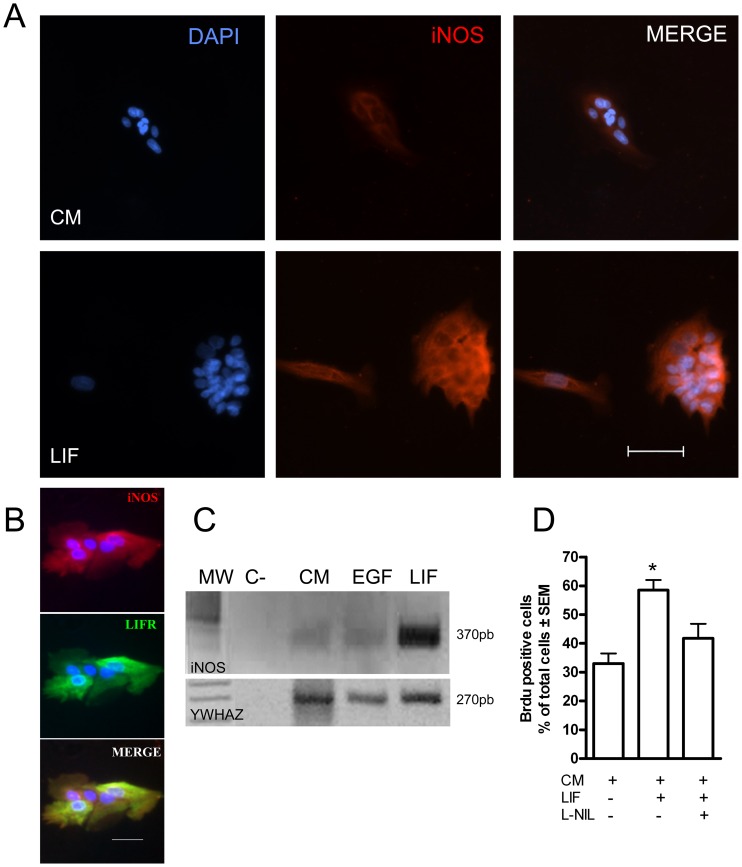
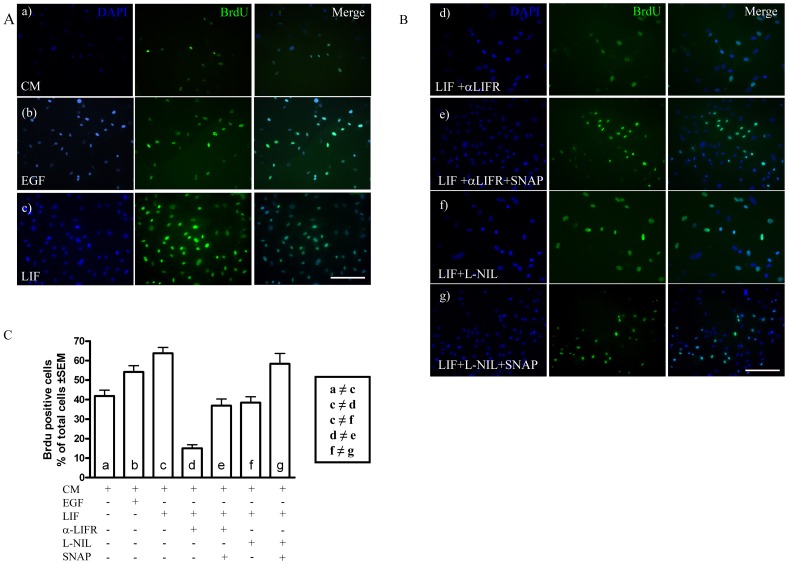
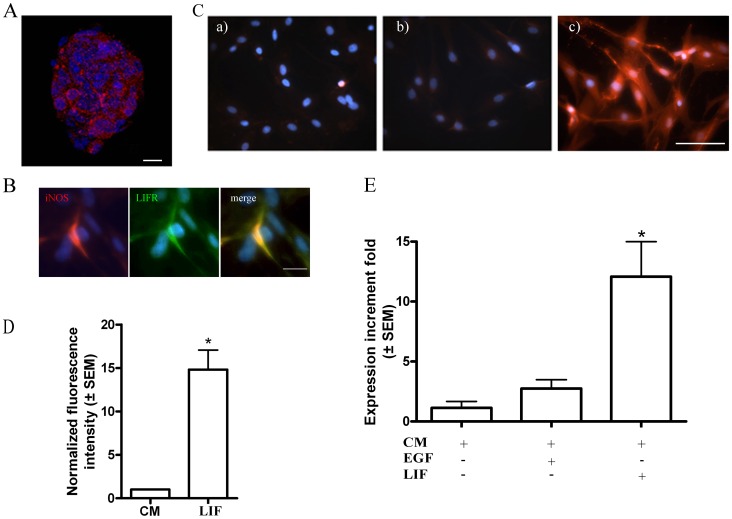
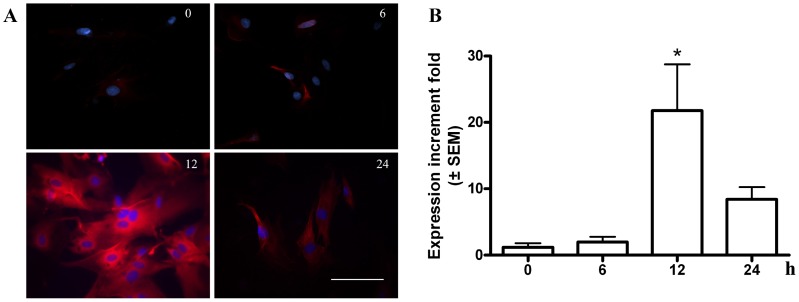
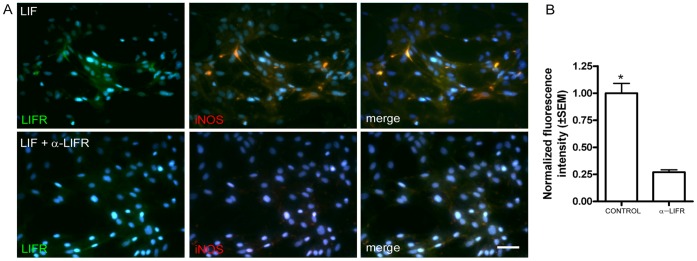
Neurogenesis continues in the adult brain and in the adult olfactory epithelium. The cytokine, leukaemia inhibitory factor and nitric oxide are both known to stimulate neuronal progenitor cell proliferation in the olfactory epithelium after injury. Our aim here was to determine whether these observations are independent, specifically, whether leukaemia inhibitory factor triggers neural precursor proliferation via the inducible nitric oxide synthase pathway. We evaluated the effects of leukaemia inhibitory factor on inducible form of nitric oxide synthase (iNOS) expression, and cell proliferation in olfactory epithelial cell cultures and olfactory neurosphere-derived cells. Leukaemia inhibitory factor induced expression of iNOS and increased cell proliferation. An iNOS inhibitor and an anti-leukaemia inhibitory factor receptor blocking antibody inhibited leukaemia inhibitory factor-induced cell proliferation, an effect that was reversed by a NO donor. Altogether, the results strongly suggest that leukaemia inhibitory factor induces iNOS expression, increasing nitric oxide levels, to stimulate proliferation of olfactory neural precursor cells. This finding sheds light on neuronal regeneration occurring after injury of the olfactory epithelium.
神经发生在成人的大脑和嗅上皮中持续存在。细胞因子白血病抑制因子和一氧化氮都已知在嗅上皮损伤后刺激神经元祖细胞增殖。我们在这里的目的是确定这些观察结果是否是独立的,特别是白血病抑制因子是否通过诱导型一氧化氮合酶途径触发神经前体细胞增殖。我们评估了白血病抑制因子对诱导型一氧化氮合酶(iNOS)表达和嗅上皮细胞培养物和嗅神经球衍生细胞中细胞增殖的影响。白血病抑制因子诱导 iNOS 的表达并增加细胞增殖。iNOS 抑制剂和抗白血病抑制因子受体阻断抗体抑制白血病抑制因子诱导的细胞增殖,而一氧化氮供体可逆转这种作用。总的来说,这些结果强烈表明白血病抑制因子诱导 iNOS 的表达,增加一氧化氮水平,从而刺激嗅神经前体细胞的增殖。这一发现揭示了嗅上皮损伤后发生的神经元再生。