Department of Molecular Genetics, Weizmann Institute of Science, Rehovot, Israel.
PLoS Pathog. 2012 Sep;8(9):e1002945. doi: 10.1371/journal.ppat.1002945. Epub 2012 Sep 27.
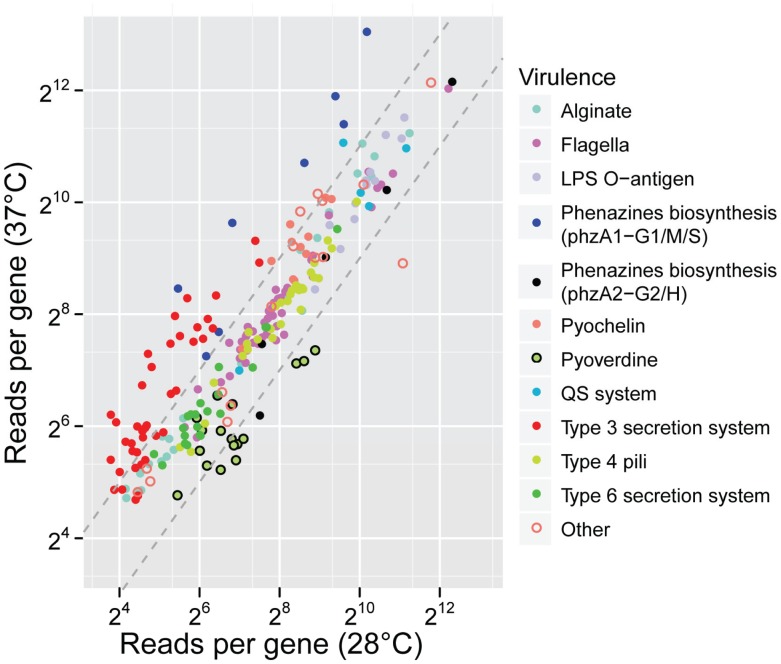
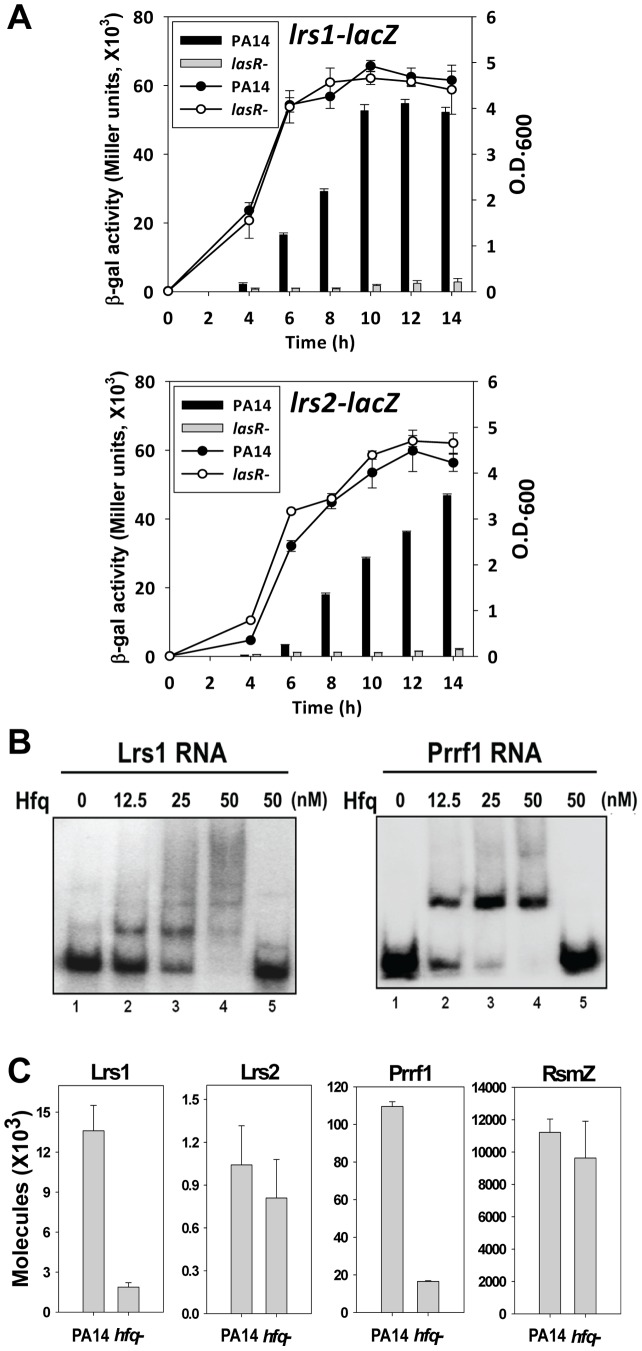
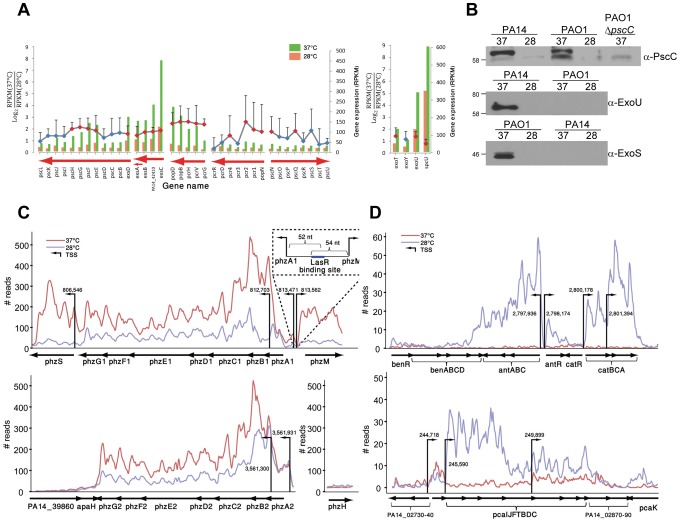
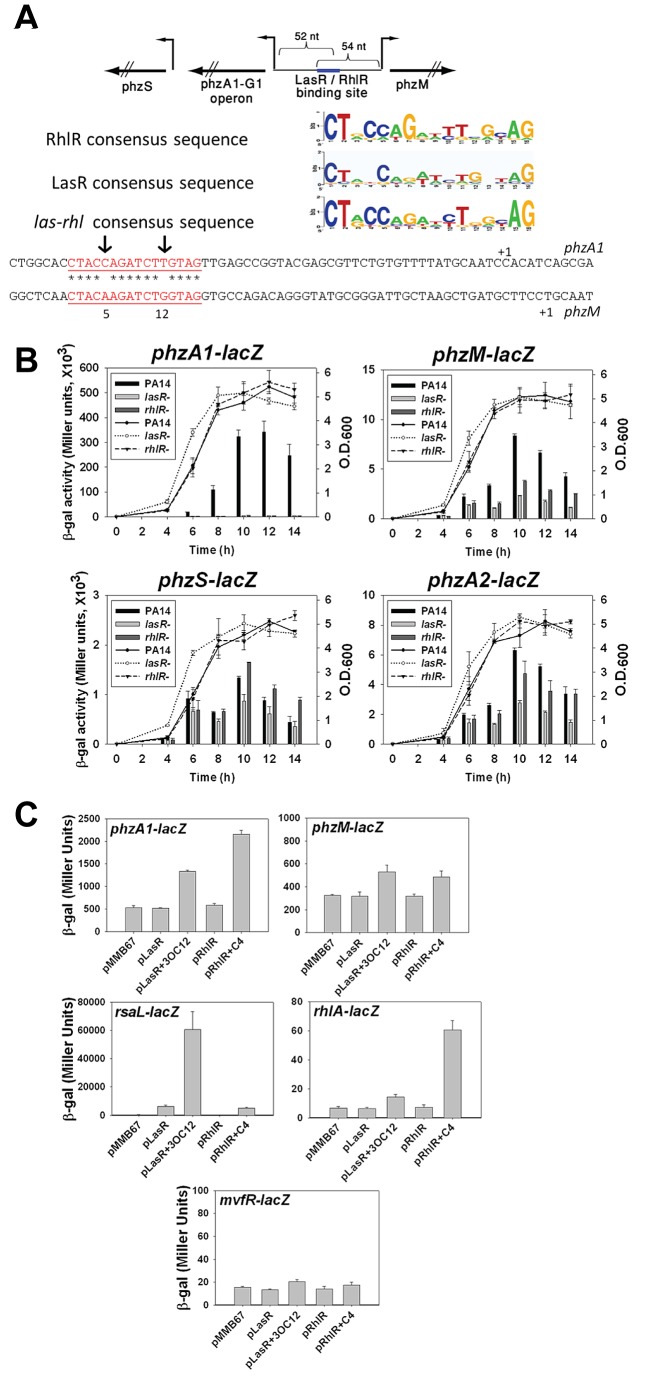
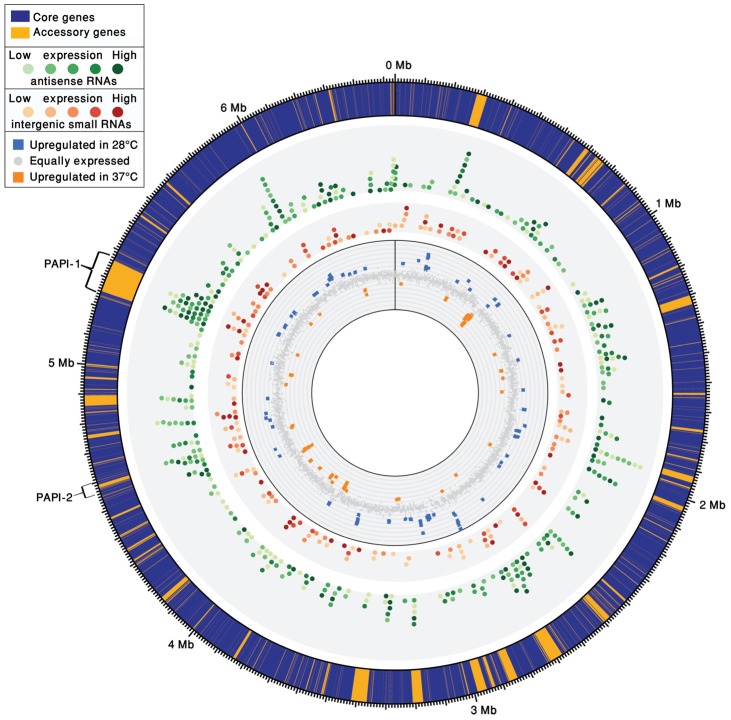
One of the hallmarks of opportunistic pathogens is their ability to adjust and respond to a wide range of environmental and host-associated conditions. The human pathogen Pseudomonas aeruginosa has an ability to thrive in a variety of hosts and cause a range of acute and chronic infections in individuals with impaired host defenses or cystic fibrosis. Here we report an in-depth transcriptional profiling of this organism when grown at host-related temperatures. Using RNA-seq of samples from P. aeruginosa grown at 28°C and 37°C we detected genes preferentially expressed at the body temperature of mammalian hosts, suggesting that they play a role during infection. These temperature-induced genes included the type III secretion system (T3SS) genes and effectors, as well as the genes responsible for phenazines biosynthesis. Using genome-wide transcription start site (TSS) mapping by RNA-seq we were able to accurately define the promoters and cis-acting RNA elements of many genes, and uncovered new genes and previously unrecognized non-coding RNAs directly controlled by the LasR quorum sensing regulator. Overall we identified 165 small RNAs and over 380 cis-antisense RNAs, some of which predicted to perform regulatory functions, and found that non-coding RNAs are preferentially localized in pathogenicity islands and horizontally transferred regions. Our work identifies regulatory features of P. aeruginosa genes whose products play a role in environmental adaption during infection and provides a reference transcriptional landscape for this pathogen.
机会性病原体的一个特点是它们能够调整和响应广泛的环境和宿主相关条件。人类病原体铜绿假单胞菌能够在各种宿主中茁壮成长,并在宿主防御功能受损或囊性纤维化的个体中引起一系列急性和慢性感染。在这里,我们报告了该生物体在与宿主相关的温度下生长时的深入转录谱。通过对在 28°C 和 37°C 下生长的铜绿假单胞菌样本进行 RNA-seq 检测,我们发现了在哺乳动物宿主体温下优先表达的基因,这表明它们在感染过程中发挥作用。这些温度诱导的基因包括 III 型分泌系统(T3SS)基因和效应子,以及负责吩嗪生物合成的基因。通过 RNA-seq 进行全基因组转录起始位点(TSS)图谱绘制,我们能够准确地定义许多基因的启动子和顺式作用 RNA 元件,并发现了新的基因和以前未被识别的由 LasR 群体感应调节剂直接控制的非编码 RNA。总的来说,我们鉴定了 165 个小 RNA 和超过 380 个顺式反义 RNA,其中一些预测具有调节功能,并且发现非编码 RNA 优先定位于致病性岛和水平转移区域。我们的工作确定了铜绿假单胞菌基因的调节特征,这些基因的产物在感染期间的环境适应中发挥作用,并为该病原体提供了参考转录景观。