Folkhälsan Institute of Genetics, Folkhälsan Research Center, Biomedicum Helsinki, Helsinki, Finland.
PLoS Genet. 2012 Sep;8(9):e1002921. doi: 10.1371/journal.pgen.1002921. Epub 2012 Sep 20.
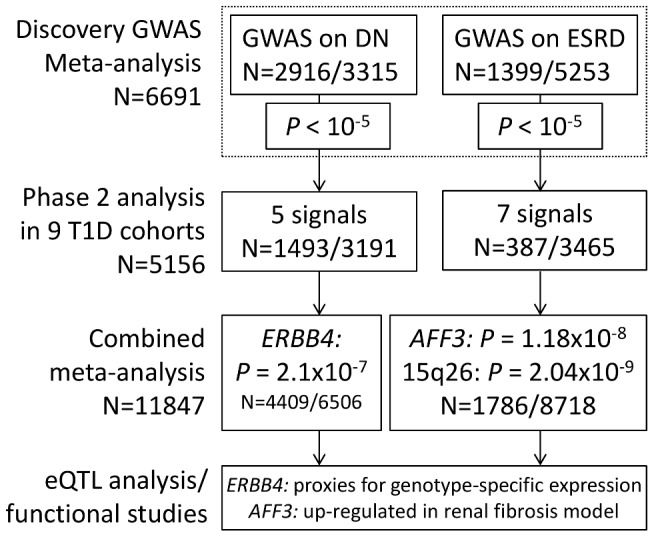
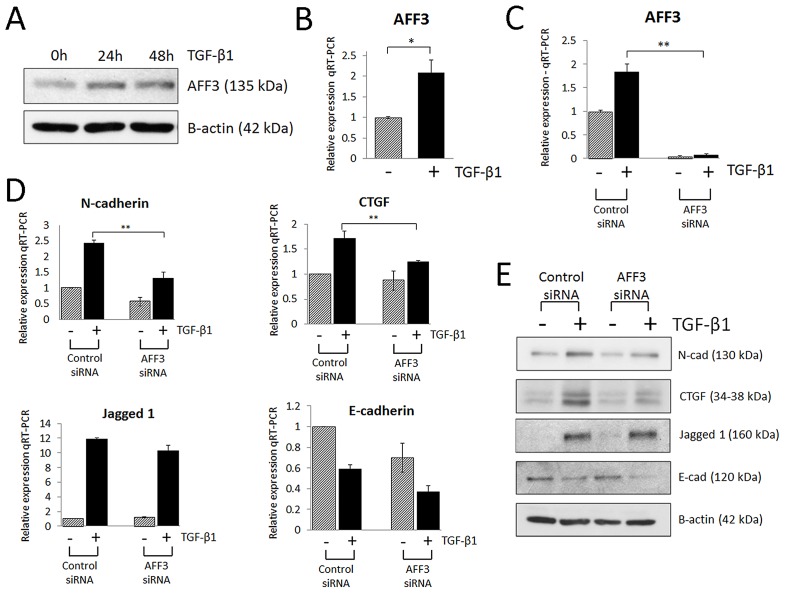
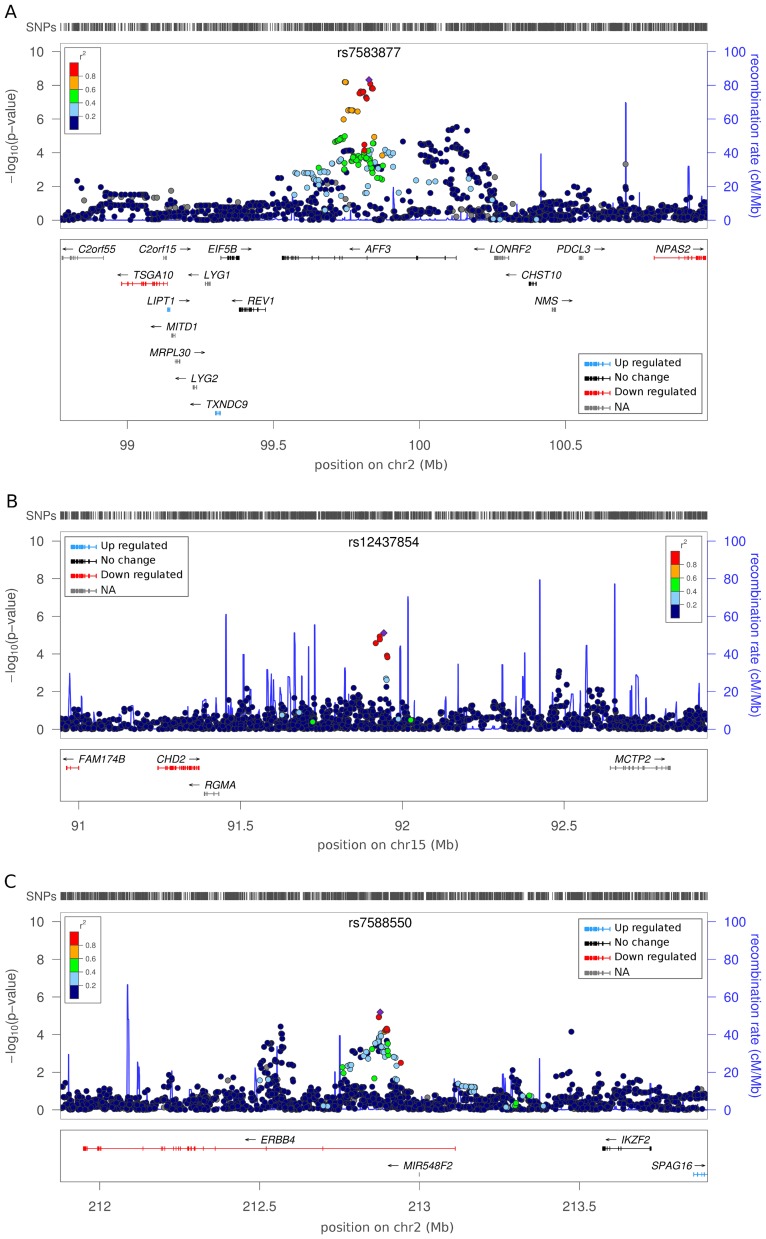
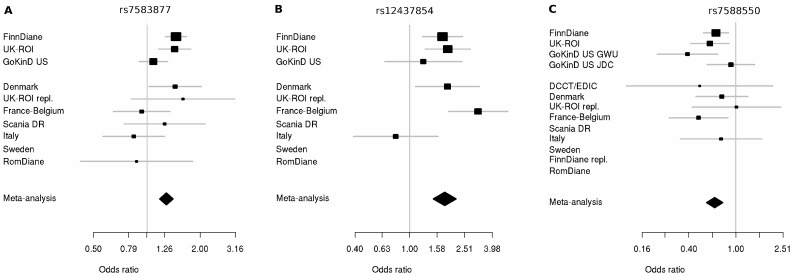
Diabetic kidney disease, or diabetic nephropathy (DN), is a major complication of diabetes and the leading cause of end-stage renal disease (ESRD) that requires dialysis treatment or kidney transplantation. In addition to the decrease in the quality of life, DN accounts for a large proportion of the excess mortality associated with type 1 diabetes (T1D). Whereas the degree of glycemia plays a pivotal role in DN, a subset of individuals with poorly controlled T1D do not develop DN. Furthermore, strong familial aggregation supports genetic susceptibility to DN. However, the genes and the molecular mechanisms behind the disease remain poorly understood, and current therapeutic strategies rarely result in reversal of DN. In the GEnetics of Nephropathy: an International Effort (GENIE) consortium, we have undertaken a meta-analysis of genome-wide association studies (GWAS) of T1D DN comprising ~2.4 million single nucleotide polymorphisms (SNPs) imputed in 6,691 individuals. After additional genotyping of 41 top ranked SNPs representing 24 independent signals in 5,873 individuals, combined meta-analysis revealed association of two SNPs with ESRD: rs7583877 in the AFF3 gene (P = 1.2 × 10(-8)) and an intergenic SNP on chromosome 15q26 between the genes RGMA and MCTP2, rs12437854 (P = 2.0 × 10(-9)). Functional data suggest that AFF3 influences renal tubule fibrosis via the transforming growth factor-beta (TGF-β1) pathway. The strongest association with DN as a primary phenotype was seen for an intronic SNP in the ERBB4 gene (rs7588550, P = 2.1 × 10(-7)), a gene with type 2 diabetes DN differential expression and in the same intron as a variant with cis-eQTL expression of ERBB4. All these detected associations represent new signals in the pathogenesis of DN.
糖尿病肾病,又称糖尿病性肾病(DN),是糖尿病的主要并发症之一,也是导致终末期肾病(ESRD)的主要原因,需要进行透析治疗或肾移植。除了降低生活质量外,DN 还导致了与 1 型糖尿病(T1D)相关的大量超额死亡率。尽管血糖水平在 DN 中起着至关重要的作用,但一部分血糖控制不佳的 T1D 患者不会发展为 DN。此外,强烈的家族聚集支持了 DN 的遗传易感性。然而,该疾病背后的基因和分子机制仍知之甚少,并且目前的治疗策略很少能逆转 DN。在“肾病遗传学:国际合作”(GENIE)联盟中,我们对包含 6691 个人的约 240 万个单核苷酸多态性(SNP)进行了 T1D DN 的全基因组关联研究(GWAS)的荟萃分析。在 5873 个人中对代表 24 个独立信号的 41 个排名最高的 SNP 进行了额外的基因分型后,合并的荟萃分析显示,有两个 SNP 与 ESRD 相关:AFF3 基因中的 rs7583877(P = 1.2 × 10(-8))和染色体 15q26 上 RGMA 和 MCTP2 基因之间的基因间 SNP rs12437854(P = 2.0 × 10(-9))。功能数据表明,AFF3 通过转化生长因子-β(TGF-β1)途径影响肾小管纤维化。与作为主要表型的 DN 相关性最强的是 ERBB4 基因中的内含子 SNP(rs7588550,P = 2.1 × 10(-7)),该基因与 2 型糖尿病 DN 差异表达有关,并且与 ERBB4 的顺式-eQTL 表达的变体位于同一内含子中。所有这些检测到的关联都代表了 DN 发病机制中的新信号。