Department of Molecular, Cellular and Developmental Biology, Yale University, New Haven, Connecticut, United States of America.
PLoS One. 2012;7(9):e41804. doi: 10.1371/journal.pone.0041804. Epub 2012 Sep 13.
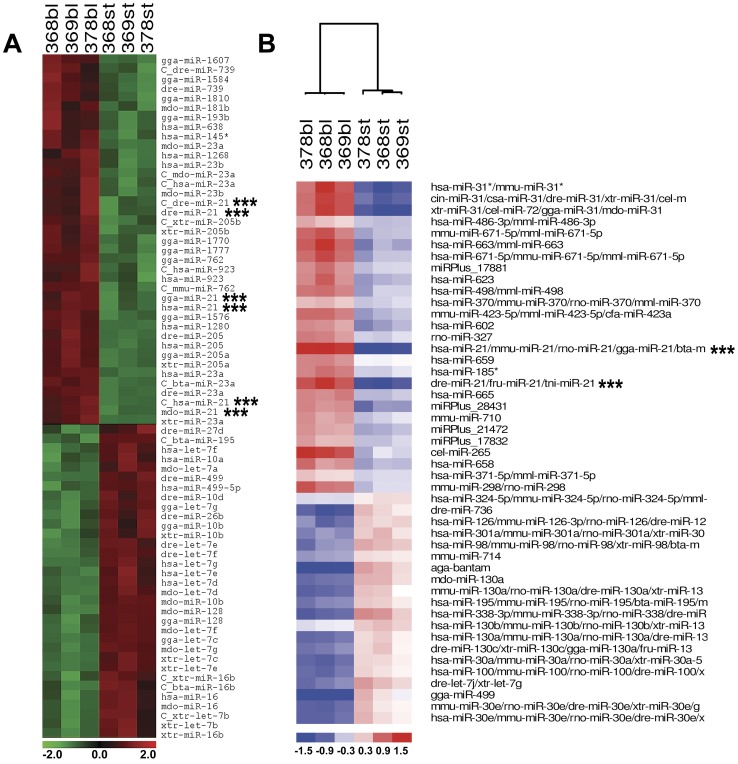
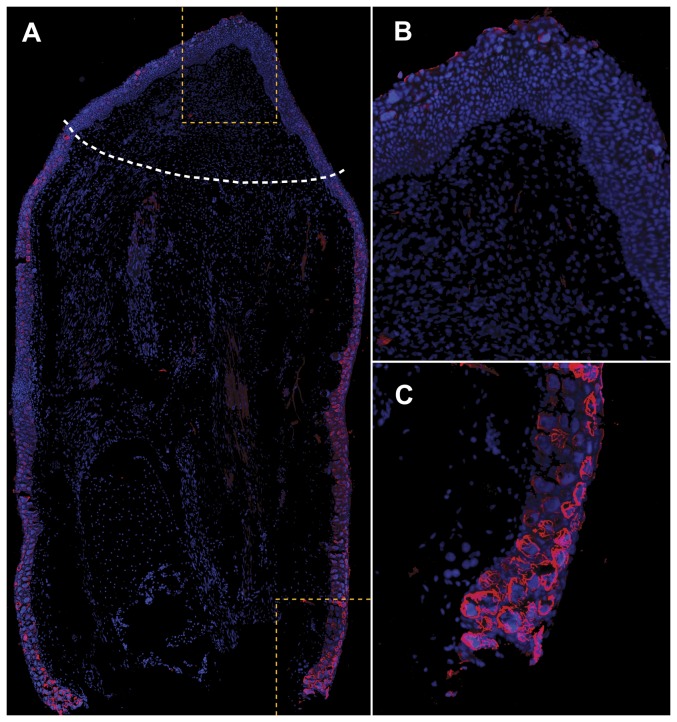
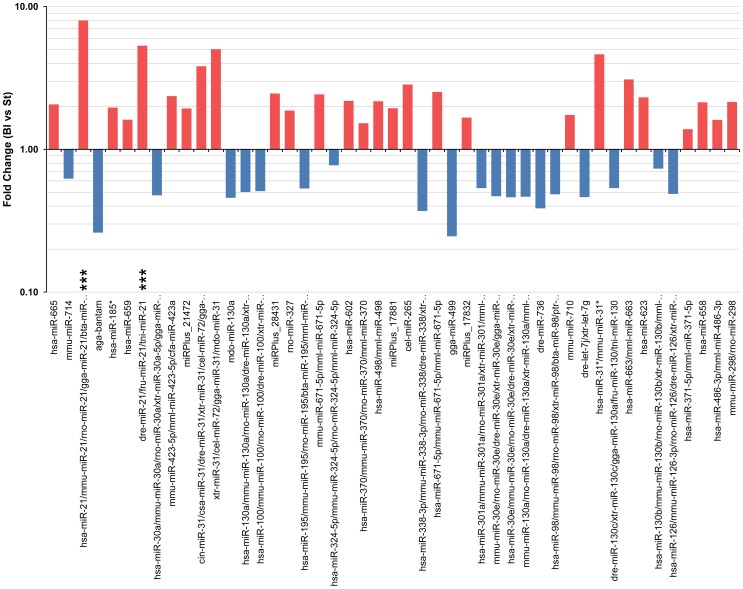
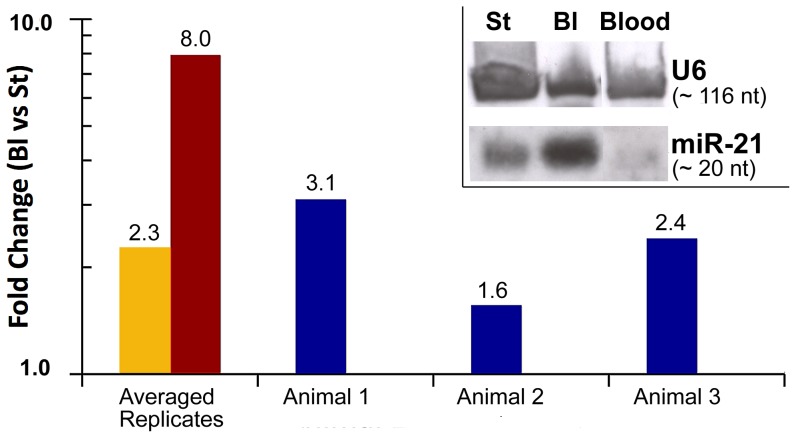
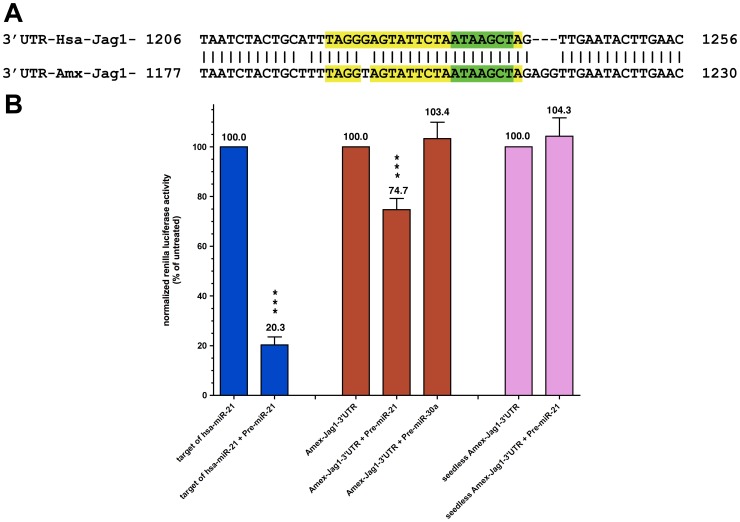
Among vertebrates, salamanders stand out for their remarkable capacity to quickly regrow a myriad of tissues and organs after injury or amputation. The limb regeneration process in axolotls (Ambystoma mexicanum) has been well studied for decades at the cell-tissue level. While several developmental genes are known to be reactivated during this epimorphic process, less is known about the role of microRNAs in urodele amphibian limb regeneration. Given the compelling evidence that many microRNAs tightly regulate cell fate and morphogenetic processes through development and adulthood by modulating the expression (or re-expression) of developmental genes, we investigated the possibility that microRNA levels change during limb regeneration. Using two different microarray platforms to compare the axolotl microRNA expression between mid-bud limb regenerating blastemas and non-regenerating stump tissues, we found that miR-21 was overexpressed in mid-bud blastemas compared to stump tissue. Mature A. mexicanum ("Amex") miR-21 was detected in axolotl RNA by Northern blot and differential expression of Amex-miR-21 in blastema versus stump was confirmed by quantitative RT-PCR. We identified the Amex Jagged1 as a putative target gene for miR-21 during salamander limb regeneration. We cloned the full length 3'UTR of Amex-Jag1, and our in vitro assays demonstrated that its single miR-21 target recognition site is functional and essential for the response of the Jagged1 gene to miR-21 levels. Our findings pave the road for advanced in vivo functional assays aimed to clarify how microRNAs such as miR-21, often linked to pathogenic cell growth, might be modulating the redeployment of developmental genes such as Jagged1 during regenerative processes.
在脊椎动物中,蝾螈以其在受伤或截肢后快速再生大量组织和器官的非凡能力而脱颖而出。蝾螈(Ambystoma mexicanum)的肢体再生过程在细胞组织水平上已经研究了几十年。虽然已知有几个发育基因在这个表型形成过程中被重新激活,但在有尾两栖动物肢体再生中,miRNA 的作用知之甚少。鉴于许多 miRNA 通过调节发育基因的表达(或重新表达)来紧密调控细胞命运和形态发生过程的有力证据,我们研究了 miRNA 水平在肢体再生过程中是否发生变化的可能性。使用两种不同的微阵列平台比较中芽肢再生芽基和非再生残桩组织之间的蝾螈 miRNA 表达,我们发现 miR-21 在中芽芽基中表达上调与残桩组织相比。Northern blot 检测到成熟的 A. mexicanum(“Amex”)miR-21 在蝾螈 RNA 中,通过定量 RT-PCR 证实了芽基与残桩之间 Amex-miR-21 的差异表达。我们确定 A. mexicanum Jagged1 是蝾螈肢体再生过程中 miR-21 的一个潜在靶基因。我们克隆了 Amex-Jag1 的全长 3'UTR,我们的体外实验表明,其单个 miR-21 靶识别位点是功能性的,对于 Jagged1 基因对 miR-21 水平的反应至关重要。我们的发现为旨在阐明像 miR-21 这样的 microRNAs 如何通过重新分配发育基因(如 Jagged1)来调节再生过程铺平了道路,这些 microRNAs 通常与病理性细胞生长有关。