Division of Behavioural Neuroscience, Florey Neuroscience Institutes, University of Melbourne, Melbourne, Victoria, Australia.
PLoS One. 2012;7(9):e44790. doi: 10.1371/journal.pone.0044790. Epub 2012 Sep 18.
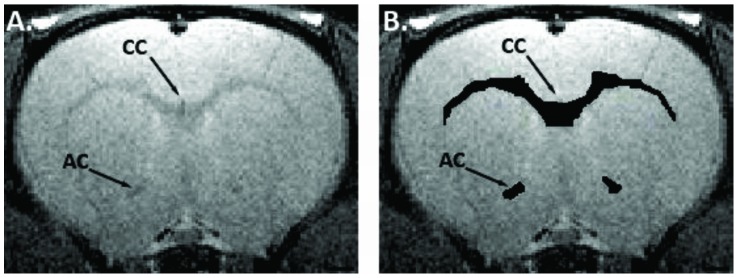
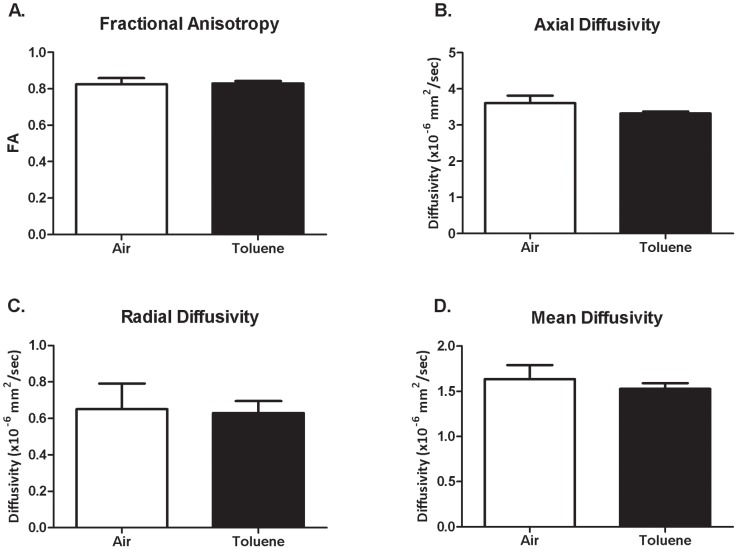
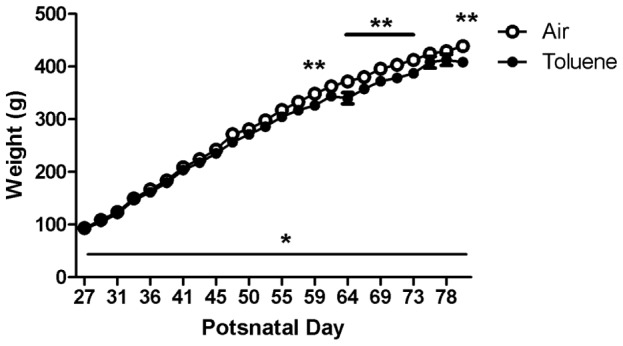
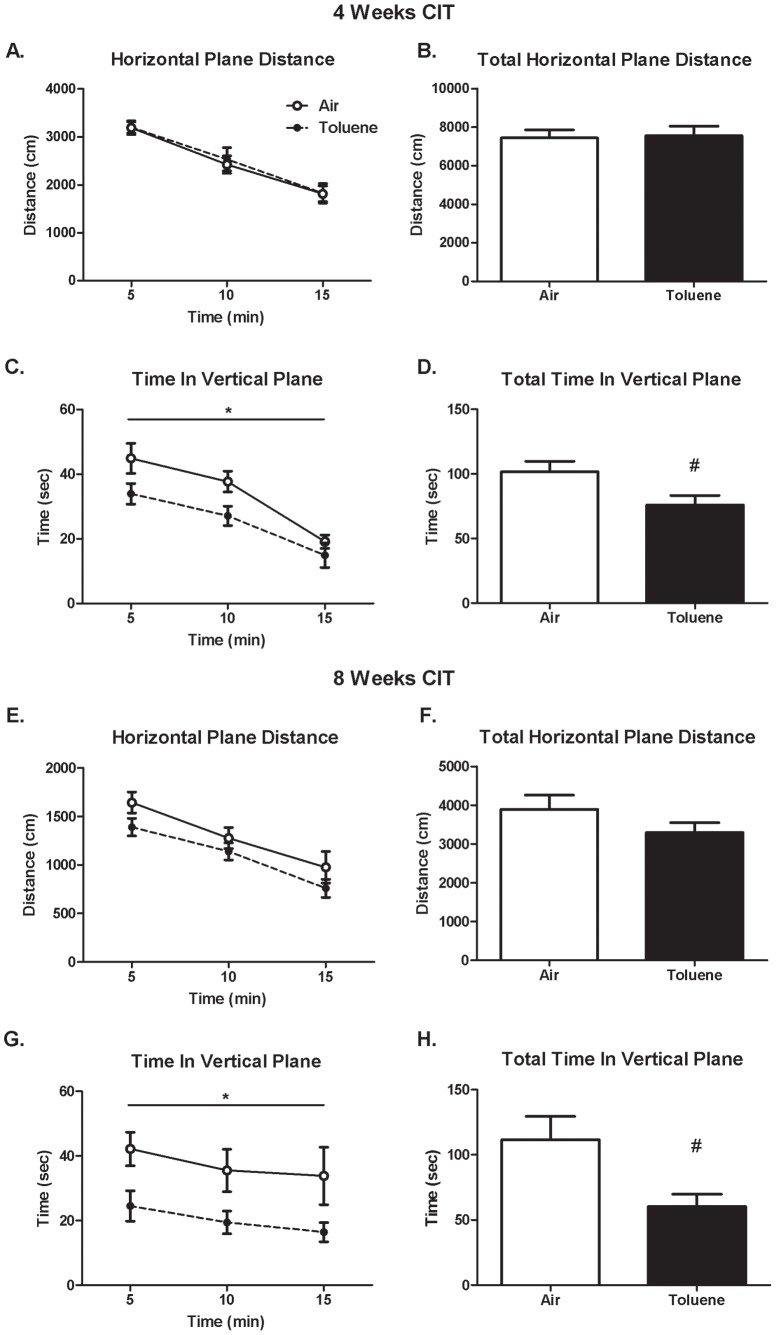
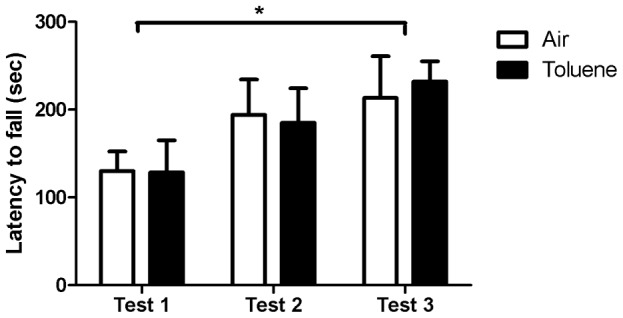
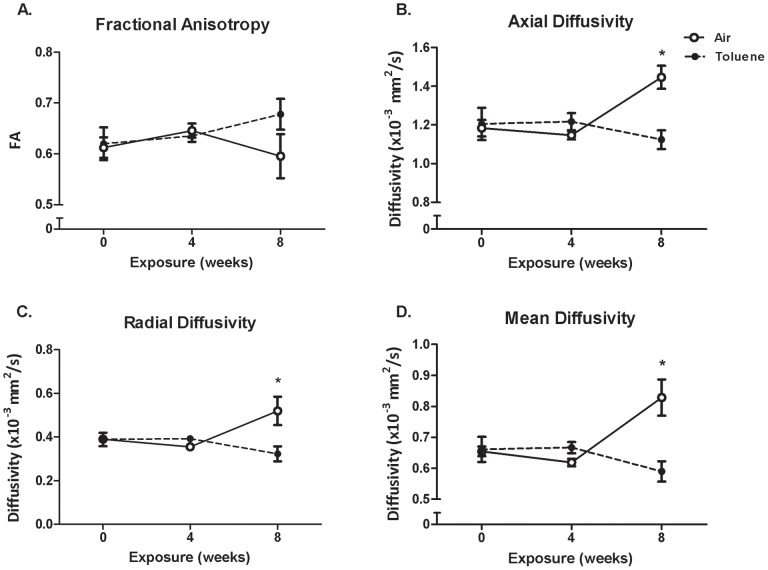
Inhalant misuse is common during adolescence, with ongoing chronic misuse associated with neurobiological and cognitive abnormalities. While human imaging studies consistently report white matter abnormalities among long-term inhalant users, longitudinal studies have been lacking with limited data available regarding the progressive nature of such abnormalities, including the potential for recovery following periods of sustained abstinence. We exposed adolescent male Wistar rats (postnatal day 27) to chronic intermittent inhaled toluene (3,000 ppm) for 1 hour/day, 3 times/week for 8 weeks to model abuse patterns observed in adolescent and young adult human users. This dosing regimen resulted in a significant retardation in weight gain during the exposure period (p<0.05). In parallel, we performed longitudinal magnetic resonance imaging (T₂-weighted) and diffusion tensor imaging prior to exposure, and after 4 and 8 weeks, to examine the integrity of white matter tracts, including the anterior commissure and corpus callosum. We also conducted imaging after 8 weeks of abstinence to assess for potential recovery. Chronic intermittent toluene exposure during adolescence and early adulthood resulted in white matter abnormalities, including a decrease in axial (p<0.05) and radial (p<0.05) diffusivity. These abnormalities appeared region-specific, occurring in the anterior commissure but not the corpus callosum and were not present until after at least 4 weeks of exposure. Toluene-induced effects on both body weight and white matter parameters recovered following abstinence. Behaviourally, we observed a progressive decrease in rearing activity following toluene exposure but no difference in motor function, suggesting cognitive function may be more sensitive to the effects of toluene. Furthermore, deficits in rearing were present by 4 weeks suggesting that toluene may affect behaviour prior to detectable white matter abnormalities. Consequently, exposure to inhalants that contain toluene during adolescence and early adulthood appear to differentially affect white matter maturation and behavioural outcomes, although recovery can occur following abstinence.
青少年时期吸入剂滥用较为常见,持续的慢性滥用与神经生物学和认知异常有关。虽然人类影像学研究一致报告长期吸入剂使用者存在白质异常,但缺乏纵向研究,关于这种异常的进展性质,包括在持续禁欲期后恢复的可能性,可用的数据有限。我们使青春期雄性 Wistar 大鼠(出生后第 27 天)每天吸入 3000ppm 的慢性间歇性甲苯 1 小时,每周 3 次,共 8 周,以模拟青少年和年轻成人人类使用者中观察到的滥用模式。这种给药方案导致暴露期间体重增加显著延迟(p<0.05)。与此同时,我们在暴露前、暴露后 4 周和 8 周进行了纵向磁共振成像(T₂ 加权)和弥散张量成像,以检查白质束的完整性,包括前连合和胼胝体。我们还在 8 周禁欲后进行了影像学检查,以评估潜在的恢复情况。青春期和成年早期的慢性间歇性甲苯暴露导致白质异常,包括轴向(p<0.05)和径向(p<0.05)扩散率降低。这些异常似乎具有区域特异性,仅在前连合发生,而不在胼胝体发生,并且直到暴露至少 4 周后才出现。甲苯对体重和白质参数的影响在禁欲后恢复。行为上,我们观察到甲苯暴露后活动次数逐渐减少,但运动功能没有差异,这表明认知功能可能对甲苯的影响更为敏感。此外,4 周后出现了活动减少的现象,这表明甲苯可能在白质异常出现之前就影响了行为。因此,在青少年和成年早期接触含有甲苯的吸入剂似乎会对白质成熟和行为结果产生不同的影响,尽管禁欲后可以恢复。