Dalian Natural History Museum, Dalian, Liaoning, China.
PLoS One. 2012;7(9):e45203. doi: 10.1371/journal.pone.0045203. Epub 2012 Sep 27.
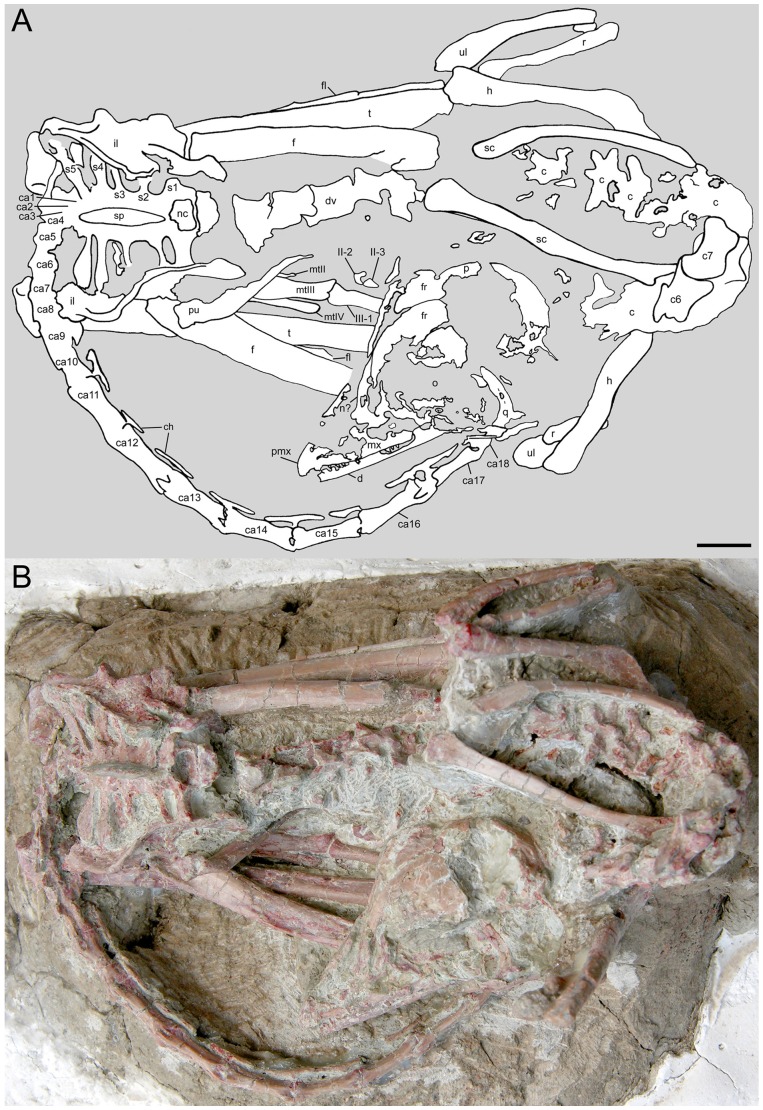
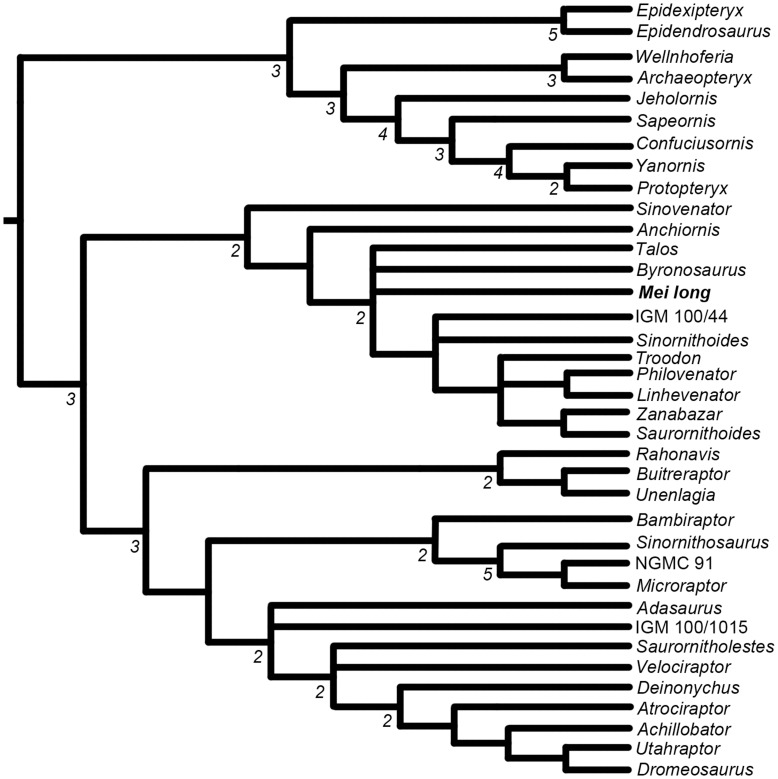
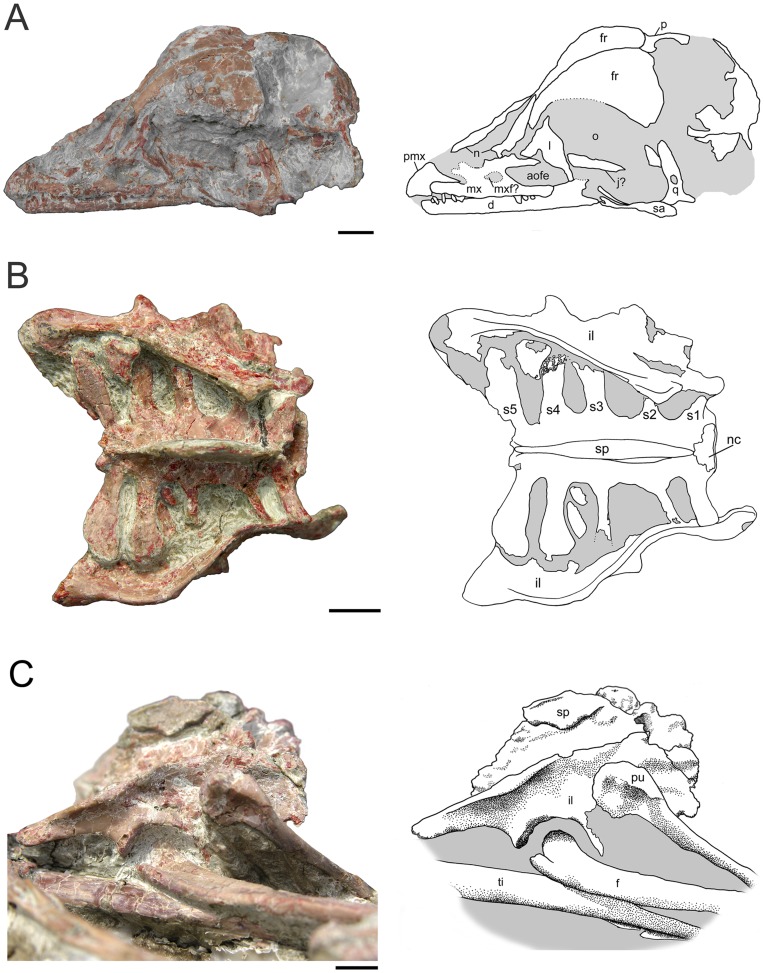
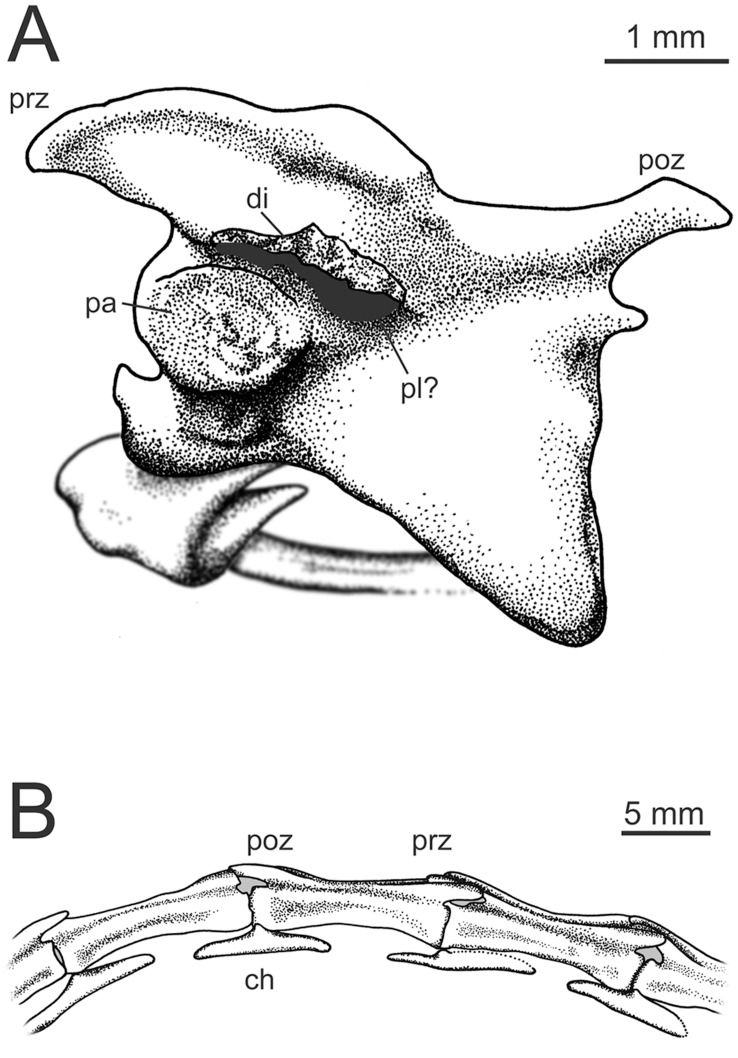
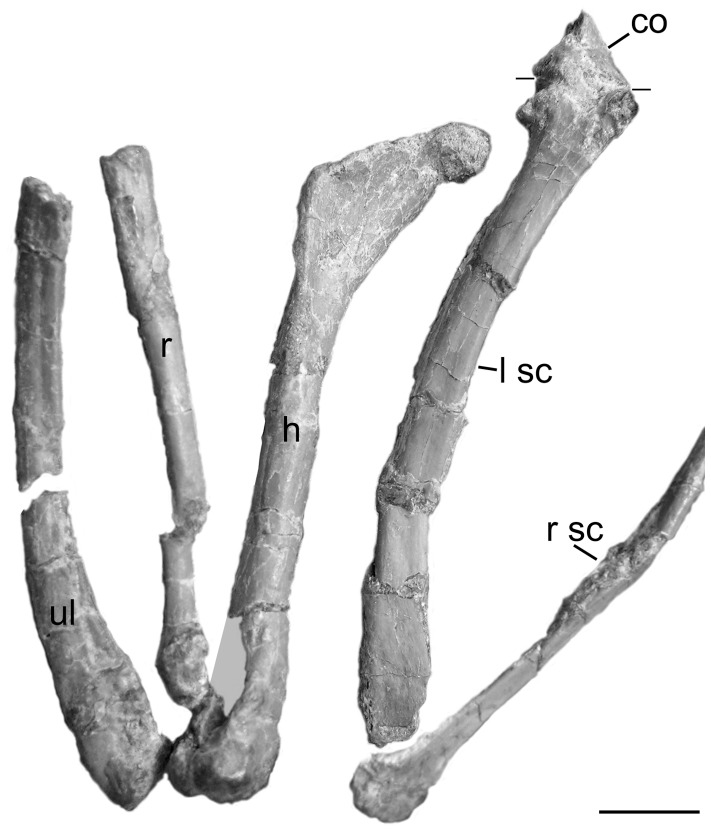
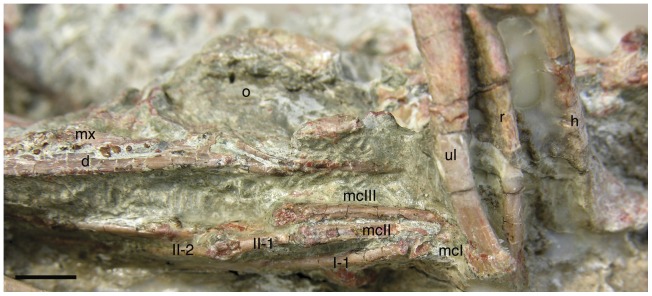
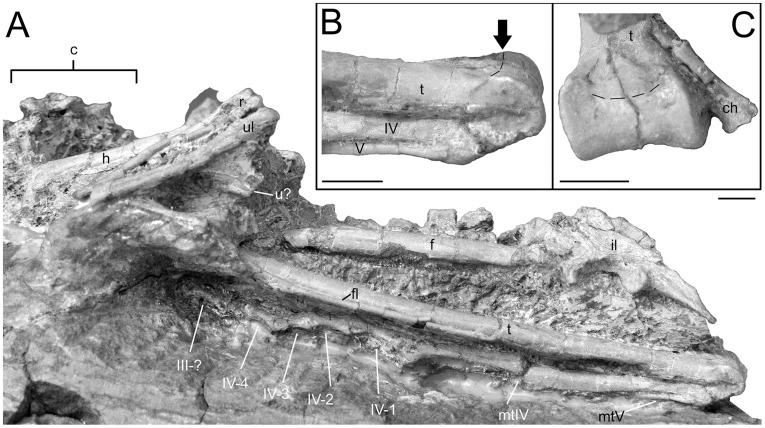
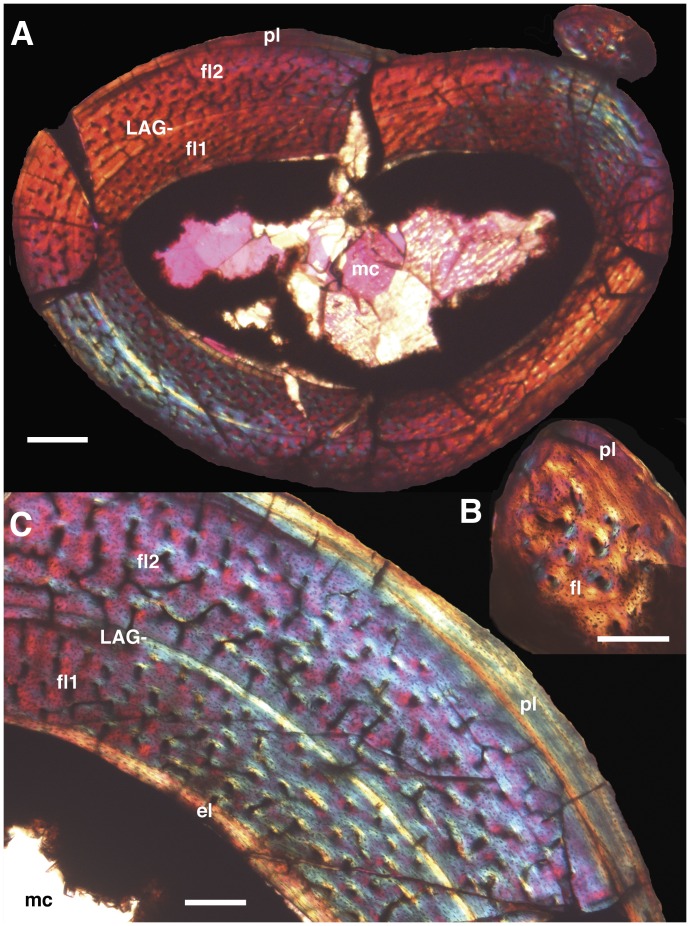
A second nearly complete, articulated specimen of the basal troodontid Mei long (DNHM D2154) is reported from the Early Cretaceous (Hauterivian-Valanginian) lower Yixian Formation, Liaoning Province, China. New diagnostic features of Mei long are identified, including: a uniquely shaped maxilla, low with small, low maxillary fenestra; sacrum with an extremely wide caudal portion and elongate 4(th) and 5(th) sacral processes; and a large distal articular surface on the tibiotarsus which continues caudally on the tibia. A phylogenetic analysis including new data from the second specimen recovered Mei as a basal troodontid, in keeping with previous analyses. Although the skeleton exhibits several juvenile-like features including free cervical ribs, unfused frontals and nasals, and a short snouted skull, other attributes, full fusion of all neurocentral synostoses and the sacrum, and dense exteriors to cortical bone, suggest a small, mature individual. Microscopic examination of tibia and fibula histology confirms maturity and suggests an individual greater than two years old with slowed growth. Despite being one of the smallest dinosaurs, Mei long exhibits multi-year growth and cortical bone consisting largely of fibro-lamellar tissue marked by lines of arrested growth as in much larger and more basal theropods. This Mei long specimen lies in a similar but mirrored sleeping position to that of the holotype, strengthening the hypothesis that both specimens were preserved in a stereotypical life position. Like many Liaoning specimens, the new specimen also lacks extensive taphonomic and stratigraphic data, making further behavioral inference problematic.
来自中国辽宁省早白垩世(豪特里维阶-凡蓝今阶)下部义县组的第二个近乎完整的、关节相连的 basal troodontid 美颌龙(DNHM D2154)标本被报道。鉴定出美颌龙的新的诊断特征,包括:独特形状的上颌骨,低矮,具有小的、低的上颌骨窗;骶骨具有非常宽的尾部部分和拉长的第 4 和第 5 骶骨突;以及胫骨上的大远端关节面,在胫骨上向尾部延伸。包括来自第二个标本的新数据的系统发育分析恢复了美颌龙作为 basal troodontid 的地位,与以前的分析一致。尽管骨骼表现出几种幼年特征,包括游离的颈椎肋骨、未融合的额骨和鼻骨,以及短吻的头骨,但其他属性,包括所有神经中枢的融合和骶骨的融合,以及皮质骨的密集外部,表明这是一个小型的、成熟的个体。对胫骨和腓骨组织学的微观检查证实了成熟度,并表明这是一个年龄大于两岁、生长速度较慢的个体。尽管美颌龙是最小的恐龙之一,但它表现出多年的生长和皮质骨主要由纤维-层状组织组成,这与更大和更基础的兽脚亚目恐龙一样,有生长停止线。这个美颌龙标本躺在与正型标本相似但镜像的睡眠位置,这加强了两个标本都保存在一个典型的生活位置的假设。与许多辽宁标本一样,新标本也缺乏广泛的埋藏学和地层学数据,使得进一步的行为推断变得困难。