Department of Pharmacology, Molecular Biophysics Graduate Program, Green Center for Systems Biology, University of Texas Southwestern Medical Center, Dallas, TX, USA.
PLoS One. 2012;7(9):e45651. doi: 10.1371/journal.pone.0045651. Epub 2012 Sep 20.
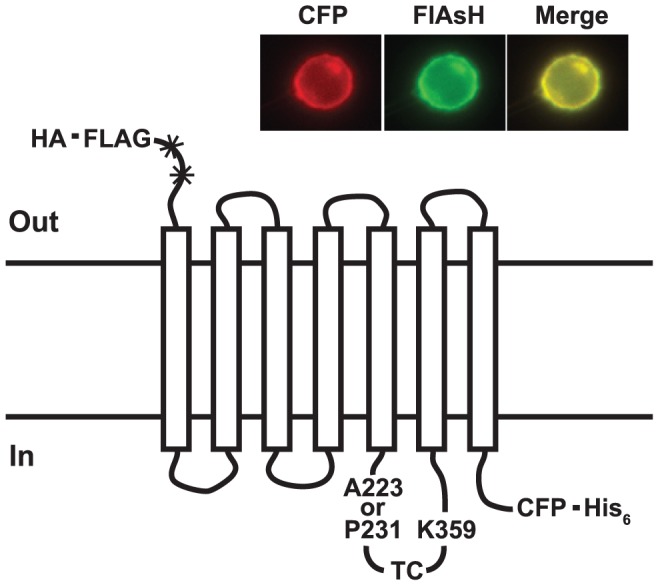
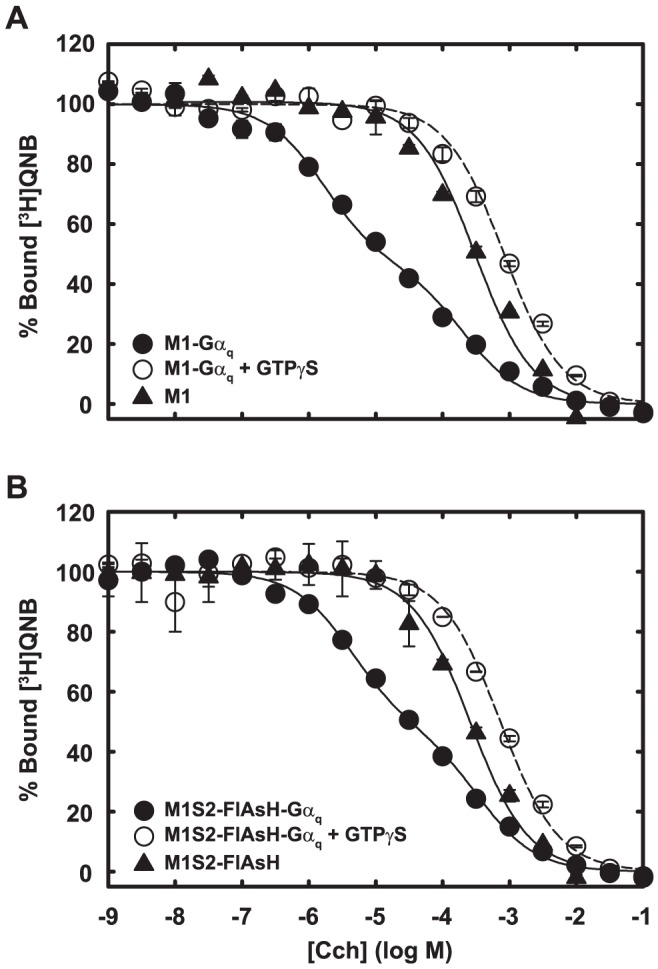
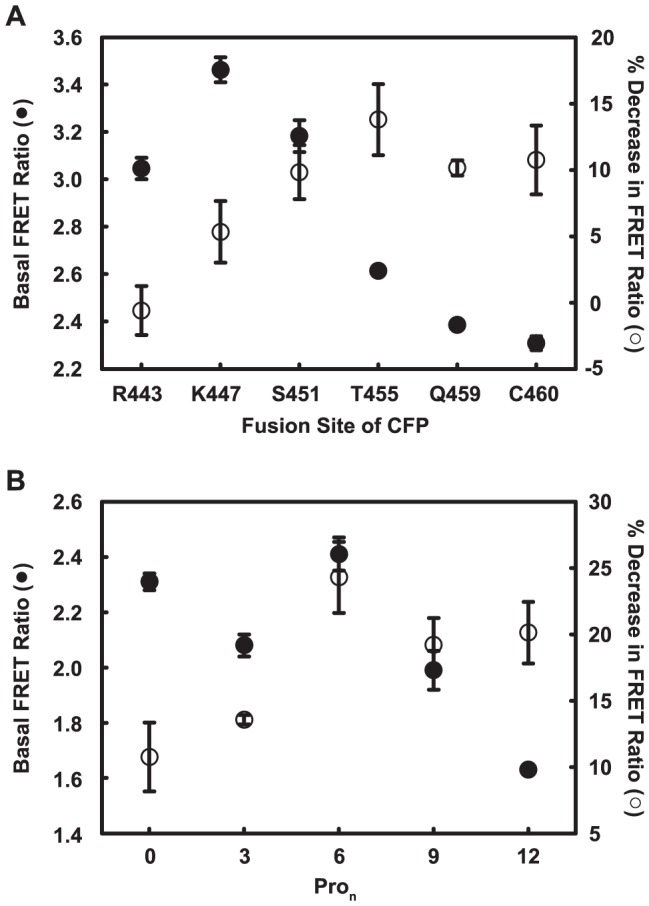
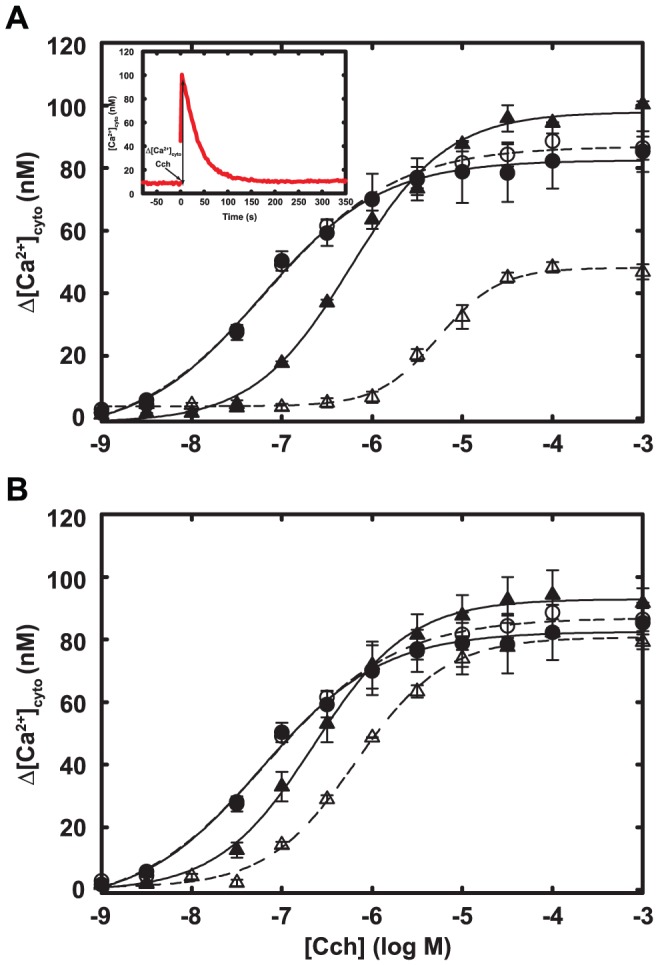
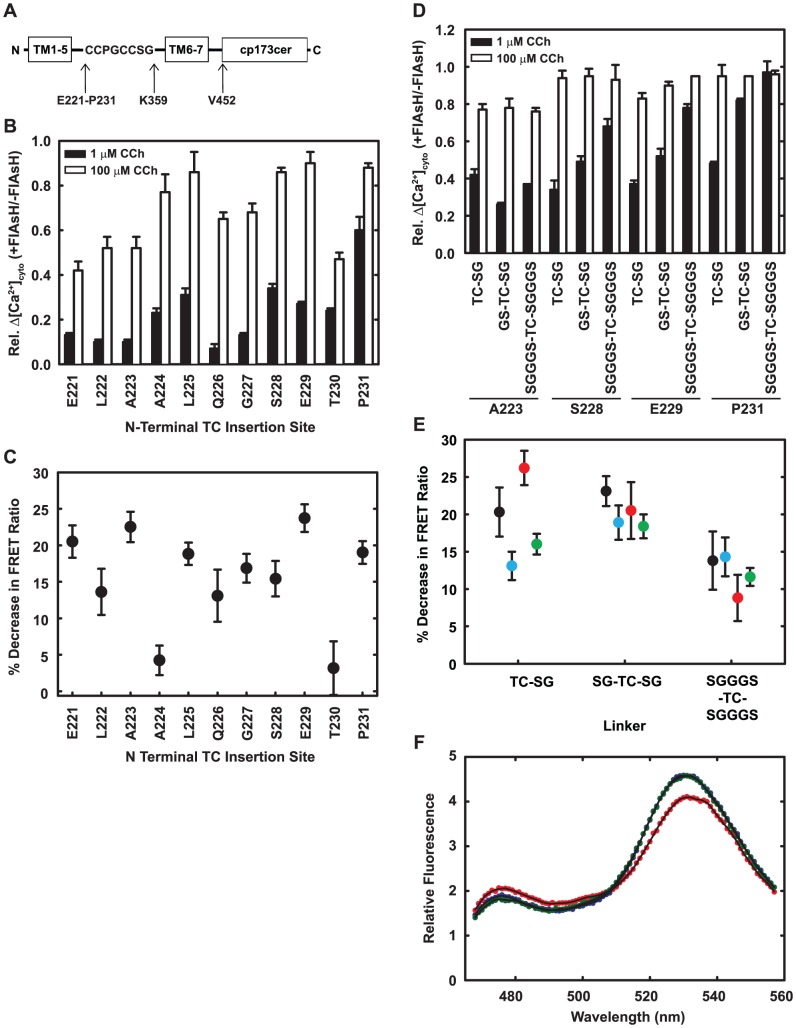
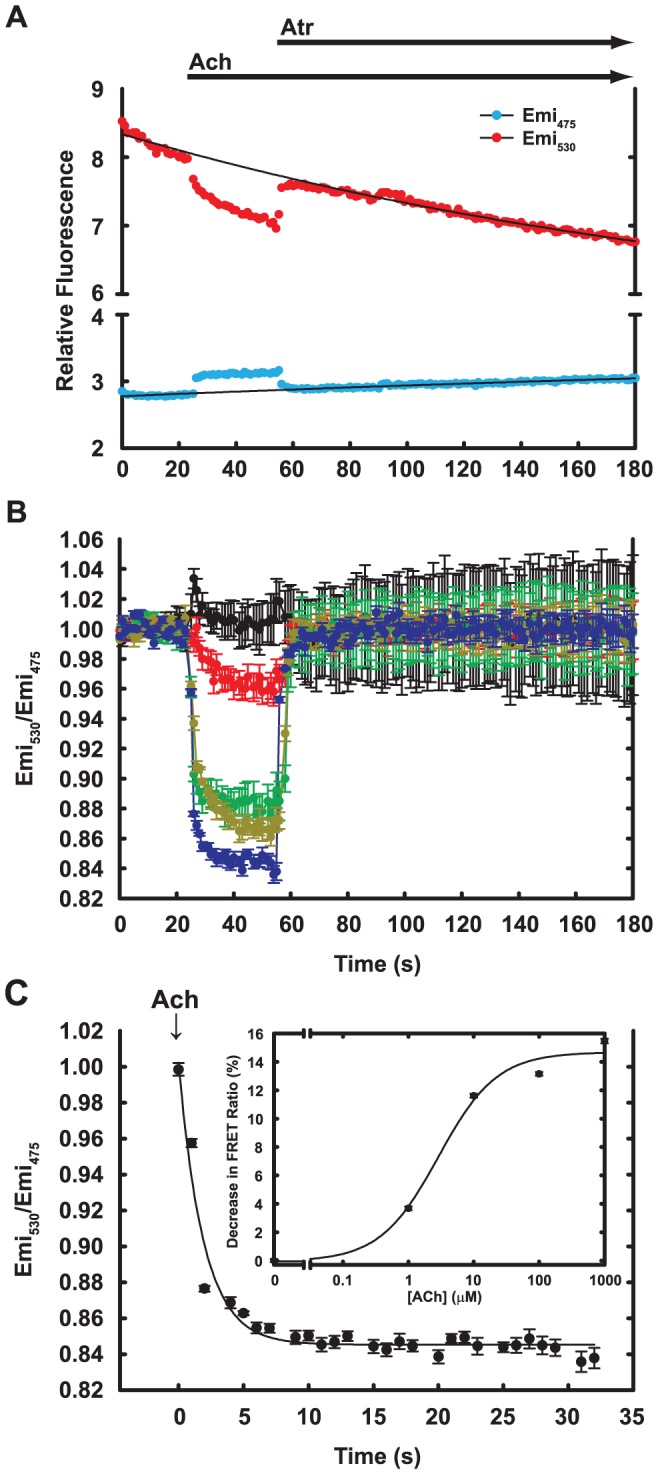
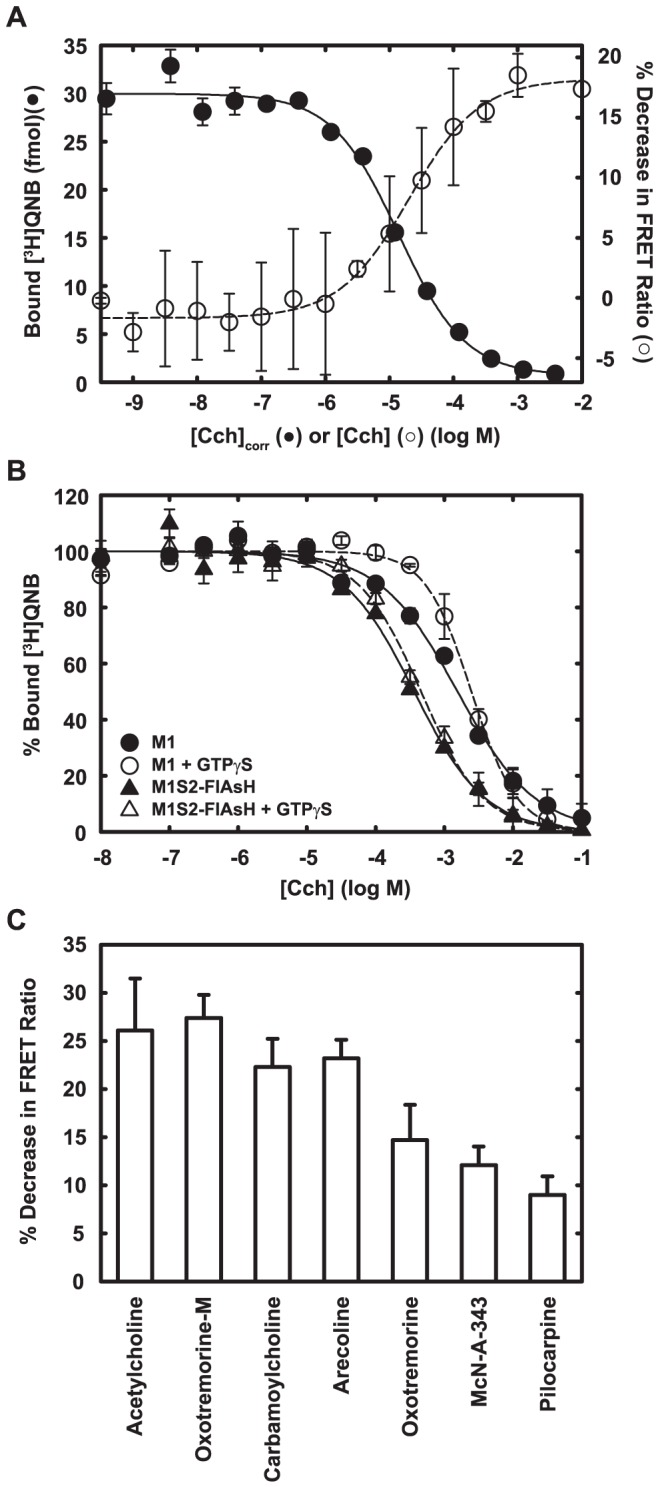
We describe the design, construction and validation of a fluorescence sensor to measure activation by agonist of the m1 muscarinic cholinergic receptor, a prototypical class I G(q)-coupled receptor. The sensor uses an established general design in which Förster resonance energy transfer (FRET) from a circularly permuted CFP mutant to FlAsH, a selectively reactive fluorescein, is decreased 15-20% upon binding of a full agonist. Notably, the sensor displays essentially wild-type capacity to catalyze activation of Gα(q), and the purified and reconstituted sensor displays appropriate regulation of affinity for agonists by G(q). We describe the strategies used to increase the agonist-driven change in FRET while simultaneously maintaining regulatory interactions with Gα(q), in the context of the known structures of Class I G protein-coupled receptors. The approach should be generally applicable to other Class I receptors which include numerous important drug targets.
我们描述了一种荧光传感器的设计、构建和验证,该传感器用于测量激动剂对 m1 毒蕈碱型乙酰胆碱受体的激活,m1 毒蕈碱型乙酰胆碱受体是典型的 I 类 G(q)偶联受体。该传感器采用了一种已建立的通用设计,其中来自环状排列 CFP 突变体的Förster 共振能量转移(FRET)到 FlAsH,一种选择性反应的荧光素,在与完全激动剂结合时减少 15-20%。值得注意的是,该传感器显示出基本上与野生型相同的能力来催化 Gα(q)的激活,并且纯化和重组的传感器显示出适当的通过 G(q)调节对激动剂的亲和力。我们描述了在已知的 I 类 G 蛋白偶联受体结构的背景下,用于增加激动剂驱动的 FRET 变化的同时,同时保持与 Gα(q)的调节相互作用的策略。该方法应适用于其他 I 类受体,其中包括许多重要的药物靶点。