Cancer Chemotherapy Center, Japanese Foundation for Cancer Research, Tokyo, Japan.
PLoS One. 2012;7(9):e45845. doi: 10.1371/journal.pone.0045845. Epub 2012 Sep 24.
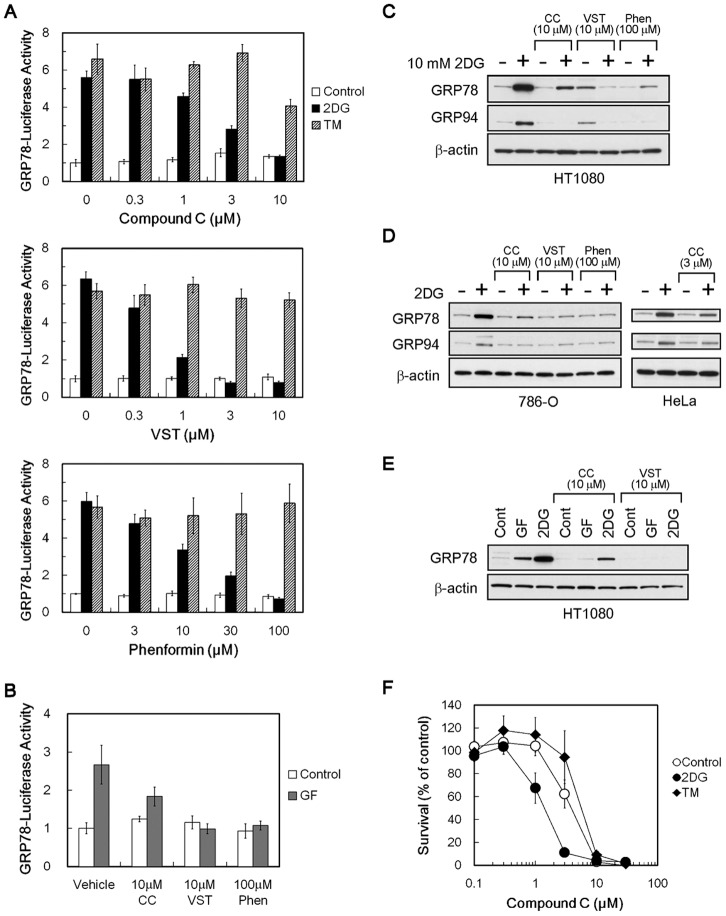
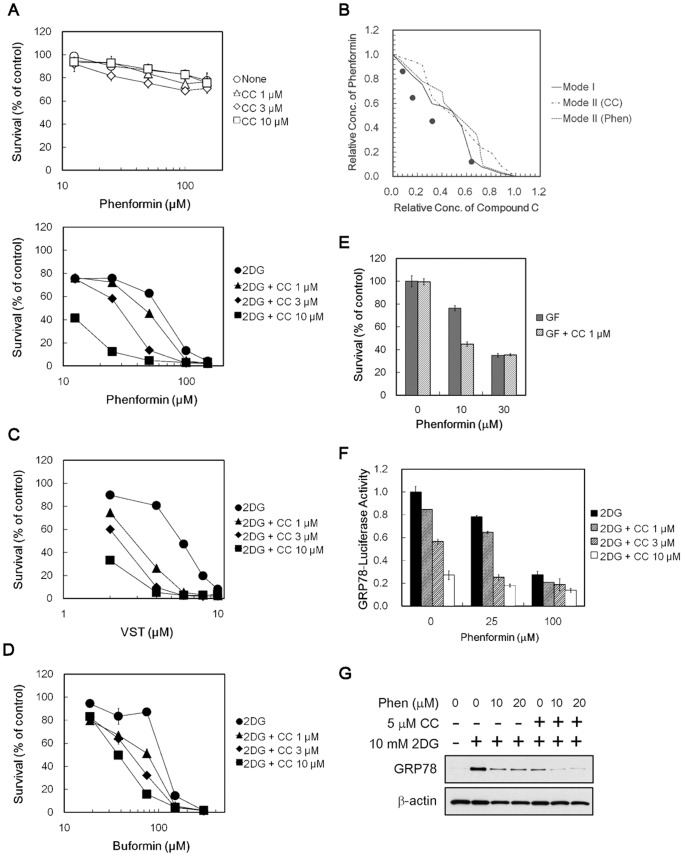
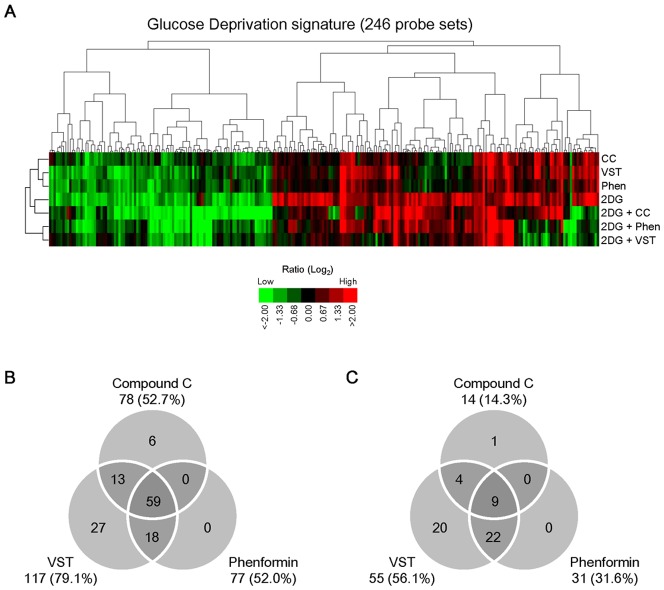
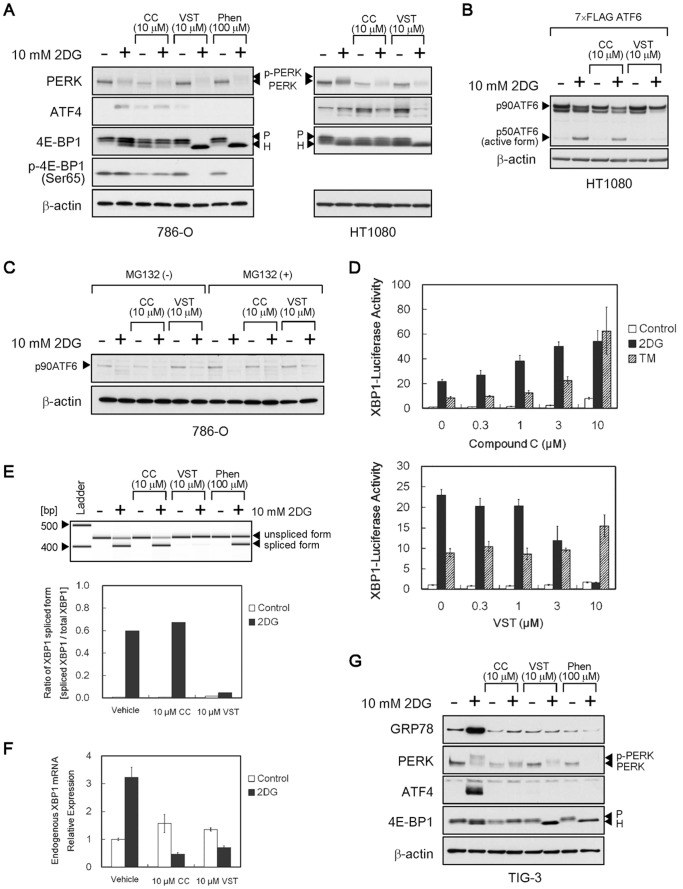
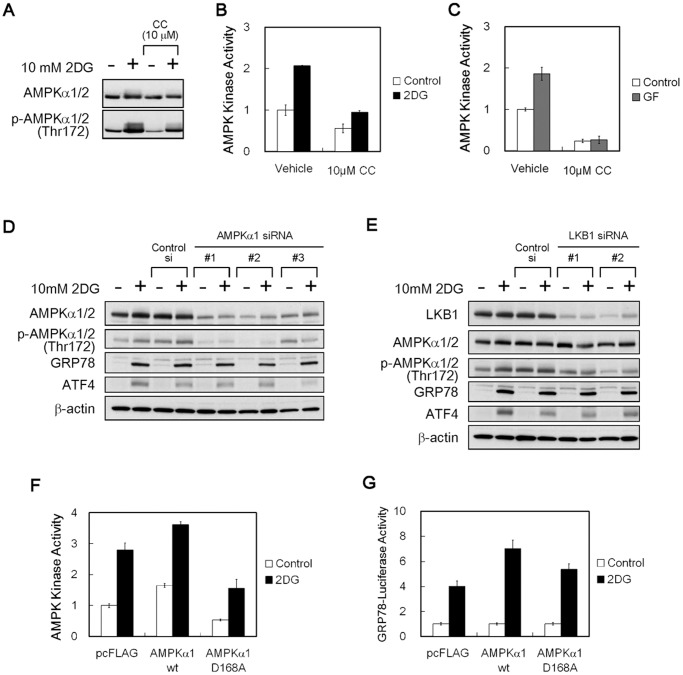
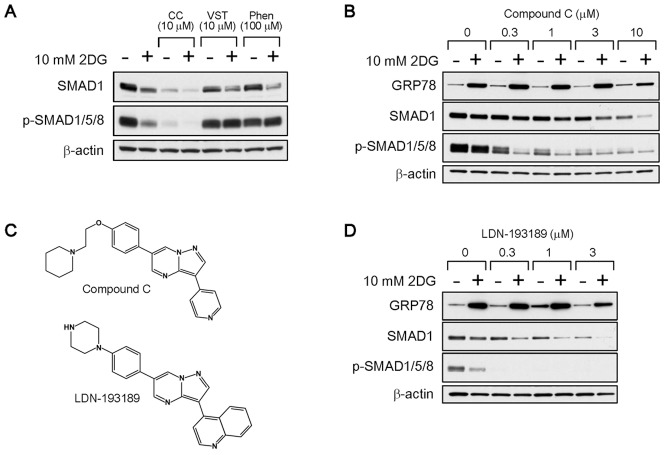
Inhibiting the unfolded protein response (UPR) can be a therapeutic approach, especially for targeting the tumor microenvironment. Here, we show that compound C (also known as dorsomorphin), a small-molecule inhibitor of AMP-activated protein kinase (AMPK) and bone morphogenetic protein (BMP) signaling, inhibit the UPR-induced transcription program depending on the glucose deprivation conditions. We found that compound C prevented UPR marker glucose-regulated protein 78 (GRP78) accumulation and exerted enhanced cytotoxicity during glucose deprivation. Gene expression profiling, together with biochemical analysis, revealed that compound C had a unique mode of action to suppress the transcriptional activation of UPR-targeted genes, as compared with the classic UPR inhibitors versipelostatin and biguanides. Surprisingly, the UPR-inhibiting activity of compound C was not associated with either AMPK or BMP signaling inhibition. We further found that combination treatments of compound C and the classic UPR inhibitors resulted in synergistic cell death with UPR suppression during glucose deprivation. Our findings demonstrate that compound C could be a unique tool for developing a UPR-targeted antitumor therapy.
抑制未折叠蛋白反应 (UPR) 可能是一种治疗方法,特别是针对肿瘤微环境。在这里,我们表明,小分子 AMP 激活蛋白激酶 (AMPK) 和骨形态发生蛋白 (BMP) 信号抑制剂 compound C(也称为 dorsomorphin)可根据葡萄糖剥夺条件抑制 UPR 诱导的转录程序。我们发现,在葡萄糖剥夺期间,compound C 可防止 UPR 标志物葡萄糖调节蛋白 78 (GRP78) 的积累并发挥增强的细胞毒性作用。基因表达谱分析以及生化分析表明,与经典的 UPR 抑制剂 versipelostatin 和双胍类药物相比,compound C 具有抑制 UPR 靶向基因转录激活的独特作用模式。令人惊讶的是,compound C 的 UPR 抑制活性与 AMPK 或 BMP 信号抑制无关。我们进一步发现,在葡萄糖剥夺期间,compound C 与经典 UPR 抑制剂的联合治疗可导致 UPR 抑制的协同细胞死亡。我们的研究结果表明,compound C 可能是开发 UPR 靶向抗肿瘤疗法的独特工具。