Murakami T, Nishiyori A, Takiguchi M, Mori M
Institute for Medical Genetics, Kumamoto University Medical School, Japan.
Mol Cell Biol. 1990 Mar;10(3):1180-91. doi: 10.1128/mcb.10.3.1180-1191.1990.
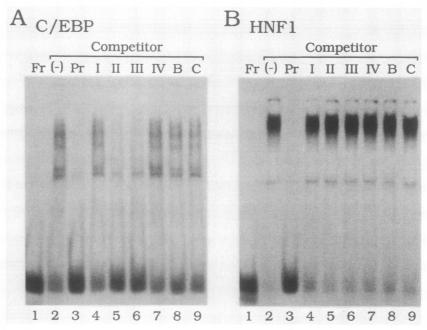
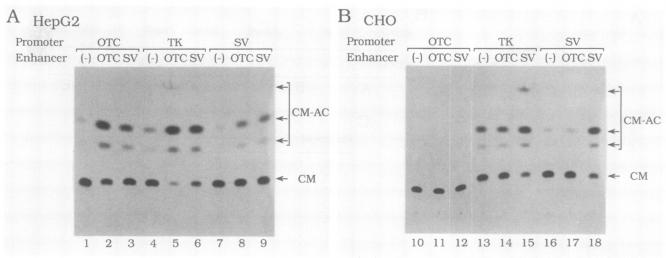
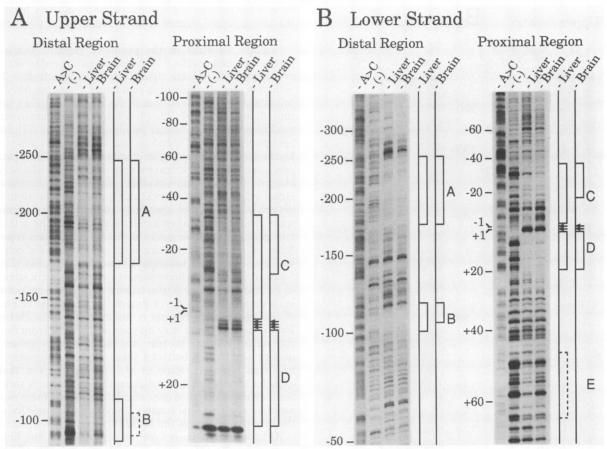
The gene for ornithine transcarbamylase (OTC; EC 2.1.3.3), a urea cycle enzyme, is expressed almost exclusively in the liver and small intestine. To identify DNA elements regulating transcription of the OTC gene in the liver, transient expression analysis was carried out by using hepatoma (HepG2) and nonhepatic (CHO) cell lines. The 1.3-kilobase 5'-flanking region of the rat OTC gene directed expression of the fused chloramphenicol acetyltransferase gene in HepG2 cells much more efficiently than in CHO cells. Analysis of deletion mutants of the 5'-flanking region in HepG2 cells revealed that there are at least one negative and two positive regulatory elements within the about 220-base-pair immediate 5'-flanking region. DNase I footprint analysis showed the presence of factors binding to these regulatory elements in nuclear extracts of rat liver and brain, and footprint profiles at the two positive elements exhibited liver-specific features. Transient expression analysis also revealed the existence of an enhancer region located 11 kilobases upstream of the transcription start site. The OTC enhancer was able to activate both its own and heterologous promoters in HepG2 but not in CHO cells. The enhancer was delimited to an about 230-base-pair region, and footprint analysis of this region revealed four protected areas. Footprint profiles at two of the four areas exhibited liver-specific features, and gel shift competition analysis showed that a factor(s) binding to the two liver-specific sites is related to C/EBP. These results suggest that both liver-specific promoter and enhancer elements regulate expression of the OTC gene through interaction with liver-specific factors binding to these elements.
鸟氨酸转氨甲酰酶(OTC;EC 2.1.3.3)是一种尿素循环酶,其基因几乎只在肝脏和小肠中表达。为了鉴定调控肝脏中OTC基因转录的DNA元件,利用肝癌(HepG2)和非肝脏(CHO)细胞系进行了瞬时表达分析。大鼠OTC基因1.3千碱基的5'侧翼区在HepG2细胞中指导融合氯霉素乙酰转移酶基因的表达,比在CHO细胞中效率高得多。对HepG2细胞中5'侧翼区缺失突变体的分析表明,在约220碱基对的紧邻5'侧翼区内至少有一个负调控元件和两个正调控元件。DNase I足迹分析表明,在大鼠肝脏和脑的核提取物中存在与这些调控元件结合的因子,并且两个正调控元件处的足迹图谱表现出肝脏特异性特征。瞬时表达分析还揭示了一个增强子区域位于转录起始位点上游11千碱基处。OTC增强子能够在HepG2细胞中激活其自身和异源启动子,但在CHO细胞中不能。该增强子被限定在约230碱基对的区域内,对该区域的足迹分析揭示了四个保护区。四个区域中的两个区域的足迹图谱表现出肝脏特异性特征,凝胶迁移竞争分析表明,与两个肝脏特异性位点结合的一个或多个因子与C/EBP相关。这些结果表明,肝脏特异性启动子和增强子元件都通过与结合到这些元件上的肝脏特异性因子相互作用来调控OTC基因的表达。