Thomson Neil C, Patel Manish, Smith Andrew D
Institute of Infection, Immunity, and Inflammation, University of Glasgow and Respiratory Medicine, Gartnavel General Hospital, Glasgow, UK.
Biologics. 2012;6:329-35. doi: 10.2147/BTT.S28666. Epub 2012 Sep 14.
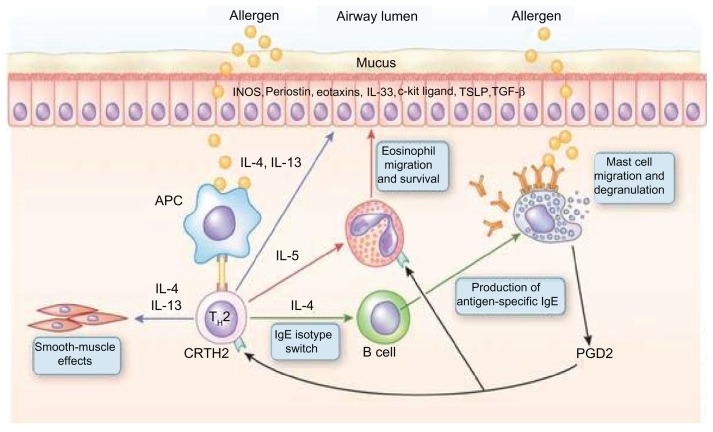
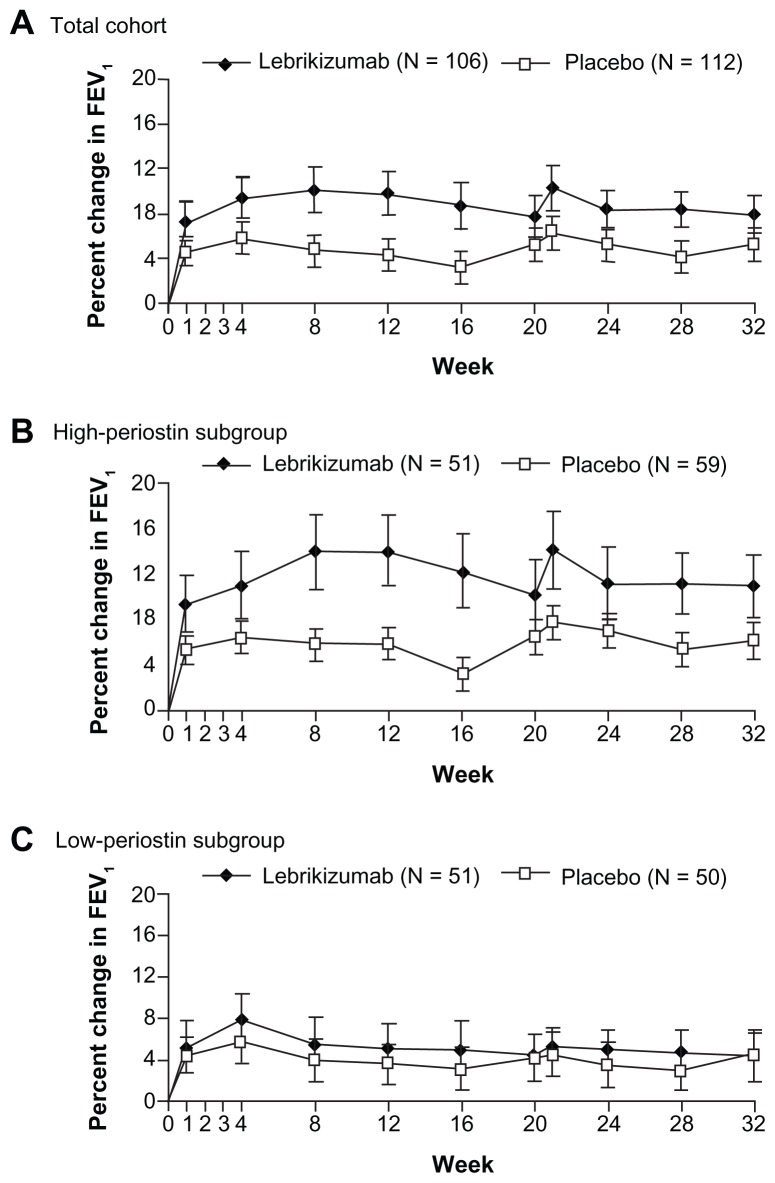
There is a need for improved therapies for severe asthma. Lebrikizumab, a humanized monoclonal antibody that binds to interleukin (IL)-13, is under development for the treatment of poorly controlled asthma. This article reviews the potential role of IL-13 in the pathogenesis of asthma, the efficacy and safety of lebrikizumab in humans, and progress in patient selection for lebrikizumab therapy. IL-13 is a T-helper (Th2) cell-derived cytokine implicated in inflammatory responses in asthma, including serum immunoglobulin-E synthesis, mucus hypersecretion, and subepithelial fibrosis. Blocking the pro-inflammatory effects of IL-13 with lebrikizumab has the potential to improve asthma control. Published data on the efficacy and safety of lebrikizumab in the treatment of asthma are relatively limited. The late asthmatic response after inhaled allergen challenge is reduced by almost 50%, following treatment with lebrikizumab. In a Phase II study performed in 219 adults with poorly controlled asthma despite inhaled corticosteroids (MILLY trial), lebrikizumab produced an improvement in prebronchodilator forced expiratory volume in 1 second of 5.5% compared with placebo at 12 weeks, but had no effects on other efficacy end points. Adverse effects were similar to placebo, except that musculoskeletal side effects occurred slightly more often with lebrikizumab. Stratifying patients into a high Th2 phenotype using serum periostin, which is upregulated in lung epithelial cells by IL-13, may identify individuals responsive to blockade of IL-13. In the MILLY trial, lebrikizumab treatment was associated with greater improvement in lung function in patients with elevated serum periostin levels compared with those with low periostin levels. Two large Phase III randomized controlled trials in patients with uncontrolled asthma are underway to establish the safety and efficacy of lebrikizumab when administered over a 52-week period. These studies will also help to determine whether identifying patients with a Th2 high inflammatory phenotype using serum periostin allows a personalized approach to the treatment of asthma.
对于重度哮喘,需要改进治疗方法。瑞比克珠单抗是一种与白细胞介素(IL)-13结合的人源化单克隆抗体,正在开发用于治疗控制不佳的哮喘。本文综述了IL-13在哮喘发病机制中的潜在作用、瑞比克珠单抗在人体中的疗效和安全性,以及瑞比克珠单抗治疗患者选择方面的进展。IL-13是一种由辅助性T(Th2)细胞衍生的细胞因子,与哮喘的炎症反应有关,包括血清免疫球蛋白E合成、黏液分泌过多和上皮下纤维化。用瑞比克珠单抗阻断IL-13的促炎作用有可能改善哮喘控制。关于瑞比克珠单抗治疗哮喘的疗效和安全性的已发表数据相对有限。吸入变应原激发后的迟发性哮喘反应在用瑞比克珠单抗治疗后降低了近50%。在一项针对219名尽管使用吸入性糖皮质激素但哮喘控制不佳的成年人进行的II期研究(MILLY试验)中,与安慰剂相比,瑞比克珠单抗在12周时使支气管扩张剂前1秒用力呼气量提高了5.5%,但对其他疗效终点无影响。不良反应与安慰剂相似,只是瑞比克珠单抗的肌肉骨骼副作用出现频率略高。使用血清骨膜蛋白将患者分层为高Th2表型,血清骨膜蛋白在肺上皮细胞中被IL-13上调,这可能识别出对IL-13阻断有反应的个体。在MILLY试验中,与血清骨膜蛋白水平低的患者相比,血清骨膜蛋白水平升高的患者接受瑞比克珠单抗治疗后肺功能改善更大。两项针对未控制哮喘患者的大型III期随机对照试验正在进行,以确定瑞比克珠单抗在52周给药期的安全性和疗效。这些研究还将有助于确定使用血清骨膜蛋白识别具有Th2高炎症表型的患者是否能实现哮喘的个性化治疗。