Lin David J, Lam Fred C, Siracuse Jeffrey J, Thomas Ajith, Kasper Ekkehard M
Division of Neurosurgery, Beth Israel Deaconess Medical Center, Harvard Medical School, Boston, Massachusetts, USA.
Surg Neurol Int. 2012;3:98. doi: 10.4103/2152-7806.100187. Epub 2012 Aug 27.
Review of intracranial gunshot wounds (GSWs) undergoing emergent neurosurgical intervention despite a very low Glasgow Coma Scale (GCS) score on admission in order to identify predictors of good outcome, with correlates to recent literature.
A retrospective review of select cases of GSWs presenting to our trauma center over the past 5 years with poor GCS requiring emergent neurosurgical intervention and a minimum of 1-year follow-up.
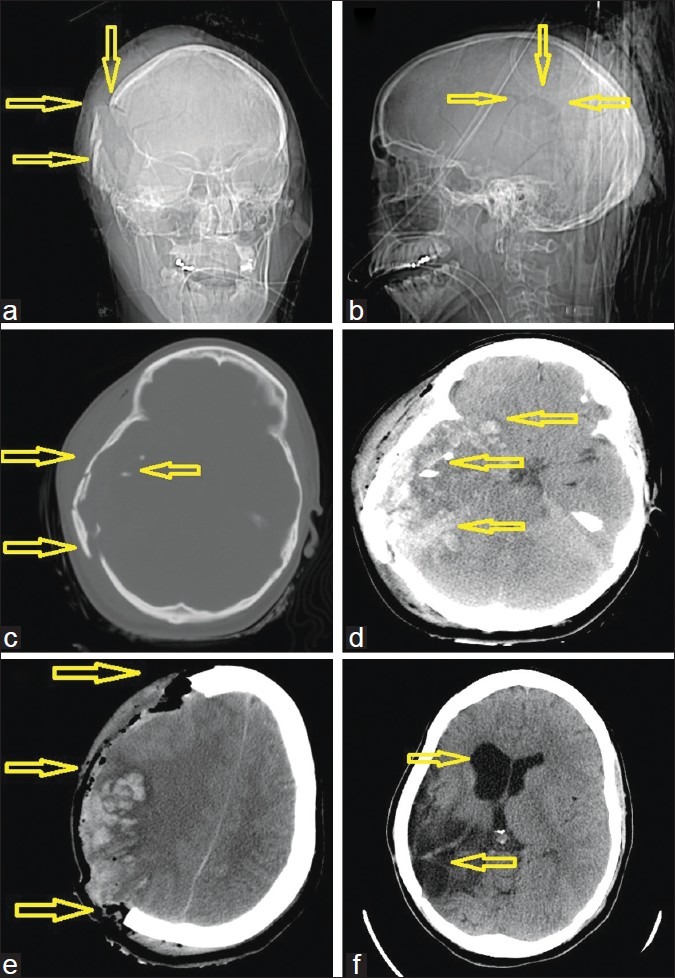
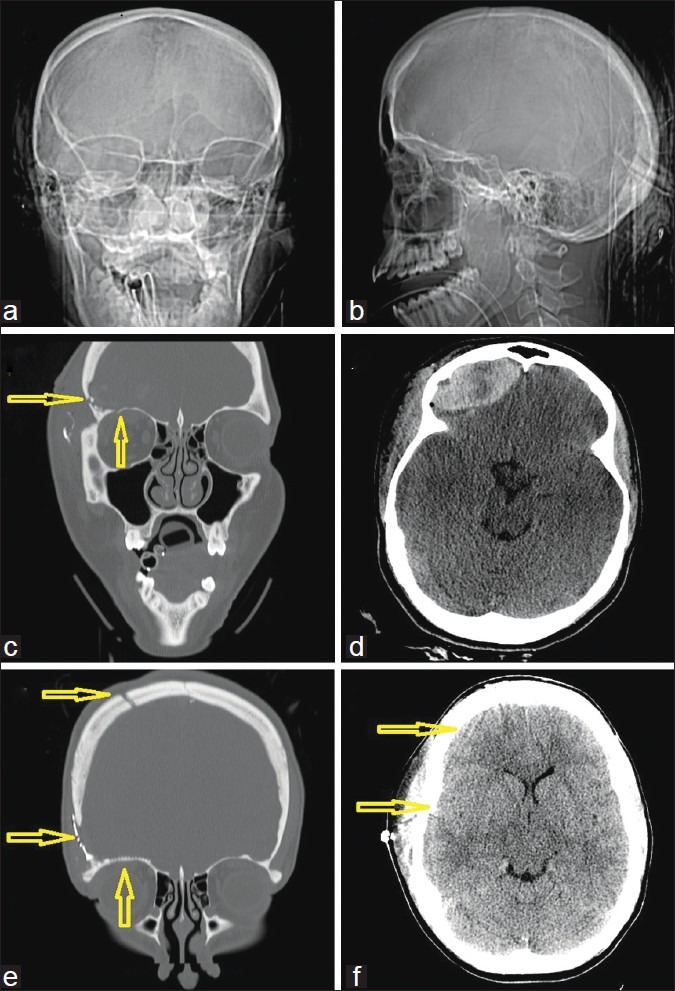
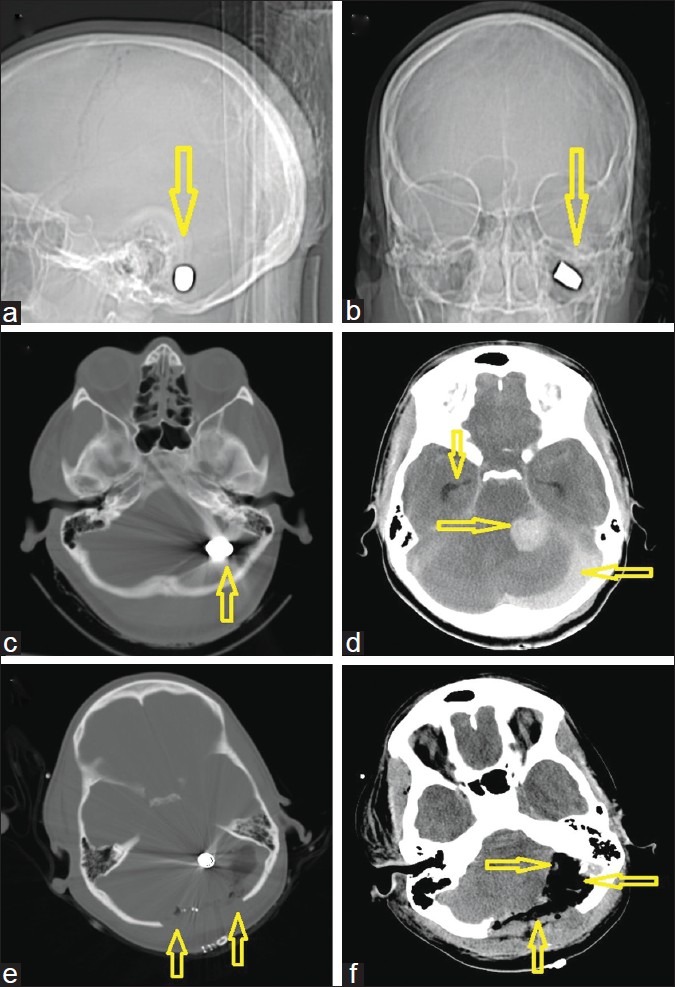
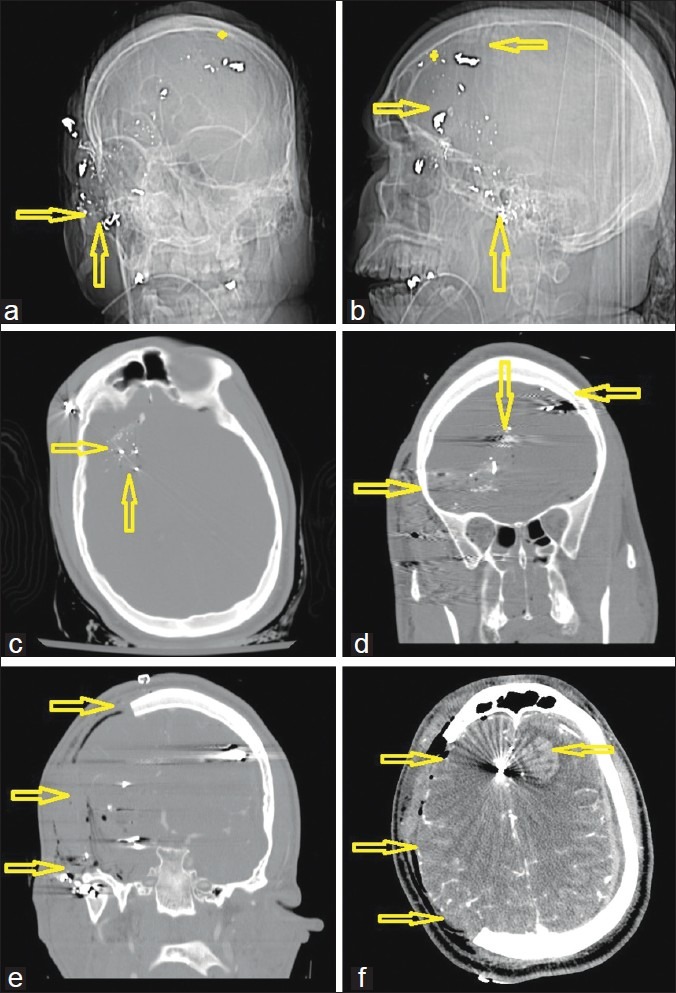
Out of a total of 17 patients who went to the operating room (OR) for GSW to the head during this period, 4 cases with a GCS < 5 on admission were identified. All cases required a hemicraniectomy to alleviate cerebral swelling. Two cases presented with a unilaterally blown pupil due to raised intracranial pressure. The remaining 2 cases had equal and reactive pupils. One patient with a GCS of 3 and a significant bilateral pattern of parenchymal bullet injury was initially assessed in moribund status but rallied and received a delayed hemicraniectomy on day 7. Three out of 4 patients are functionally independent at 1-year follow-up. The fourth patient who received a delayed decompression remains wheelchair dependent.
Victims of GSWs can have good outcomes despite having a very poor admission GCS score and papillary abnormalities. Factors predicting good outcomes include the following: time from injury to surgical intervention of < 1 h; injury to noneloquent brain; and absence of injury to midbrain, brainstem, and major vessels.
回顾颅内枪伤(GSW)患者,这些患者尽管入院时格拉斯哥昏迷量表(GCS)评分极低,但仍接受了急诊神经外科手术干预,以确定良好预后的预测因素,并与近期文献进行相关性分析。
回顾性分析过去5年在我们创伤中心就诊的部分GSW病例,这些病例GCS评分低,需要急诊神经外科手术干预,且至少随访1年。
在此期间,共有17例因头部GSW而进入手术室(OR)的患者,其中4例入院时GCS<5。所有病例均需要进行去骨瓣减压术以缓解脑肿胀。2例因颅内压升高出现单侧瞳孔散大。其余2例瞳孔等大且有反应。1例GCS评分为3分且实质内子弹伤呈明显双侧性的患者最初被评估为濒死状态,但情况好转,并在第7天接受了延迟去骨瓣减压术。4例患者中有3例在1年随访时功能独立。第4例接受延迟减压的患者仍需依赖轮椅。
尽管入院时GCS评分极低且有瞳孔异常,GSW受害者仍可能有良好预后。预测良好预后的因素包括:受伤至手术干预的时间<1小时;非优势脑损伤;以及中脑、脑干和主要血管未受损伤。