School of Allied Health Science and Public Health, Walailak University, Bangkok, Thailand.
BMC Complement Altern Med. 2012 Oct 12;12:185. doi: 10.1186/1472-6882-12-185.
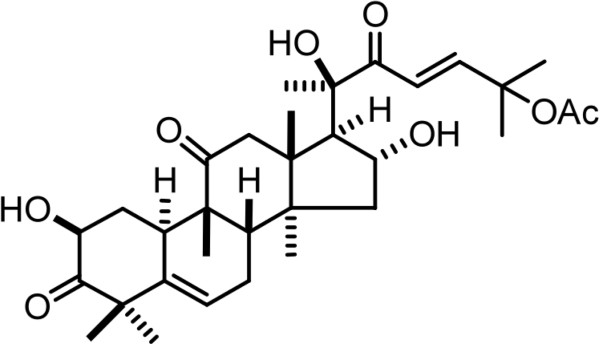
Cucurbitacin B, an oxygenated tetracyclic triterpenoid compound extracted from the Thai medicinal plant Trichosanthes cucumerina L., has been reported to have several biological activities including anti-inflammatory, antimicrobial and anticancer. Cucurbitacin B is great of interest because of its biological activity. This agent inhibits growth of various types of human cancer cells lines.
In this study, we explored the novel molecular response of cucurbitacin B in human breast cancer cells, MCF-7 and MDA-MB-231. The growth inhibitory effect of cucurbitacin B on breast cancer cells was assessed by MTT assay. The effects of cucurbitacin B on microtubules morphological structure and tubulin polymerization were analyzed using immunofluorescence technique and tubulin polymerization assay kit, respectively. Proteomic analysis was used to identify the target-specific proteins that involved in cucurbitacin B treatment. Some of the differentially expressed genes and protein products were validated by real-time RT-PCR and western blot analysis. Cell cycle distributions and apoptosis were investigated using flow cytometry.
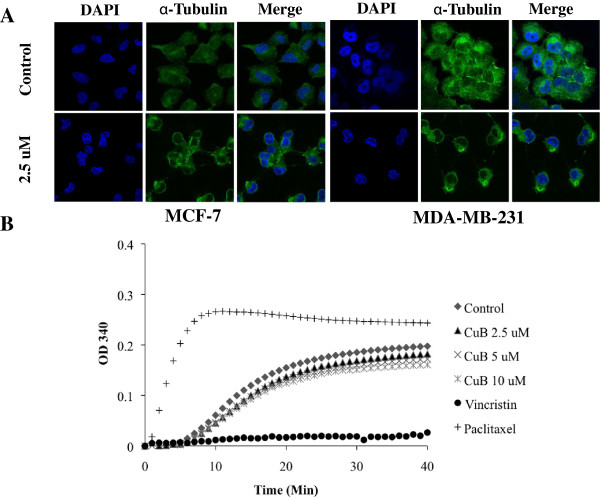
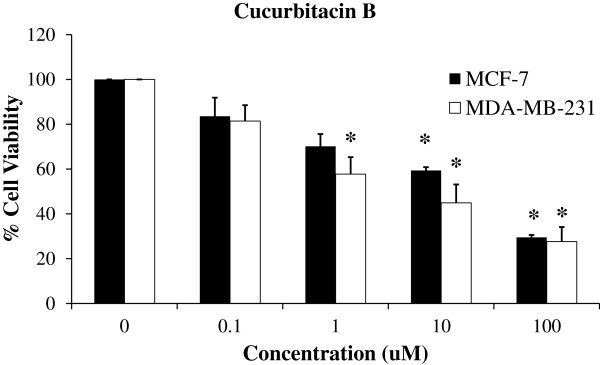
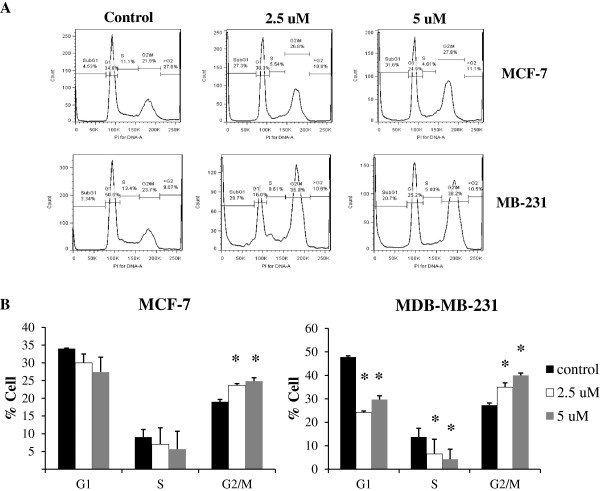
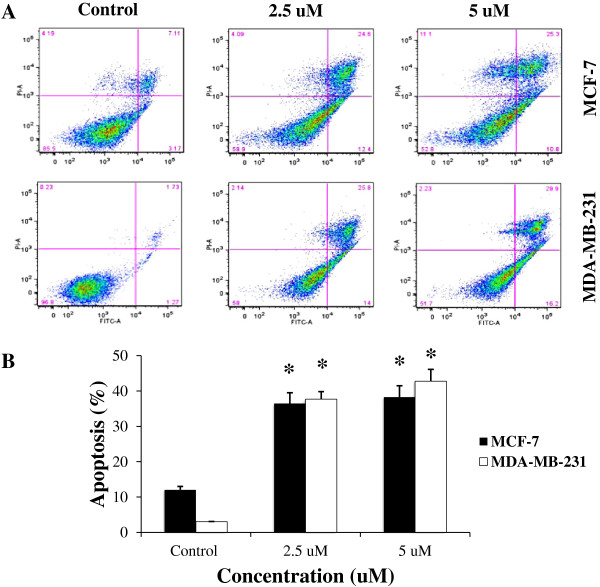
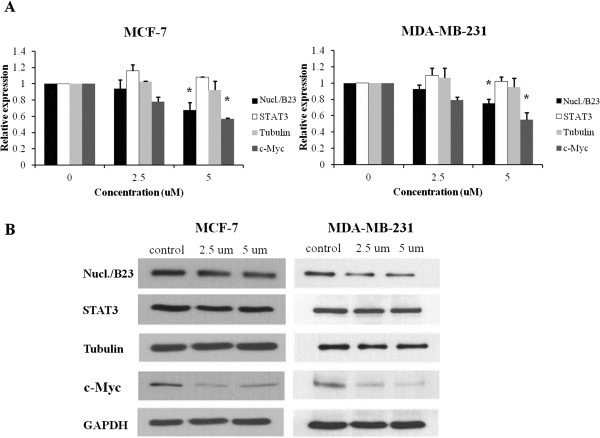
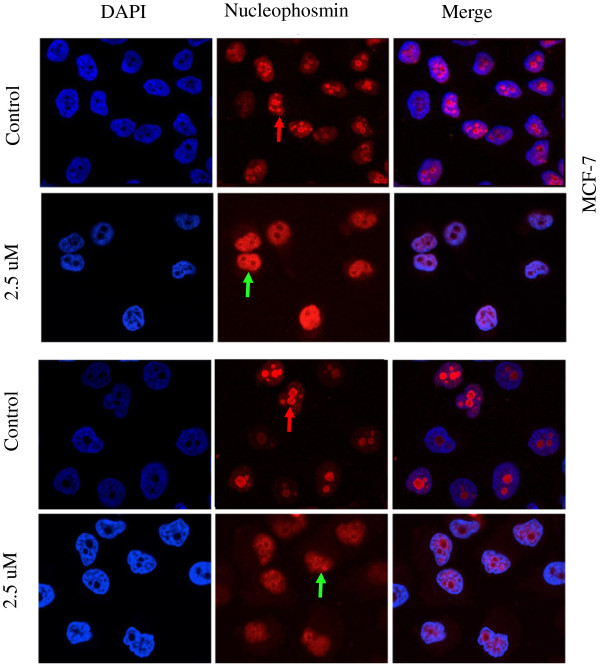
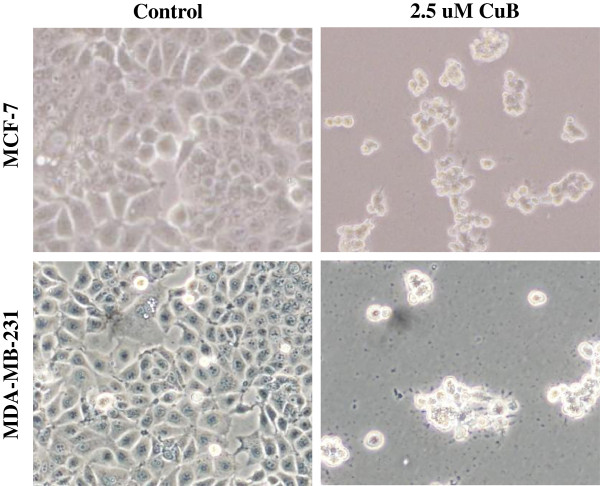
Cucurbitacin B exhibited strong antiproliferative effects against breast cancer cells in a dose-dependent manner. We show that cucurbitacin B prominently alters the cytoskeletal network of breast cancer cells, inducing rapid morphologic changes and improper polymerization of the microtubule network. Moreover, the results of 2D-PAGE, real-time RT-PCR, and western blot analysis revealed that the expression of nucleophosmin/B23 and c-Myc decreased markedly after cucurbitacin B treatment. Immunofluorescence microscopy showed that cucurbitacin B induced translocation of nucleophosmin/B23 from the nucleolus to nucleoplasm. Treatment with cucurbitacin B resulted in cell cycle arrest at G2/M phase and the enhancement of apoptosis.
Our findings suggest that cucurbitacin B may inhibit the proliferation of human breast cancer cells through disruption of the microtubule network and down-regulation of c-Myc and nucleophosmin/B23 as well as the perturbation in nucleophosmin/B23 trafficking from the nucleolus to nucleoplasm, resulting in G2/M arrest.
葫芦素 B 是从泰国药用植物苦瓜中提取的一种含氧四环三萜类化合物,具有抗炎、抗菌和抗癌等多种生物学活性。葫芦素 B 因其生物活性而备受关注。该药物能抑制多种类型的人类癌细胞系的生长。
在本研究中,我们探索了葫芦素 B 对人类乳腺癌细胞 MCF-7 和 MDA-MB-231 的新的分子反应。通过 MTT 分析评估葫芦素 B 对乳腺癌细胞的生长抑制作用。使用免疫荧光技术和微管聚合测定试剂盒分别分析葫芦素 B 对微管形态结构和微管蛋白聚合的影响。蛋白质组学分析用于鉴定参与葫芦素 B 处理的靶特异性蛋白。通过实时 RT-PCR 和 Western blot 分析验证了一些差异表达的基因和蛋白产物。使用流式细胞术研究细胞周期分布和细胞凋亡。
葫芦素 B 对乳腺癌细胞表现出强烈的增殖抑制作用,呈剂量依赖性。我们表明,葫芦素 B 明显改变了乳腺癌细胞的细胞骨架网络,诱导了快速的形态变化和微管网络的不当聚合。此外,二维凝胶电泳、实时 RT-PCR 和 Western blot 分析的结果表明,葫芦素 B 处理后核仁磷蛋白/B23 和 c-Myc 的表达明显下降。免疫荧光显微镜显示,葫芦素 B 诱导核仁磷蛋白/B23 从核仁向核质易位。用葫芦素 B 处理导致细胞周期停滞在 G2/M 期,并增强了细胞凋亡。
我们的研究结果表明,葫芦素 B 可能通过破坏微管网络以及下调 c-Myc 和核仁磷蛋白/B23 以及扰乱核仁磷蛋白/B23 从核仁向核质的运输,从而导致 G2/M 期阻滞,抑制人乳腺癌细胞的增殖。