Systems Biology Program, Centro Nacional de Biotecnología, Consejo Superior de Investigaciones Cientificas, Madrid, Spain.
PLoS Genet. 2012;8(10):e1002963. doi: 10.1371/journal.pgen.1002963. Epub 2012 Oct 11.
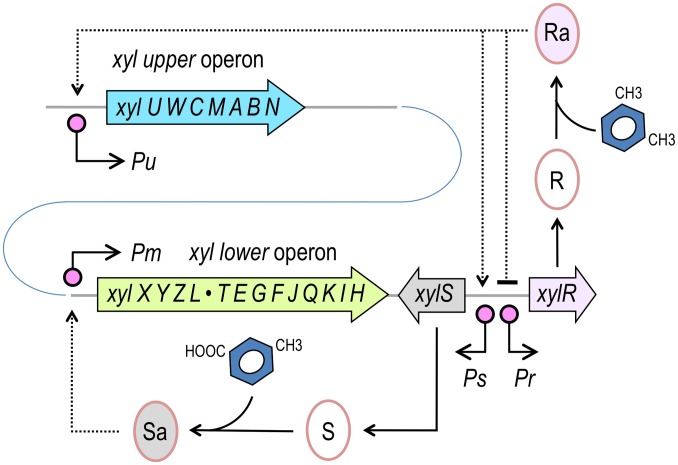
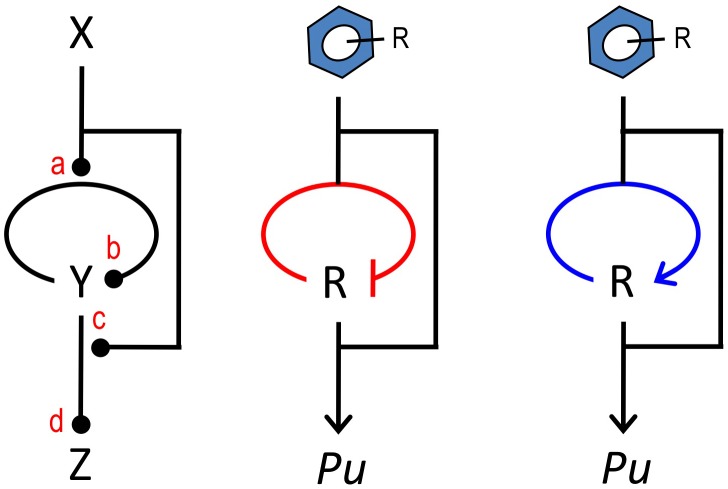
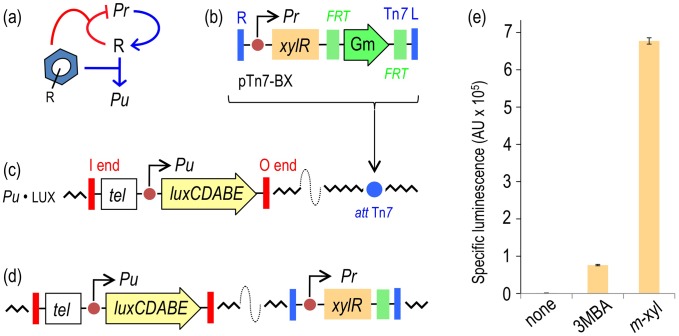
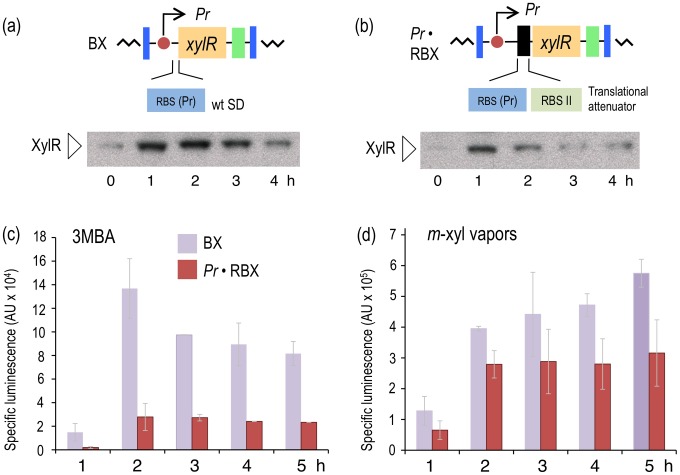
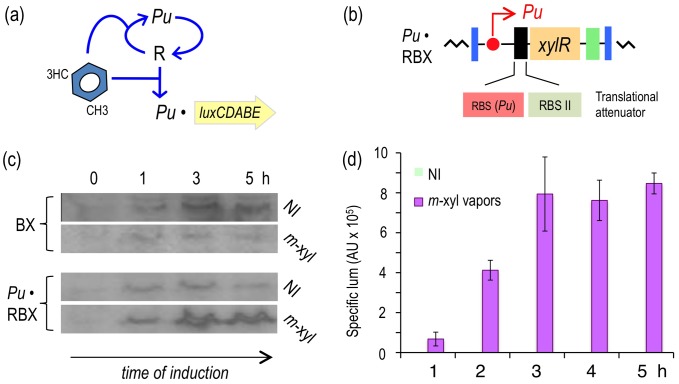
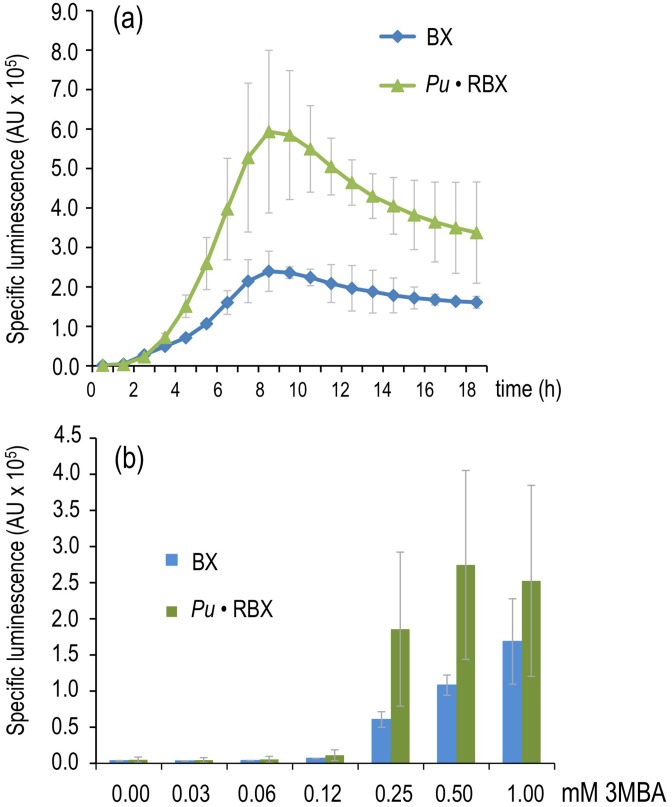
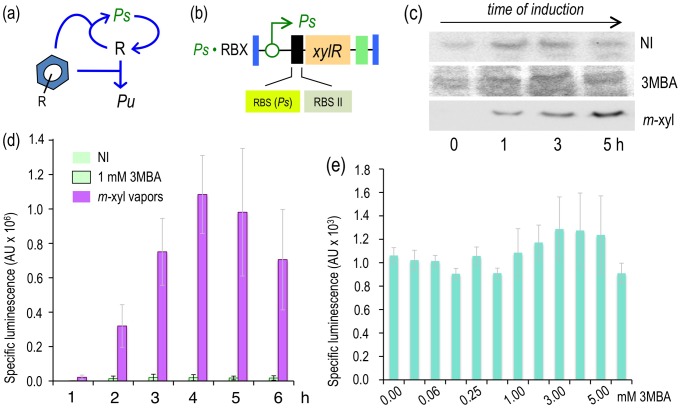
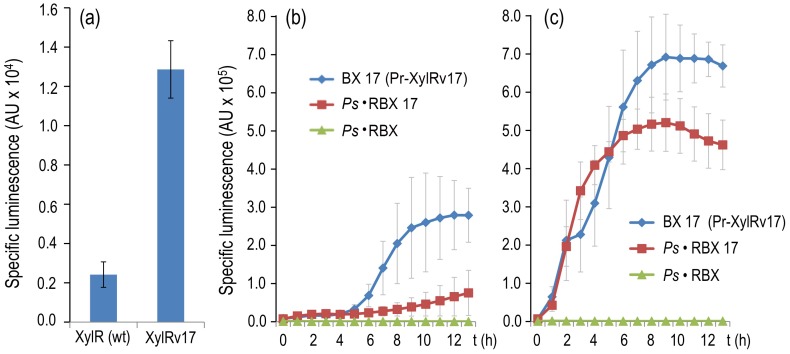
Prokaryotic transcription factors (TFs) that bind small xenobiotic molecules (e.g., TFs that drive genes that respond to environmental pollutants) often display a promiscuous effector profile for analogs of the bona fide chemical signals. XylR, the master TF for expression of the m-xylene biodegradation operons encoded in the TOL plasmid pWW0 of Pseudomonas putida, responds not only to the aromatic compound but also, albeit to a lesser extent, to many other aromatic compounds, such as 3-methylbenzylalcohol (3MBA). We have examined whether such a relaxed regulatory scenario can be reshaped into a high-capacity/high-specificity regime by changing the connectivity of this effector-sensing TF within the rest of the circuit rather than modifying XylR structure itself. To this end, the natural negative feedback loop that operates on xylR transcription was modified with a translational attenuator that brings down the response to 3MBA while maintaining the transcriptional output induced by m-xylene (as measured with a luxCDABE reporter system). XylR expression was then subject to a positive feedback loop in which the TF was transcribed from its own target promoters, each known to hold different input/output transfer functions. In the first case (xylR under the strong promoter of the upper TOL operon, Pu), the reporter system displayed an increased transcriptional capacity in the resulting network for both the optimal and the suboptimal XylR effectors. In contrast, when xylR was expressed under the weaker Ps promoter, the resulting circuit unmistakably discriminated m-xylene from 3MBA. The non-natural connectivity engineered in the network resulted both in a higher promoter activity and also in a much-increased signal-to-background ratio. These results indicate that the working regimes of given genetic circuits can be dramatically altered through simple changes in the way upstream transcription factors are self-regulated by positive or negative feedback loops.
原核转录因子 (TFs) 可以结合小分子外源化合物(例如,驱动基因响应环境污染物的 TFs),这些 TF 通常对外源化合物的类似物具有混杂的效应物特征。XylR 是 Pseudomonas putida 中 TOL 质粒 pWW0 编码的 m-二甲苯生物降解操纵子表达的主 TF,它不仅响应芳香族化合物,而且还响应许多其他芳香族化合物,如 3-甲基苄醇 (3MBA)。我们已经研究了是否可以通过改变该效应物感应 TF 在电路其余部分中的连接性,而不是修饰 XylR 结构本身,将这种宽松的调控情景重塑为高容量/高特异性的调控情景。为此,对自然作用于 xylR 转录的负反馈回路进行了修饰,添加了一个翻译衰减子,该衰减子降低了对 3MBA 的响应,同时保持了 m-二甲苯诱导的转录输出(通过 luxCDABE 报告系统测量)。然后,XylR 的表达受到正反馈回路的控制,其中 TF 从其自身的靶启动子转录,每个启动子都知道具有不同的输入/输出传递函数。在第一种情况下(在强启动子 Pu 下的 xylR 基因),报告系统在网络中的转录能力都对最佳和次优的 XylR 效应物增加。相比之下,当 xylR 在较弱的 Ps 启动子下表达时,所得电路毫不含糊地将 m-二甲苯与 3MBA 区分开来。网络中工程化的非自然连接不仅导致启动子活性增加,而且信号与背景的比值也大大增加。这些结果表明,通过正向或负反馈回路改变上游转录因子的自我调节方式,可以显著改变特定遗传电路的工作模式。