Robotics Institute, Carnegie Mellon University, Pittsburgh, Pennsylvania, USA.
PLoS One. 2012;7(10):e47241. doi: 10.1371/journal.pone.0047241. Epub 2012 Oct 17.
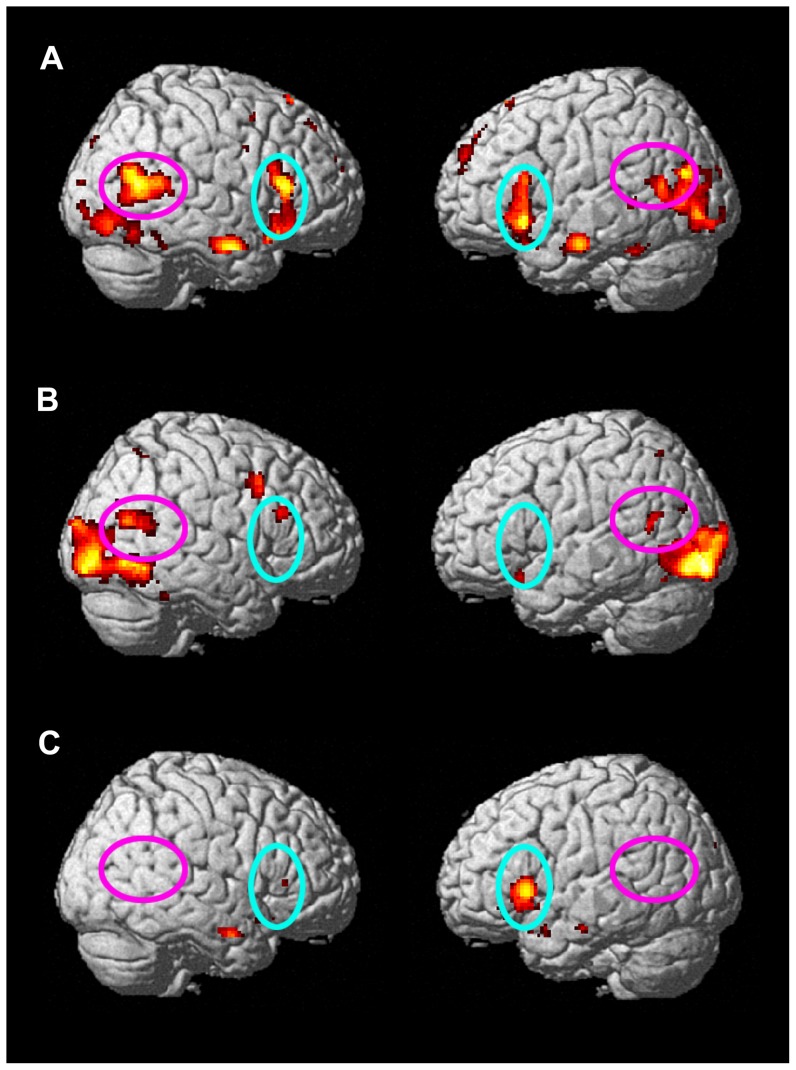
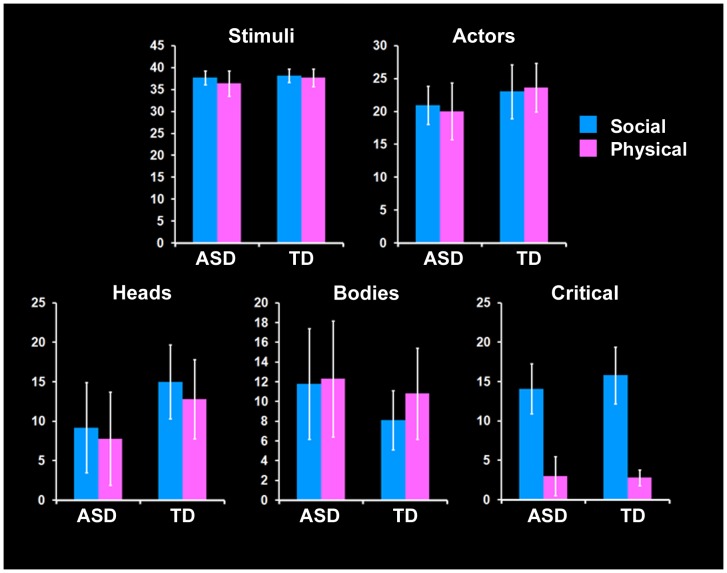
Individuals with autism often violate social rules and have lower accuracy in identifying and explaining inappropriate social behavior. Twelve children with autism (AD) and thirteen children with typical development (TD) participated in this fMRI study of the neurofunctional basis of social judgment. Participants indicated in which of two pictures a boy was being bad (Social condition) or which of two pictures was outdoors (Physical condition). In the within-group Social-Physical comparison, TD children used components of mentalizing and language networks [bilateral inferior frontal gyrus (IFG), bilateral medial prefrontal cortex (mPFC), and bilateral posterior superior temporal sulcus (pSTS)], whereas AD children used a network that was primarily right IFG and bilateral pSTS, suggesting reduced use of social and language networks during this social judgment task. A direct group comparison on the Social-Physical contrast showed that the TD group had greater mPFC, bilateral IFG, and left superior temporal pole activity than the AD group. No regions were more active in the AD group than in the group with TD in this comparison. Both groups successfully performed the task, which required minimal language. The groups also performed similarly on eyetracking measures, indicating that the activation results probably reflect the use of a more basic strategy by the autism group rather than performance disparities. Even though language was unnecessary, the children with TD recruited language areas during the social task, suggesting automatic encoding of their knowledge into language; however, this was not the case for the children with autism. These findings support behavioral research indicating that, whereas children with autism may recognize socially inappropriate behavior, they have difficulty using spoken language to explain why it is inappropriate. The fMRI results indicate that AD children may not automatically use language to encode their social understanding, making expression and generalization of this knowledge more difficult.
自闭症个体经常违反社会规则,并且在识别和解释不当社会行为方面的准确性较低。本 fMRI 研究纳入了 12 名自闭症儿童(AD)和 13 名典型发育儿童(TD),旨在探究社会判断的神经功能基础。参与者需要判断两个图片中的哪个男孩行为不当(社会条件)或哪个图片是在户外(物理条件)。在组内的社会-物理比较中,TD 儿童使用了心理化和语言网络的组成部分[双侧额下回(IFG)、双侧内侧前额叶皮层(mPFC)和双侧后上颞叶回(pSTS)],而 AD 儿童主要使用了右侧 IFG 和双侧 pSTS 网络,表明在进行社会判断任务时,AD 儿童较少使用社会和语言网络。在社会-物理对比的直接组间比较中,TD 组的 mPFC、双侧 IFG 和左侧颞极活动大于 AD 组。在这种比较中,AD 组没有任何区域比 TD 组更活跃。两组都成功完成了任务,且任务几乎不需要语言。两组在眼动测量上的表现也相似,表明激活结果可能反映了自闭症组使用了更基本的策略,而不是表现差异。尽管不需要语言,TD 组的儿童在社会任务中也会募集语言区域,这表明他们的知识会自动以语言形式进行编码;然而,自闭症儿童并非如此。这些发现支持了表明自闭症儿童可能识别到不适当的社会行为,但难以用口语解释其为何不适当的行为研究。 fMRI 结果表明,AD 儿童可能不会自动使用语言来编码他们的社会理解,这使得他们更难以表达和推广这些知识。