Department of Molecular, Cellular, and Developmental Biology, University of Colorado-Boulder, Boulder, CO 80309, USA.
Mol Biol Cell. 2012 Dec;23(24):4766-77. doi: 10.1091/mbc.E12-06-0454. Epub 2012 Oct 19.
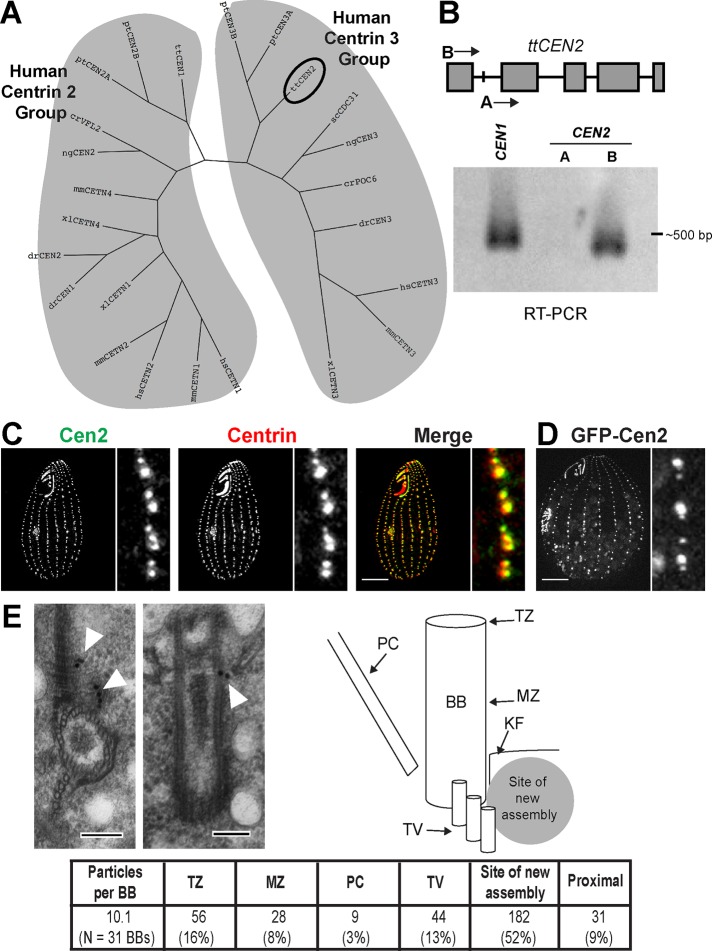
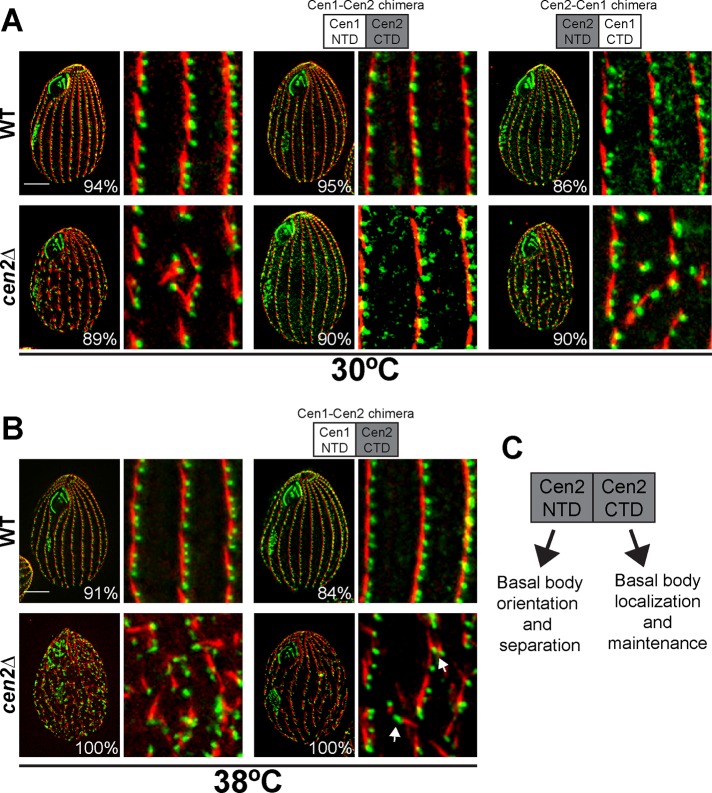
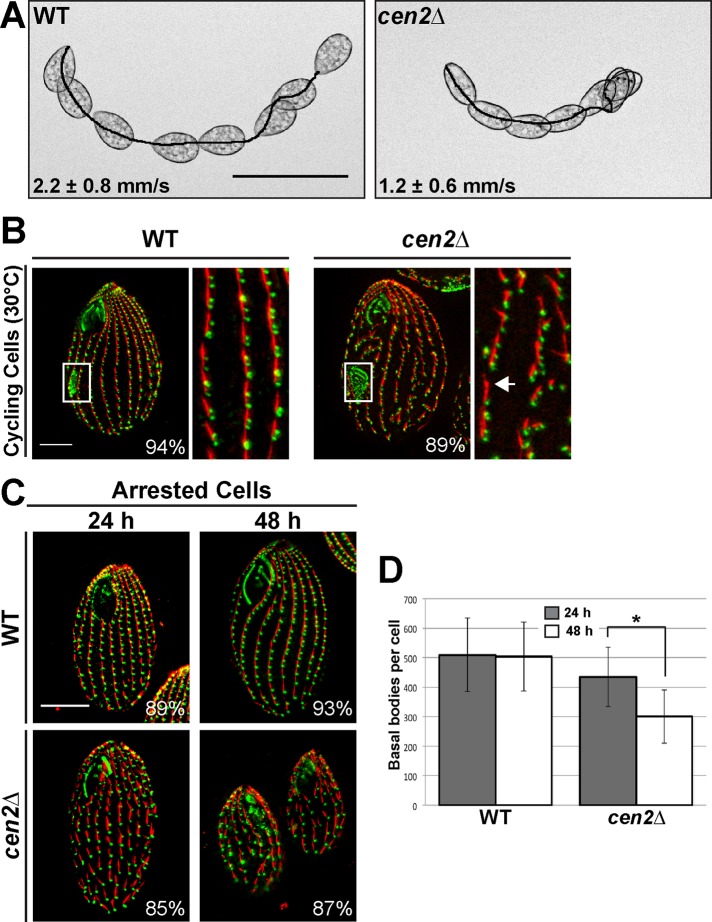
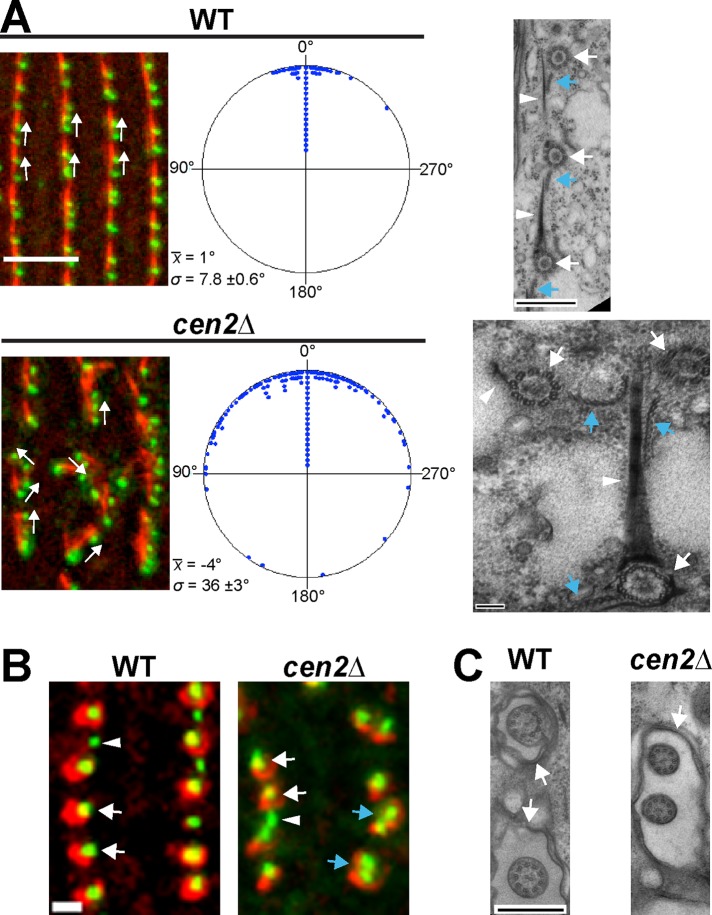
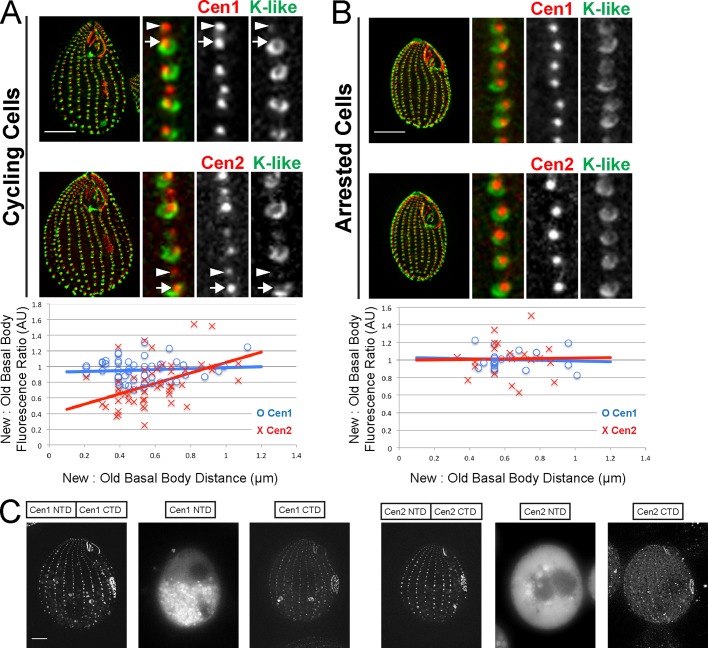
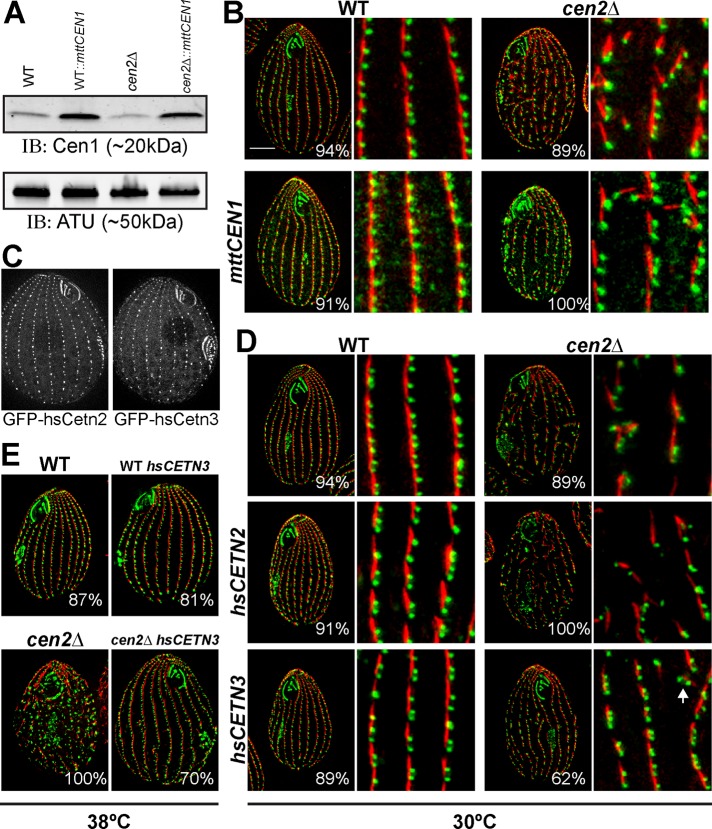
Centrins are a ubiquitous family of small Ca(2+)-binding proteins found at basal bodies that are placed into two groups based on sequence similarity to the human centrins 2 and 3. Analyses of basal body composition in different species suggest that they contain a centrin isoform from each group. We used the ciliate protist Tetrahymena thermophila to gain a better understanding of the functions of the two centrin groups and to determine their potential redundancy. We have previously shown that the Tetrahymena centrin 1 (Cen1), a human centrin 2 homologue, is required for proper basal body function. In this paper, we show that the Tetrahymena centrin 2 (Cen2), a human centrin 3 homologue, has functions similar to Cen1 in basal body orientation, maintenance, and separation. The two are, however, not redundant. A further examination of human centrin 3 homologues shows that they function in a manner distinct from human centrin 2 homologues. Our data suggest that basal bodies require a centrin from both groups in order to function correctly.
中心粒是一种普遍存在的小 Ca(2+)-结合蛋白家族,存在于基体中,根据与人类中心粒 2 和 3 的序列相似性,可将其分为两组。对不同物种基体组成的分析表明,它们包含来自每组的一种中心粒同工型。我们使用纤毛虫原生动物嗜热四膜虫来更好地了解两组中心粒的功能,并确定它们的潜在冗余性。我们之前已经表明,嗜热四膜虫中心粒 1(Cen1),一种人类中心粒 2 的同源物,对于基体的正常功能是必需的。在本文中,我们表明,嗜热四膜虫中心粒 2(Cen2),一种人类中心粒 3 的同源物,在基体的定向、维持和分离方面具有与 Cen1 相似的功能。然而,两者并非冗余。进一步研究人类中心粒 3 同源物表明,它们的功能与人类中心粒 2 同源物不同。我们的数据表明,基体需要两组的中心粒才能正常发挥功能。