Department of Environmental Health and Center for Environmental Genetics (CEG), University of Cincinnati Medical Center, Cincinnati, OH 45267-0056, USA.
Metallomics. 2012 Nov;4(11):1218-25. doi: 10.1039/c2mt20177a. Epub 2012 Oct 22.
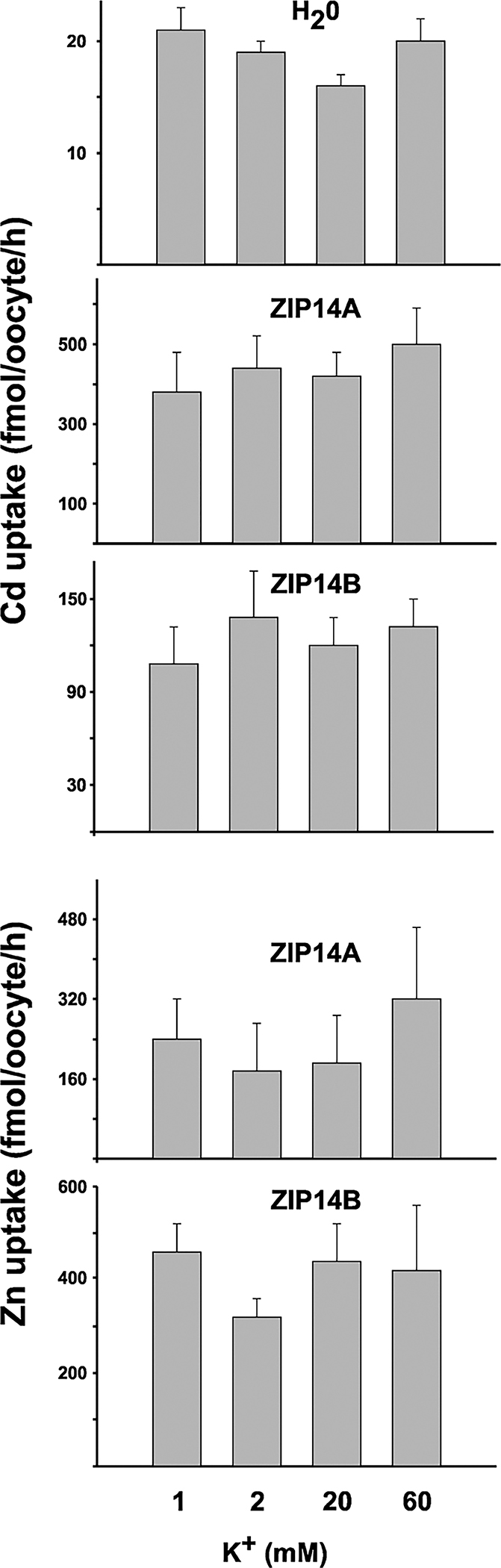
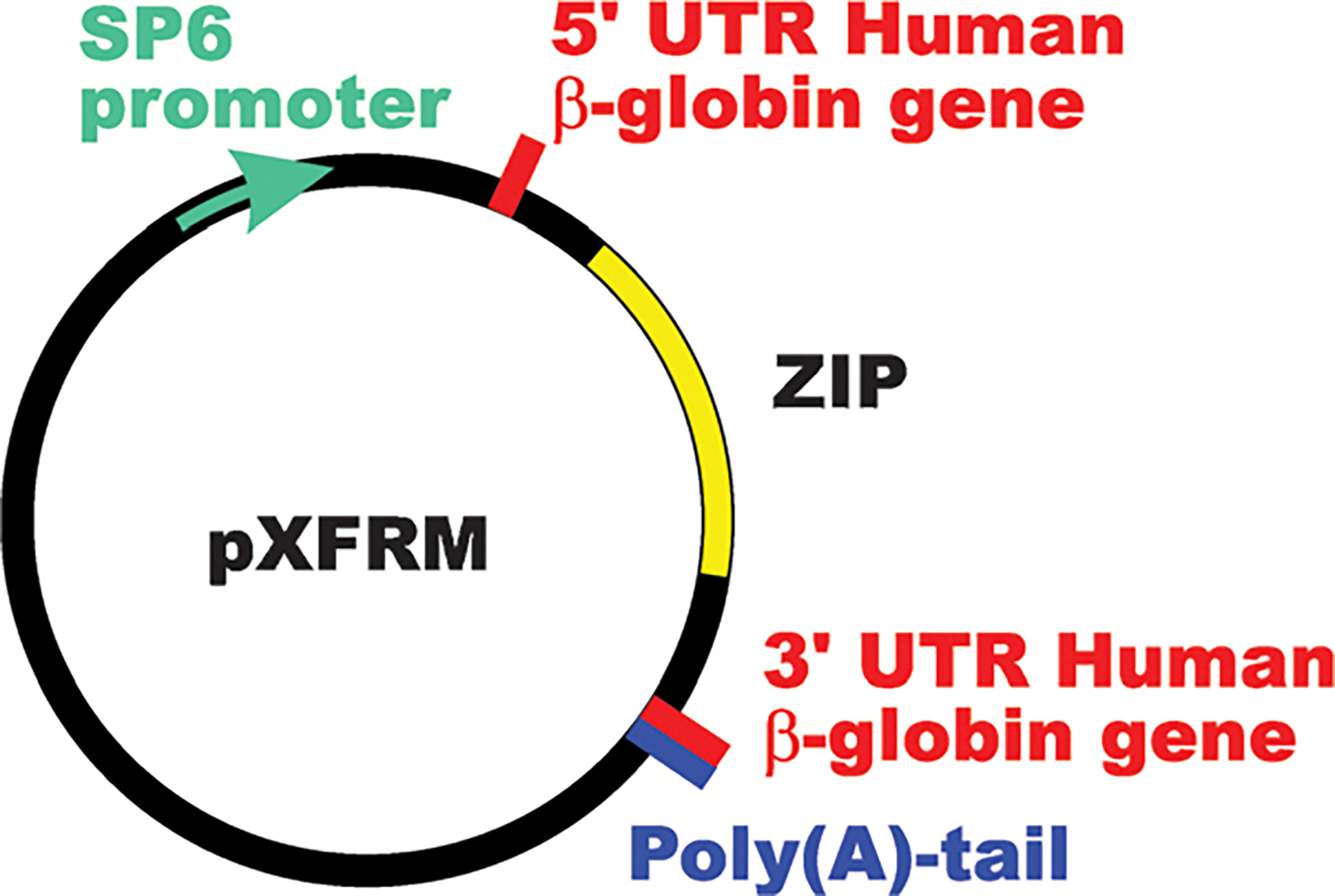
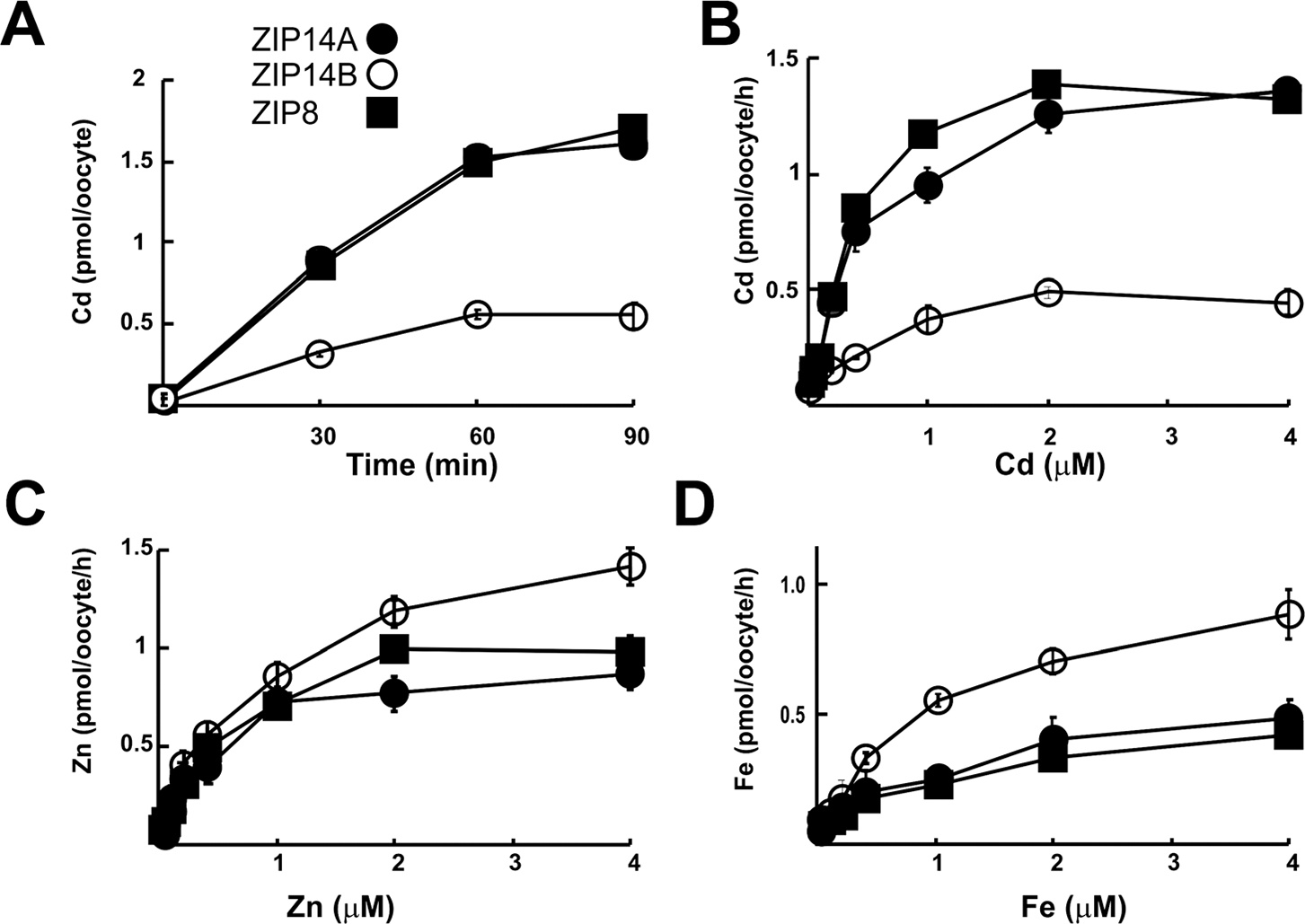
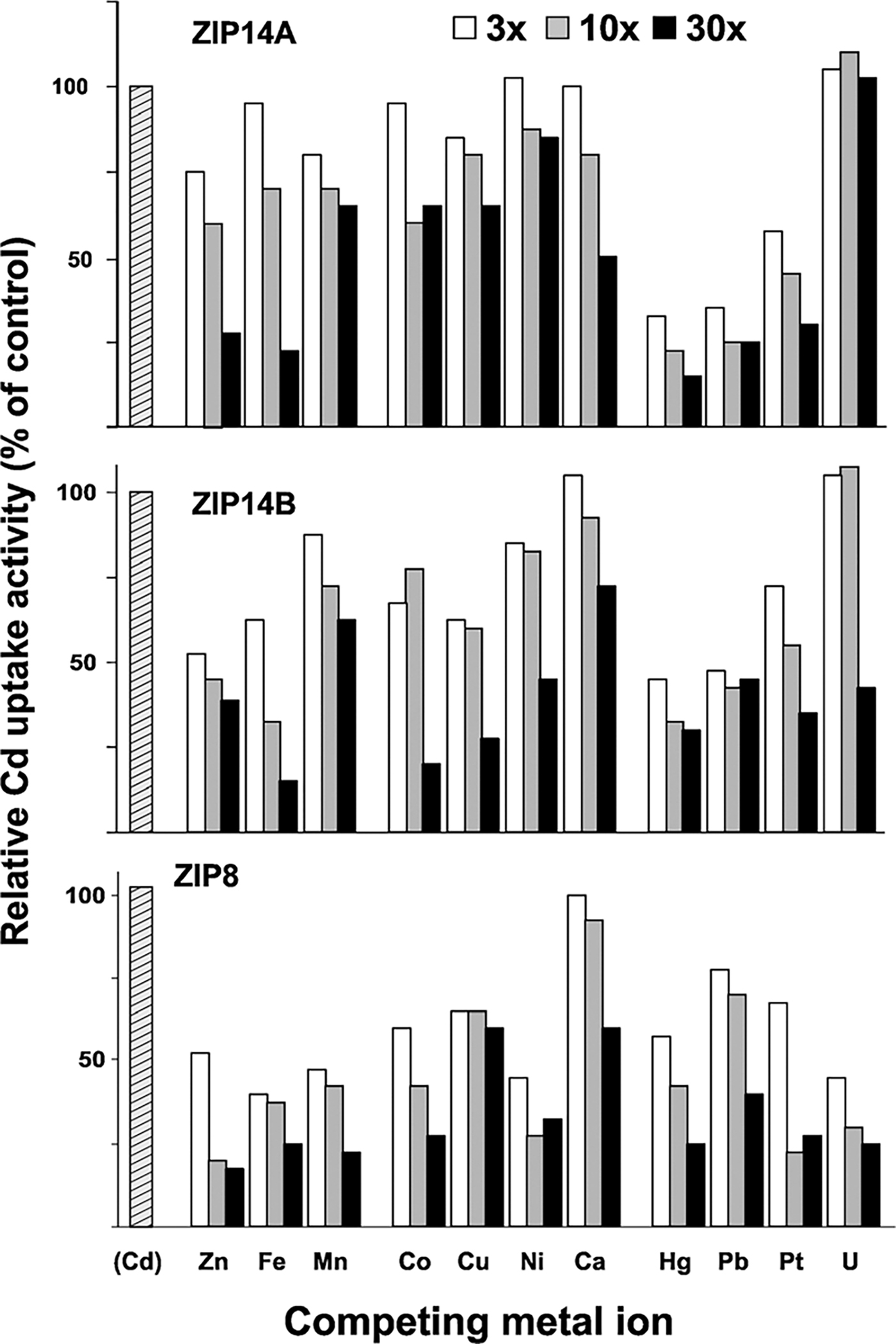
The highly conserved human and mouse SLC39A14 and SLC39A8 genes encode the ZIP14 and ZIP8 transporters, respectively-functioning as divalent cation/bicarbonate symporters and expressed in dozens of tissues. Due to alternative splicing of exons 4, human and mouse SLC39A14 genes each encode two distinct gene products, whereas SLC39A8 produces a single product. This lab previously noted that ZIP14A and ZIP14B show highly variable expression in different cell types, suggesting differences in metal uptake function. We ligated mouse ZIP14A, ZIP14B and ZIP8 cDNA coding regions into the Xenopus-specific vector pXFRM, transcribed these in vitro, and microinjected the capped RNAs into Xenopus oocytes. K(m) and V(max) values for Cd, Zn and Fe uptake were determined. Electrogenicity studies using a potassium gradient confirmed that (just as we found previously for ZIP8) ZIP14A- and ZIP14B-mediated divalent Cd- or Zn-bicarbonate complexes are electroneutral. Competitive inhibition of Cd and Zn uptake with ten additional divalent cations showed a unique gradient of patterns for each of ZIP14A, ZIP14B and ZIP8. ZIP14 proteins are prominent in the gastrointestinal tract and ZIP8 protein is located on the surface of renal proximal tubular epithelial cells. It is known that renal Fanconi syndrome can be caused by five nonessential heavy metals: Cd(2+), Hg(2+), Pb(2+), Pt(2+) and U(2+). In the present study we show that these five divalent cations are usually competitors of ZIP14- and/or ZIP8-mediated Zn uptake; our data thus support the possible involvement of intestinal ZIP14 for uptake of these five metals into the body and ZIP8 for efficient uptake into the kidney.
高度保守的人类和小鼠 SLC39A14 和 SLC39A8 基因分别编码 ZIP14 和 ZIP8 转运体,作为二价阳离子/碳酸氢盐共转运体发挥作用,并在数十种组织中表达。由于外显子 4 的选择性剪接,人类和小鼠 SLC39A14 基因各自编码两种不同的基因产物,而 SLC39A8 则产生一种单一的产物。本实验室之前注意到,ZIP14A 和 ZIP14B 在不同细胞类型中的表达具有高度可变性,表明金属摄取功能存在差异。我们将小鼠 ZIP14A、ZIP14B 和 ZIP8 cDNA 编码区连接到 Xenopus 特异性载体 pXFRM 中,在体外转录这些基因,并将加帽的 RNA 微注射到 Xenopus 卵母细胞中。确定了 Cd、Zn 和 Fe 摄取的 K(m)和 V(max)值。使用钾梯度进行的电化学研究证实,(正如我们之前对 ZIP8 所发现的那样)ZIP14A 和 ZIP14B 介导的二价 Cd 或 Zn-碳酸氢盐复合物是电中性的。用另外十种二价阳离子对 Cd 和 Zn 摄取的竞争性抑制显示出每种 ZIP14A、ZIP14B 和 ZIP8 的独特梯度模式。ZIP14 蛋白在胃肠道中很突出,ZIP8 蛋白位于肾近端小管上皮细胞的表面。已知肾性范可尼综合征可由五种非必需重金属引起:Cd(2+)、Hg(2+)、Pb(2+)、Pt(2+)和 U(2+)。在本研究中,我们表明这五种二价阳离子通常是 ZIP14-和/或 ZIP8 介导的 Zn 摄取的竞争者;因此,我们的数据支持肠道 ZIP14 可能参与这些五种金属进入体内的摄取,以及 ZIP8 对有效摄取进入肾脏的可能参与。