School of Environmental and Forest Sciences, College of the Environment, University of Washington, Seattle, WA 98195, USA.
Sensors (Basel). 2012;12(8):10639-58. doi: 10.3390/s120810639. Epub 2012 Aug 3.
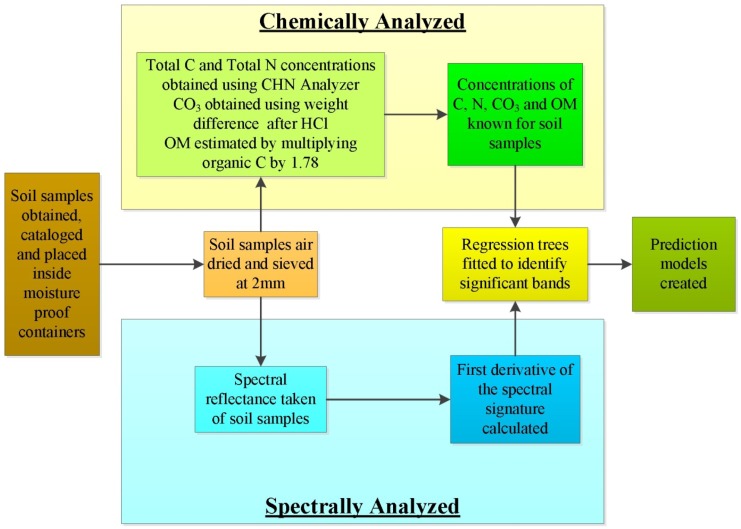
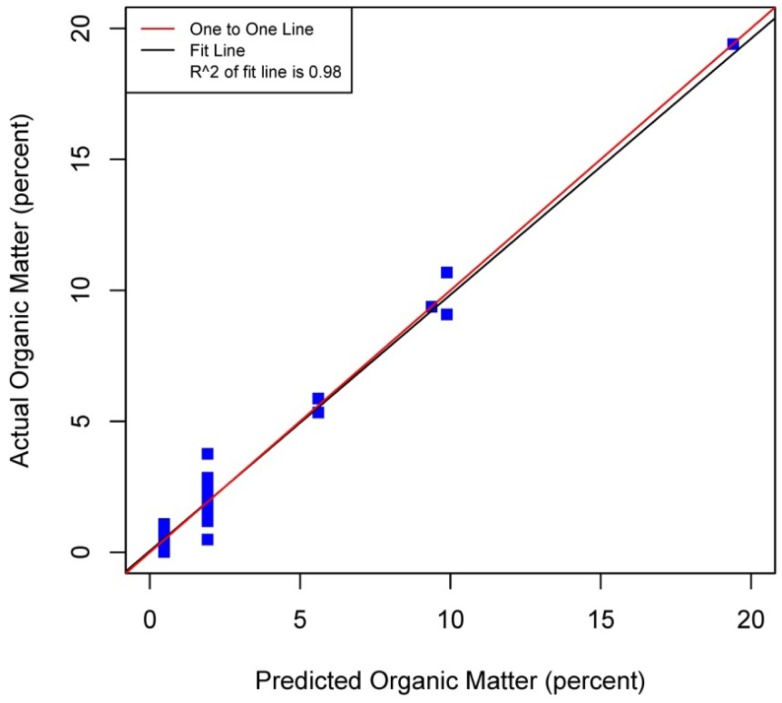
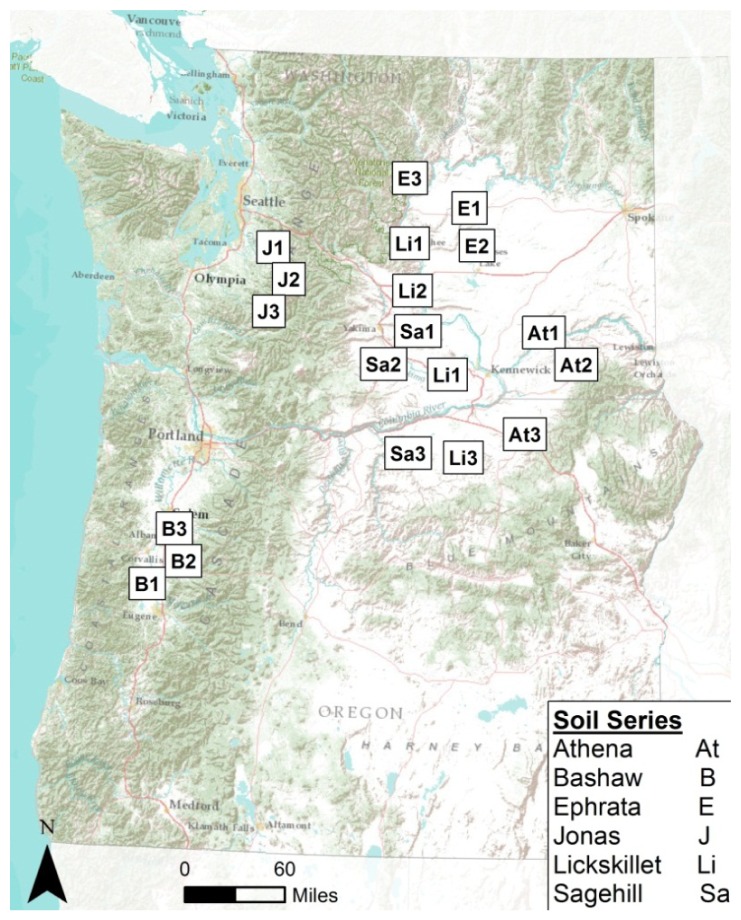
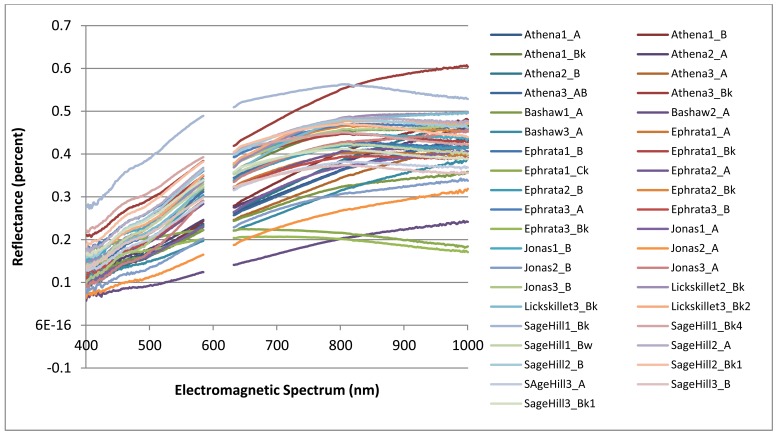
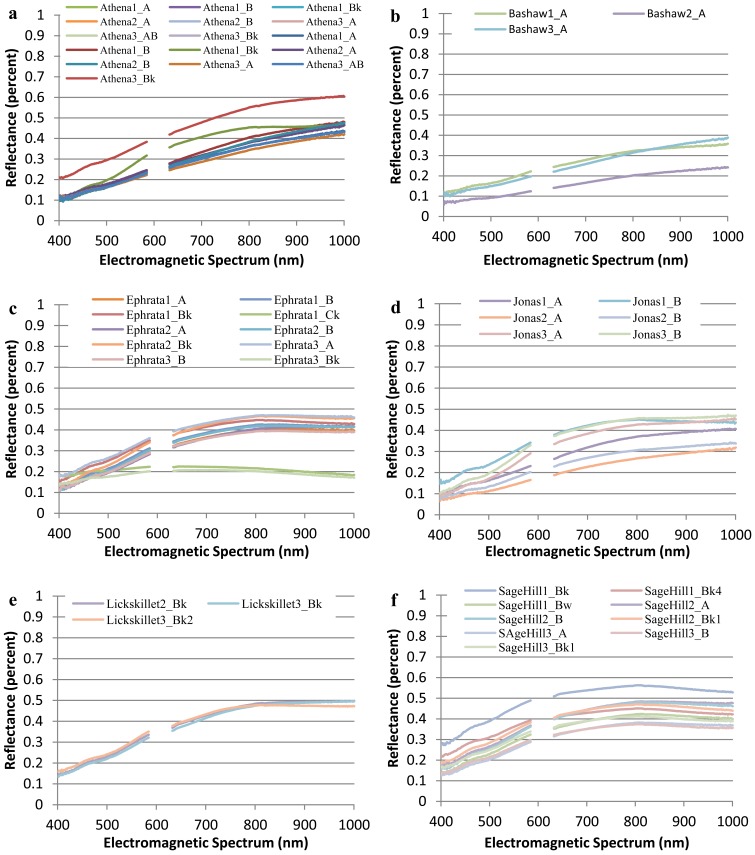
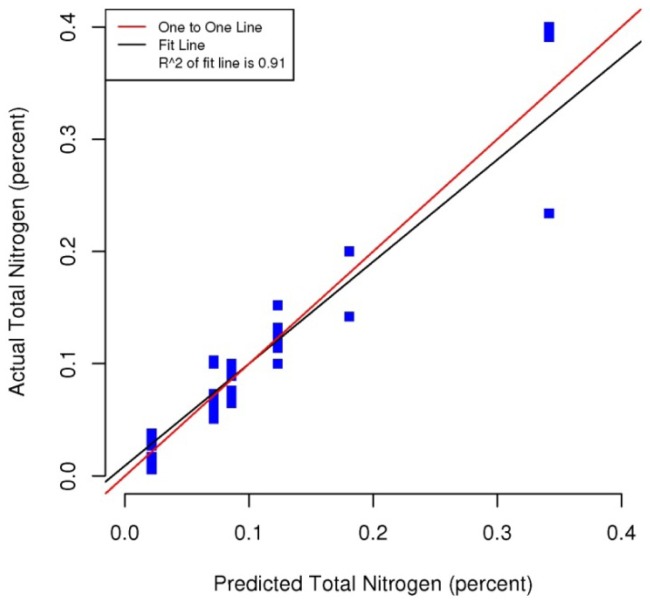
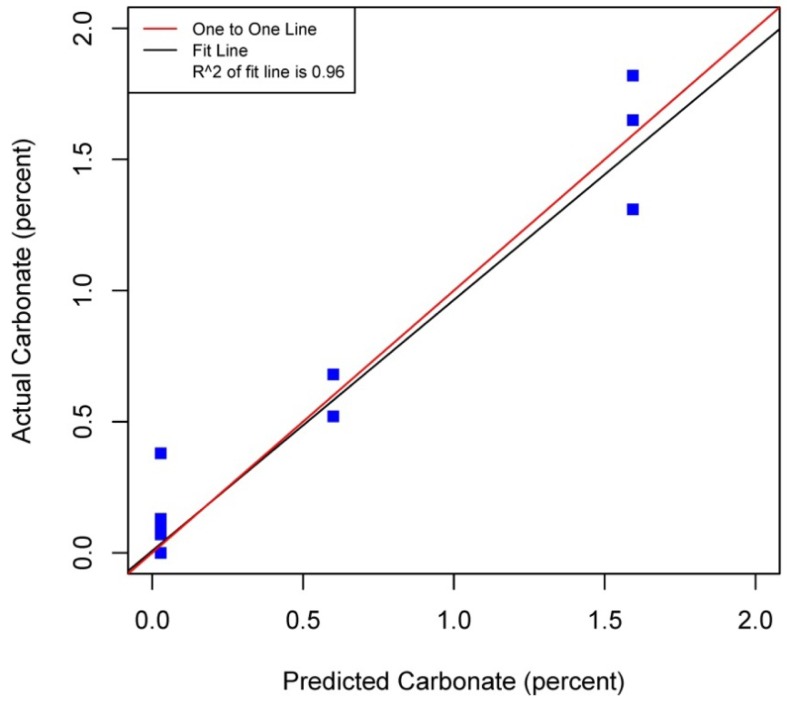
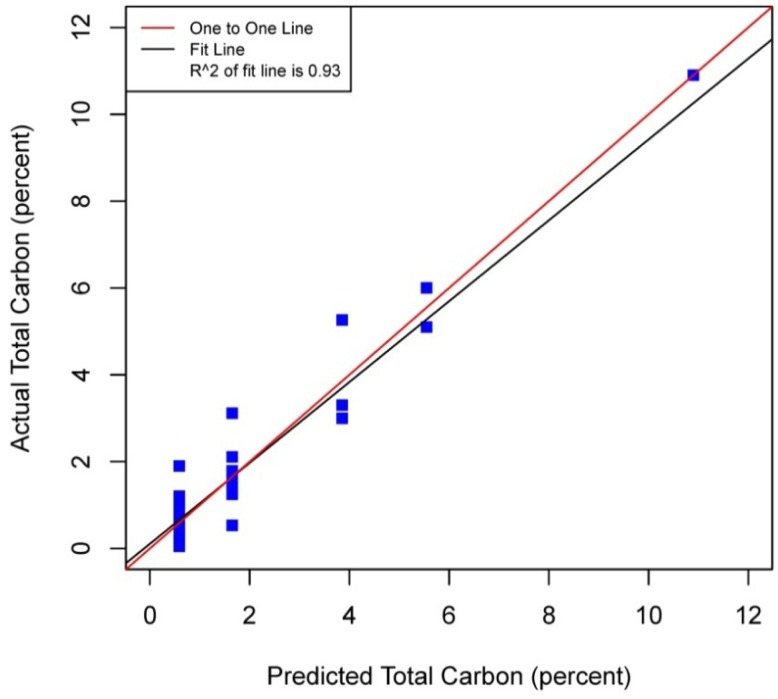
The characterization of soil attributes using hyperspectral sensors has revealed patterns in soil spectra that are known to respond to mineral composition, organic matter, soil moisture and particle size distribution. Soil samples from different soil horizons of replicated soil series from sites located within Washington and Oregon were analyzed with the FieldSpec Spectroradiometer to measure their spectral signatures across the electromagnetic range of 400 to 1,000 nm. Similarity rankings of individual soil samples reveal differences between replicate series as well as samples within the same replicate series. Using classification and regression tree statistical methods, regression trees were fitted to each spectral response using concentrations of nitrogen, carbon, carbonate and organic matter as the response variables. Statistics resulting from fitted trees were: nitrogen R(2) 0.91 (p < 0.01) at 403, 470, 687, and 846 nm spectral band widths, carbonate R(2) 0.95 (p < 0.01) at 531 and 898 nm band widths, total carbon R(2) 0.93 (p < 0.01) at 400, 409, 441 and 907 nm band widths, and organic matter R(2) 0.98 (p < 0.01) at 300, 400, 441, 832 and 907 nm band widths. Use of the 400 to 1,000 nm electromagnetic range utilizing regression trees provided a powerful, rapid and inexpensive method for assessing nitrogen, carbon, carbonate and organic matter for upper soil horizons in a nondestructive method.
利用高光谱传感器对土壤属性进行特征描述,揭示了土壤光谱中已知的对矿物组成、有机质、土壤水分和颗粒大小分布有响应的模式。从华盛顿州和俄勒冈州的多个地点复制的土壤系列的不同土壤层次采集土壤样本,使用 FieldSpec 分光辐射计测量其在 400 到 1000nm 电磁范围内的光谱特征。对个别土壤样本的相似性排名揭示了重复系列之间以及同一重复系列内样本之间的差异。使用分类和回归树统计方法,针对氮、碳、碳酸盐和有机质的浓度,分别为每个光谱响应拟合回归树。拟合树的统计结果为:在 403、470、687 和 846nm 光谱带宽下,氮的 R(2)为 0.91(p<0.01);在 531 和 898nm 带宽下,碳酸盐的 R(2)为 0.95(p<0.01);在 400、409、441 和 907nm 带宽下,总碳的 R(2)为 0.93(p<0.01);在 300、400、441、832 和 907nm 带宽下,有机质的 R(2)为 0.98(p<0.01)。利用 400 到 1000nm 的电磁范围,结合回归树,为非破坏性方法评估上土壤层中的氮、碳、碳酸盐和有机质提供了一种强大、快速且廉价的方法。