Diabetes Research Institute, University of Miami Miller School of Medicine Miami, FL, USA.
Front Immunol. 2012 Oct 25;3:320. doi: 10.3389/fimmu.2012.00320. eCollection 2012.
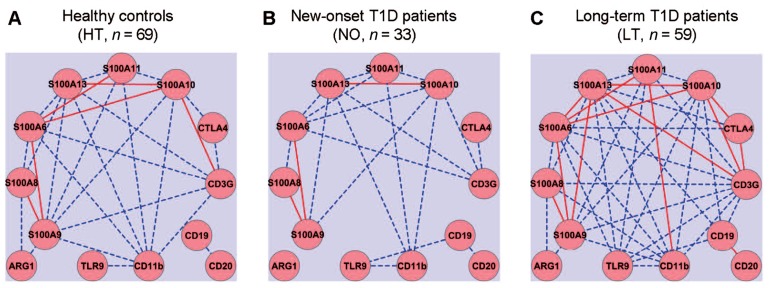
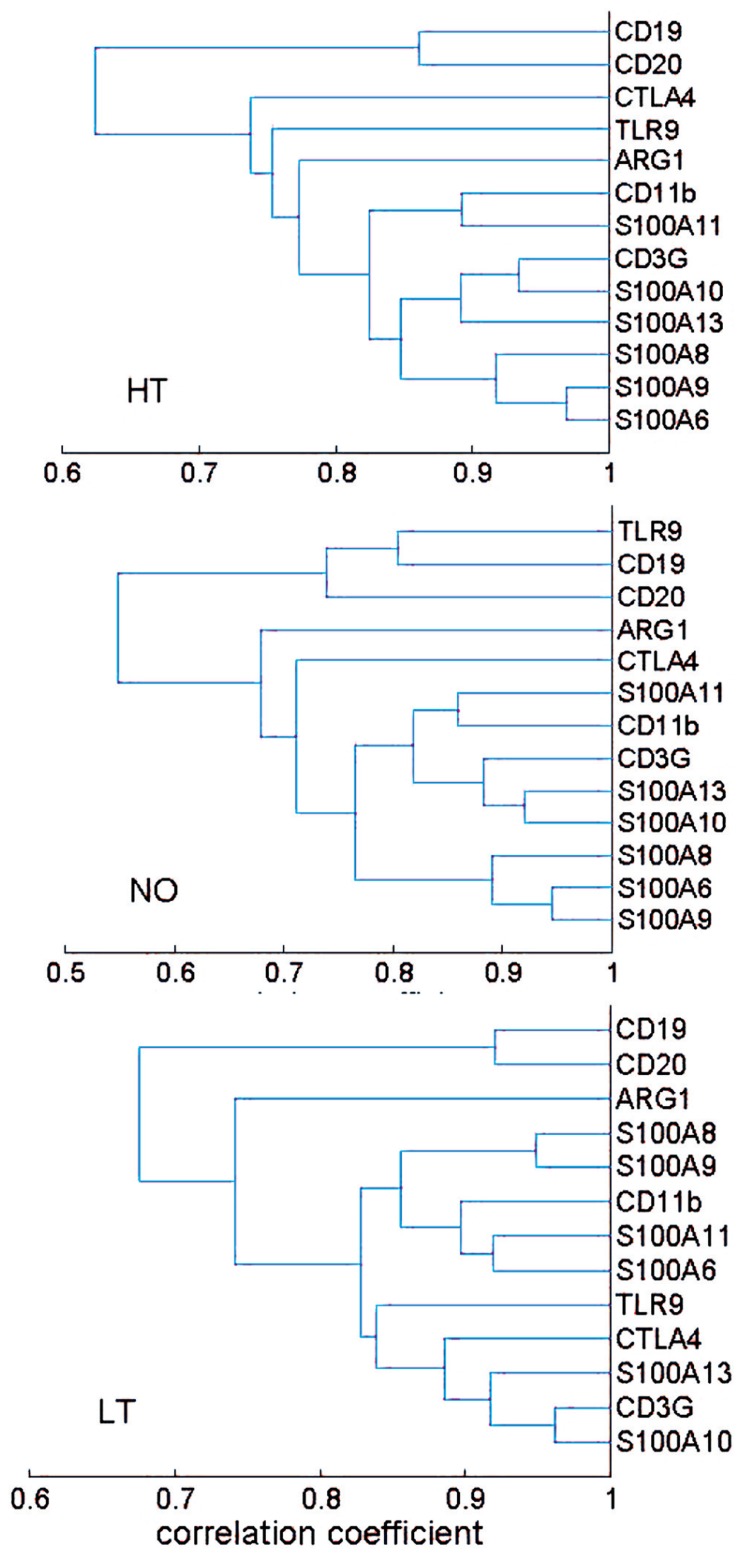
Dysregulated expression of key immune genes may cause breakdown of immunological tolerance and development of autoimmune disorders such as type 1 diabetes (T1D). General immune insufficiencies have also been implicated as a trigger of autoimmunity, due to their potential impact on immune homeostasis. Recent studies have detected evidence of systemic reduction in immune gene expression in long-term diabetic patients but the changes were not present before or at T1D onset. The changes could not be merely correlated with alteration in metabolic parameters. The studies also identified a dynamic expression pattern of several well-known as well as little-studied, immune-related genes during the course of T1D. An intriguing "ratio profile" of immune regulatory genes, such as CTLA4 and members of the S100 family, versus "baseline" immune genes, such as CD3G, prompted us to further examine immune gene expression relationships for a set of molecules representing T cells, B cells, and myeloid cells. No evidence was found to suggest an overall breach of tolerance equilibrium in T1D. Perplexingly, patients with long-term T1D presented a gene expression profile that was surprisingly more coordinated in analyses of "networking" relationship. Computational analyses of the "ratio profiles" or "relationship profiles" of immune gene expression might provide a clue for further studies of immunobiology in human T1D and other autoimmune diseases, as to how the profiles may be related to the pathogenic cause of the disease, to the effect of the diseases on immune homeostasis, or to an immunological process associated with the course of the diseases but is neither a direct cause nor a direct effect of the diseases.
关键免疫基因表达失调可能导致免疫耐受的破坏和自身免疫性疾病的发展,如 1 型糖尿病 (T1D)。由于它们对免疫稳态的潜在影响,一般免疫缺陷也被认为是自身免疫的触发因素。最近的研究在长期糖尿病患者中检测到免疫基因表达系统性降低的证据,但这些变化在 T1D 发病前或发病时并不存在。这些变化不能仅仅与代谢参数的改变相关。这些研究还在 T1D 发病过程中确定了一些众所周知的和研究较少的免疫相关基因的动态表达模式。有趣的是,免疫调节基因(如 CTLA4 和 S100 家族成员)与“基线”免疫基因(如 CD3G)的“比例谱”表明,我们进一步检查了代表 T 细胞、B 细胞和髓样细胞的一组分子的免疫基因表达关系。没有证据表明 T1D 中存在总体耐受平衡的破坏。令人费解的是,长期患有 T1D 的患者在“网络”关系的分析中表现出令人惊讶地更为协调的基因表达谱。免疫基因表达的“比例谱”或“关系谱”的计算分析可能为进一步研究人类 T1D 和其他自身免疫性疾病的免疫生物学提供线索,了解这些谱与疾病的致病原因、疾病对免疫稳态的影响,或与疾病进程相关的免疫过程的关系,但既不是疾病的直接原因,也不是疾病的直接影响。