Department of Aerospace and Mechanical Engineering, University of Notre Dame, Notre Dame, Indiana, United States of America.
PLoS One. 2012;7(10):e48843. doi: 10.1371/journal.pone.0048843. Epub 2012 Oct 31.
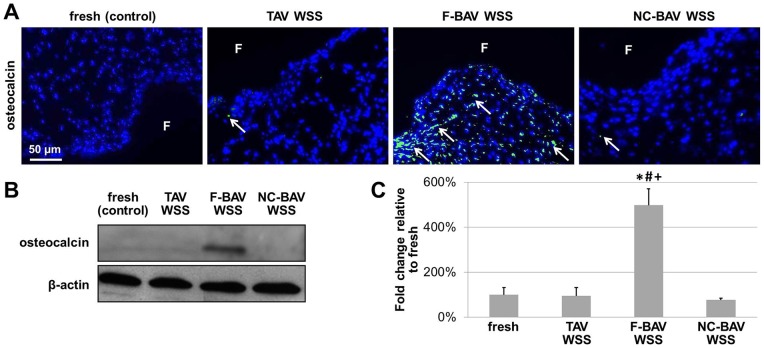
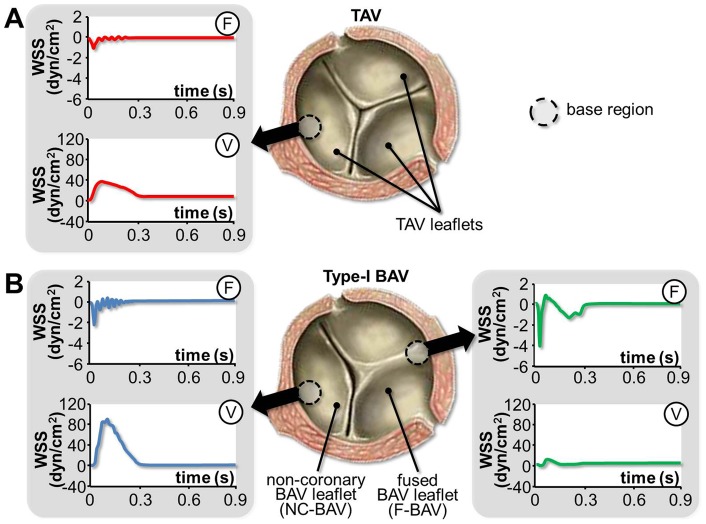
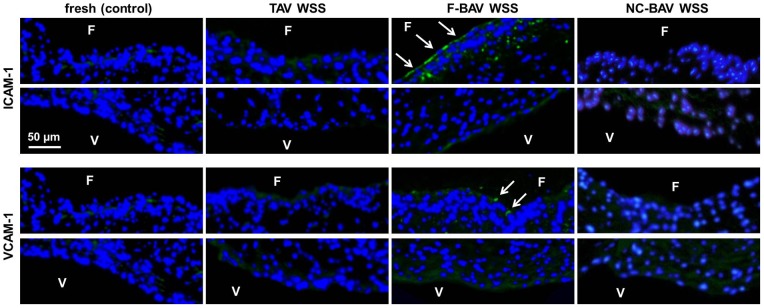
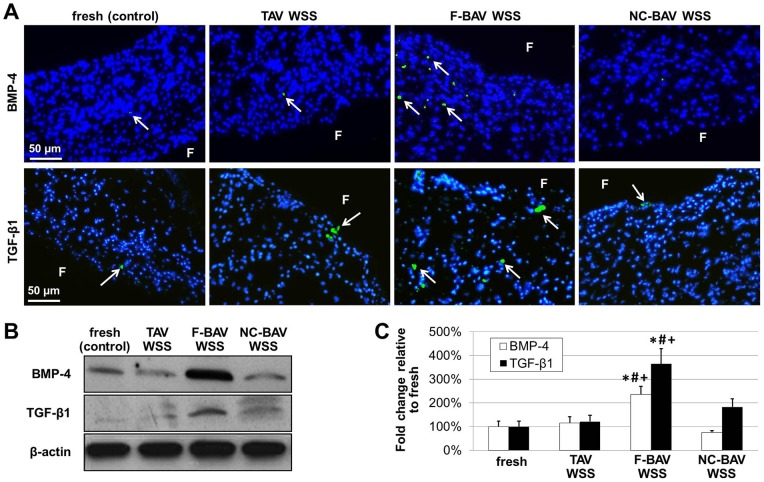
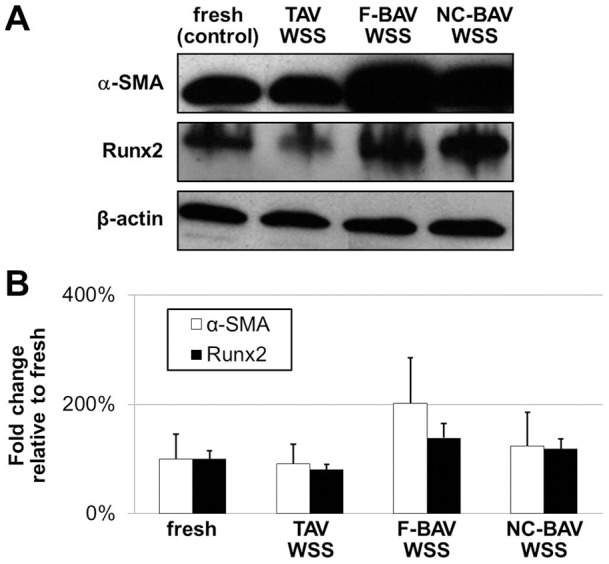
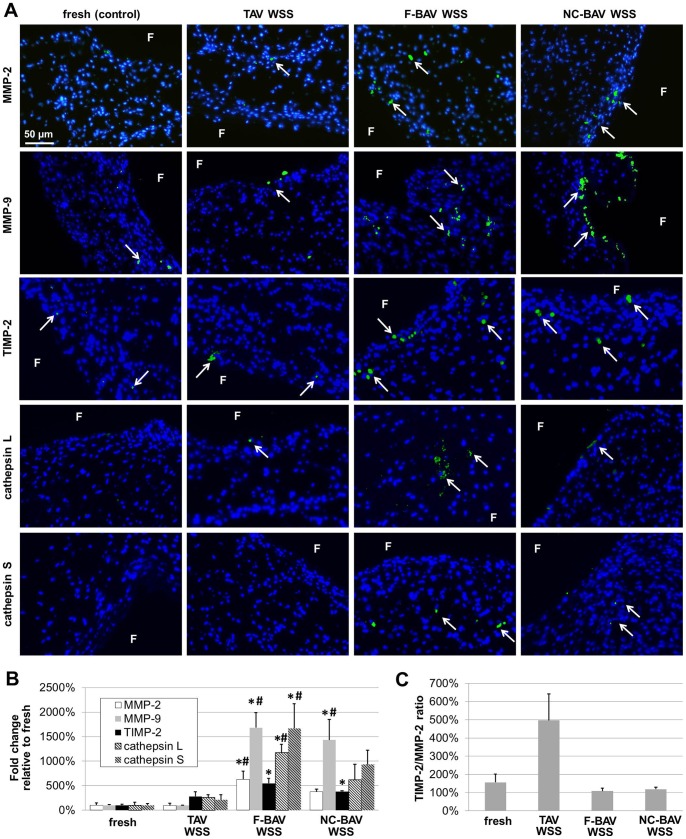
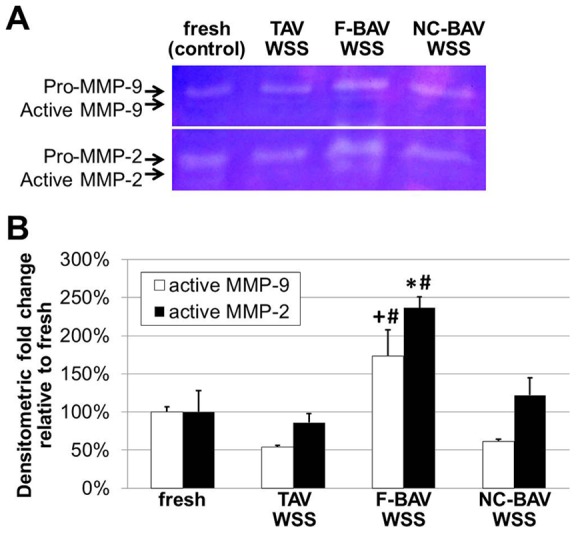
The bicuspid aortic valve (BAV) is the most common congenital cardiac anomaly and is frequently associated with calcific aortic valve disease (CAVD). The most prevalent type-I morphology, which results from left-/right-coronary cusp fusion, generates different hemodynamics than a tricuspid aortic valve (TAV). While valvular calcification has been linked to genetic and atherogenic predispositions, hemodynamic abnormalities are increasingly pointed as potential pathogenic contributors. In particular, the wall shear stress (WSS) produced by blood flow on the leaflets regulates homeostasis in the TAV. In contrast, WSS alterations cause valve dysfunction and disease. While such observations support the existence of synergies between valvular hemodynamics and biology, the role played by BAV WSS in valvular calcification remains unknown. The objective of this study was to isolate the acute effects of native BAV WSS abnormalities on CAVD pathogenesis. Porcine aortic valve leaflets were subjected ex vivo to the native WSS experienced by TAV and type-I BAV leaflets for 48 hours. Immunostaining, immunoblotting and zymography were performed to characterize endothelial activation, pro-inflammatory paracrine signaling, extracellular matrix remodeling and markers involved in valvular interstitial cell activation and osteogenesis. While TAV and non-coronary BAV leaflet WSS essentially maintained valvular homeostasis, fused BAV leaflet WSS promoted fibrosa endothelial activation, paracrine signaling (2.4-fold and 3.7-fold increase in BMP-4 and TGF-β1, respectively, relative to fresh controls), catabolic enzyme secretion (6.3-fold, 16.8-fold, 11.7-fold, 16.7-fold and 5.5-fold increase in MMP-2, MMP-9, cathepsin L, cathepsin S and TIMP-2, respectively) and activity (1.7-fold and 2.4-fold increase in MMP-2 and MMP-9 activity, respectively), and bone matrix synthesis (5-fold increase in osteocalcin). In contrast, BAV WSS did not significantly affect α-SMA and Runx2 expressions and TIMP/MMP ratio. This study demonstrates the key role played by BAV hemodynamic abnormalities in CAVD pathogenesis and suggests the dependence of BAV vulnerability to calcification on the local degree of WSS abnormality.
二叶式主动脉瓣(BAV)是最常见的先天性心脏异常,常与钙化性主动脉瓣疾病(CAVD)相关。最常见的 I 型形态是由于左/右冠状动脉瓣融合所致,其血流动力学与三叶式主动脉瓣(TAV)不同。虽然瓣叶钙化已与遗传和动脉粥样硬化倾向相关,但血流动力学异常越来越被认为是潜在的致病因素。特别是,血流对瓣叶产生的壁面切应力(WSS)调节着 TAV 的内稳态。相反,WSS 的改变会导致瓣膜功能障碍和疾病。尽管这些观察结果支持瓣血流动力学和生物学之间存在协同作用,但 BAV 的 WSS 在瓣叶钙化中的作用尚不清楚。本研究旨在分离原生 BAV WSS 异常对 CAVD 发病机制的急性影响。将猪主动脉瓣叶置于 TAV 和 I 型 BAV 叶所经历的原生 WSS 下离体孵育 48 小时。进行免疫染色、免疫印迹和酶谱分析,以表征内皮细胞激活、促炎旁分泌信号、细胞外基质重塑以及涉及瓣膜间充质细胞激活和骨生成的标志物。虽然 TAV 和非冠状动脉 BAV 瓣叶 WSS 基本维持着瓣膜的内稳态,但融合的 BAV 瓣叶 WSS 促进了纤维层内皮细胞的激活、旁分泌信号(与新鲜对照相比,BMP-4 和 TGF-β1 分别增加了 2.4 倍和 3.7 倍)、代谢酶的分泌(MMP-2、MMP-9、组织蛋白酶 L、组织蛋白酶 S 和 TIMP-2 分别增加了 6.3 倍、16.8 倍、11.7 倍、16.7 倍和 5.5 倍)和活性(MMP-2 和 MMP-9 活性分别增加了 1.7 倍和 2.4 倍)以及骨基质合成(骨钙素增加了 5 倍)。相反,BAV WSS 对 α-SMA 和 Runx2 表达以及 TIMP/MMP 比值没有显著影响。本研究证明了 BAV 血流动力学异常在 CAVD 发病机制中的关键作用,并表明 BAV 对钙化的易感性取决于局部 WSS 异常的程度。