Hempel Niels, Petrick Ingolf, Behrendt Frank
Faculty of Natural Sciences, Lausitz University of Applied Sciences, Großenhainer Straße 57, 01968 Senftenberg, Germany.
J Appl Phycol. 2012 Dec;24(6):1407-1418. doi: 10.1007/s10811-012-9795-3. Epub 2012 Feb 11.
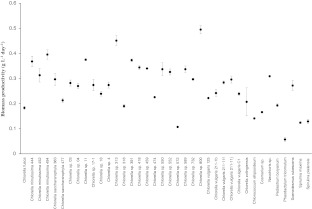
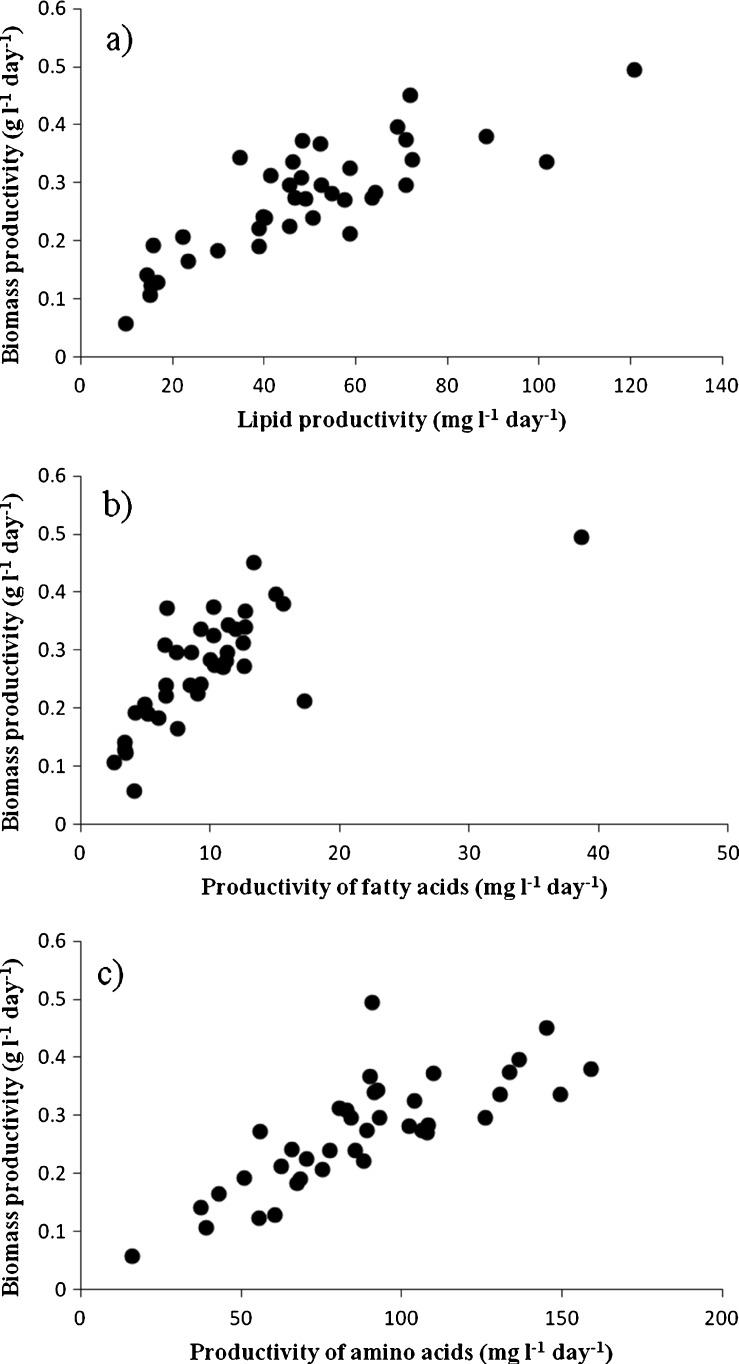
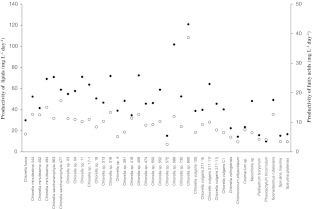
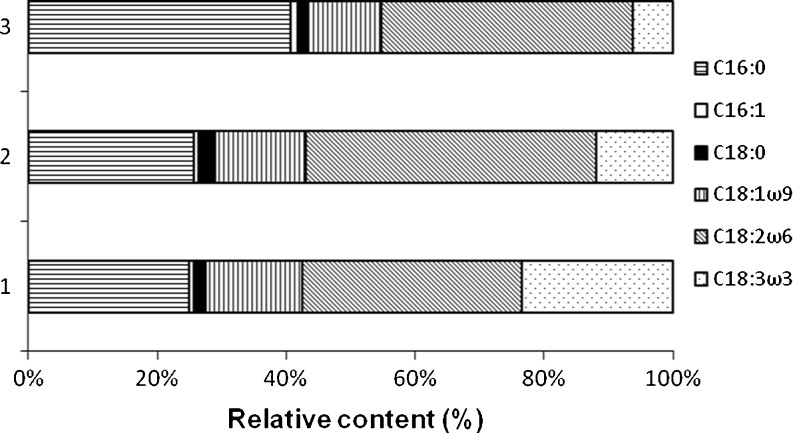
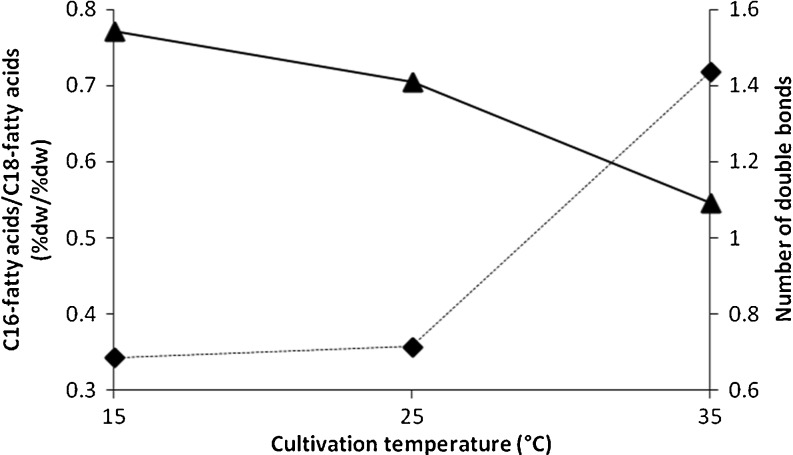
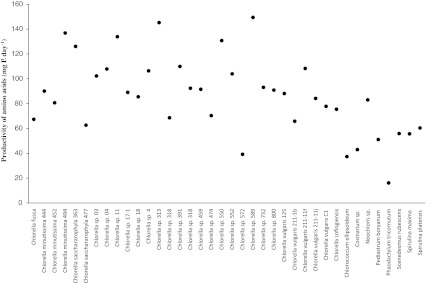
Microalgae are discussed as an alternative source for the production of biofuels. The lipid content compared to cultivation time of used species is the main reason for any choice of a special strain. This paper reviews more analytical data of 38 screened microalgae strains. After the cultivation period, total content of lipids was analysed. The extracted fatty acids were quantified as fatty acid methyl esters by GC analysis. The amino acids were analysed by HPLC. Chlorella sp., Chlorella saccharophila, Chlorella minutissima and Chlorella vulgaris were identified as species with the highest productivity of fatty acids relevant to transesterification reactions. The components were mainly linoleic acid, palmitic acid and oleic acid. To increase productivity of highly saturated fatty acids, cultivation parameters light intensity and temperature were varied. In this manner, the ideal conditions for biodiesel production were defined in this publication. ELECTRONIC SUPPLEMENTARY MATERIAL: The online version of this article (doi:10.1007/s10811-012-9795-3) contains supplementary material, which is available to authorized users.
微藻被视为生物燃料生产的替代来源。与所用藻种的培养时间相比,脂质含量是选择特定藻株的主要原因。本文回顾了38种筛选出的微藻菌株的更多分析数据。培养期结束后,分析了脂质的总含量。通过气相色谱分析将提取的脂肪酸定量为脂肪酸甲酯。通过高效液相色谱分析氨基酸。小球藻属、嗜糖小球藻、极小小球藻和普通小球藻被确定为与酯交换反应相关的脂肪酸生产率最高的藻种。这些成分主要是亚油酸、棕榈酸和油酸。为了提高高饱和脂肪酸的生产率,改变了光照强度和温度等培养参数。通过这种方式,本出版物确定了生物柴油生产的理想条件。电子补充材料:本文的在线版本(doi:10.1007/s10811-012-9795-3)包含补充材料,授权用户可获取。