MRC Human Reproductive Sciences Unit, The Queen's Medical Research Institute, 47 Little France Crescent, Edinburgh, EH16 4TJ, UK.
Dis Model Mech. 2013 Mar;6(2):530-6. doi: 10.1242/dmm.010355. Epub 2012 Nov 7.
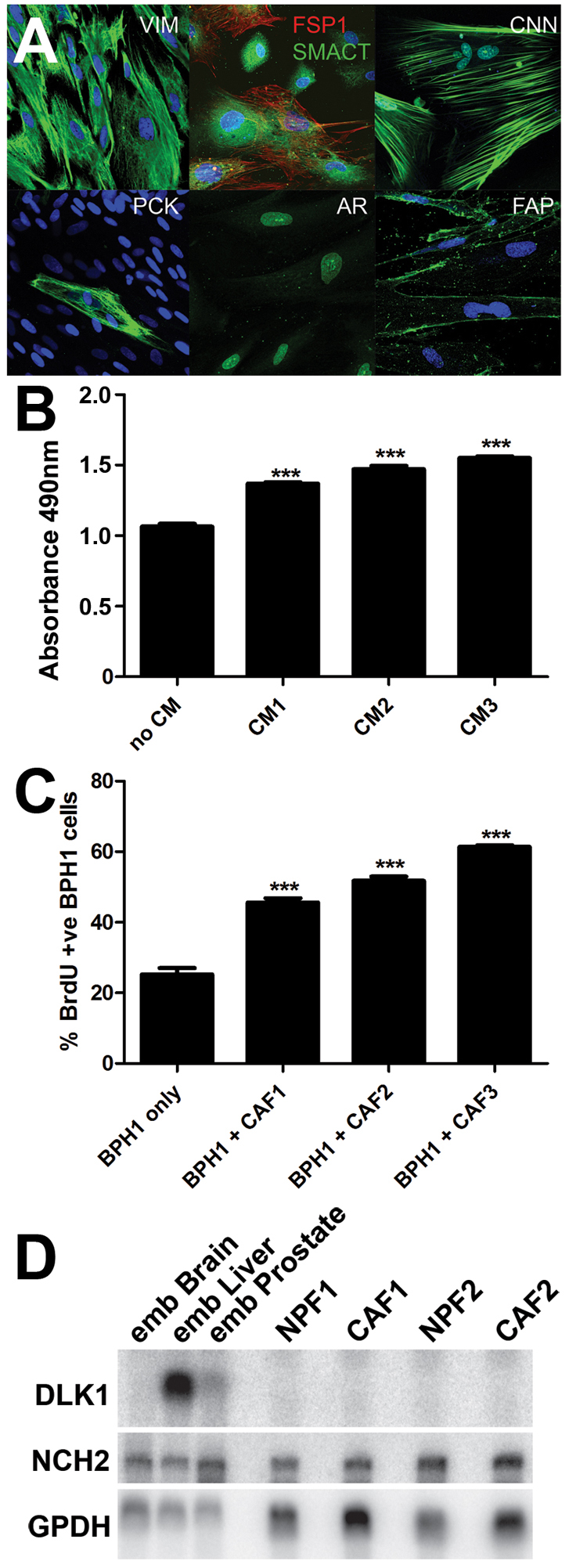
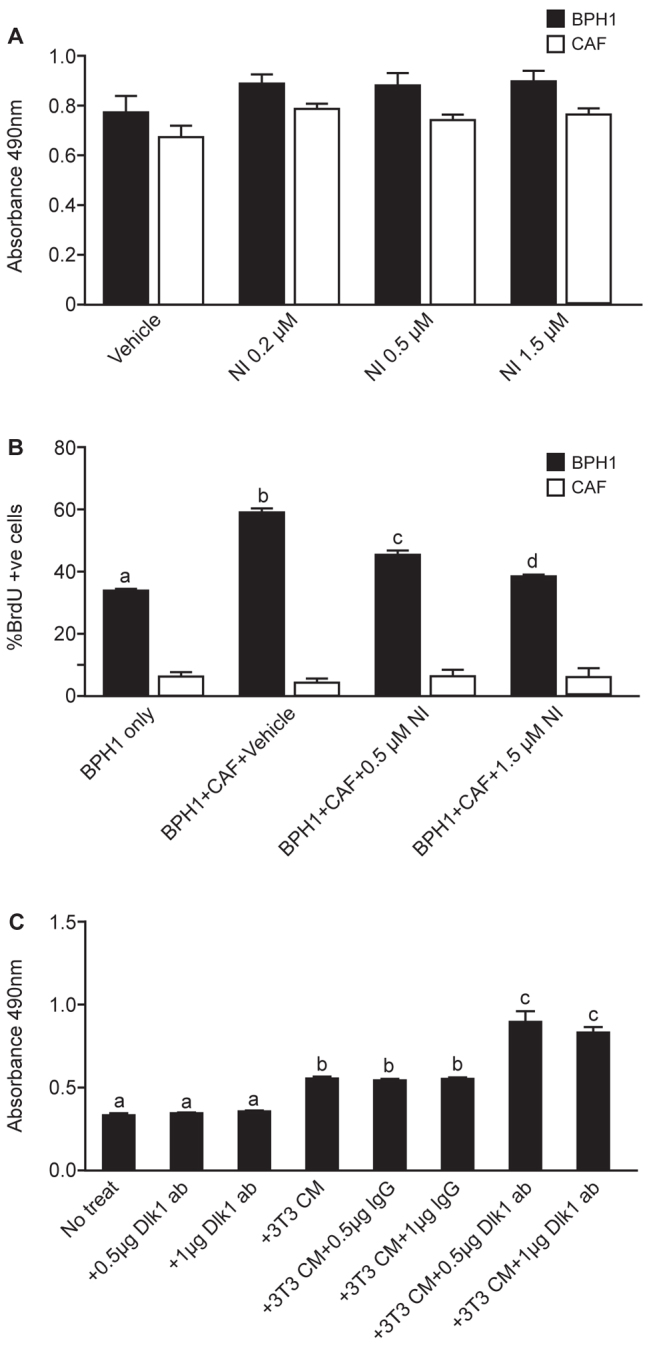
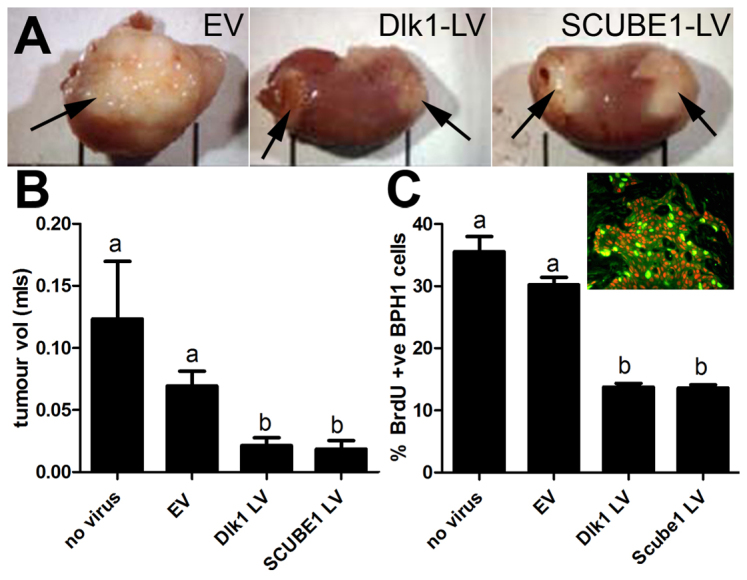
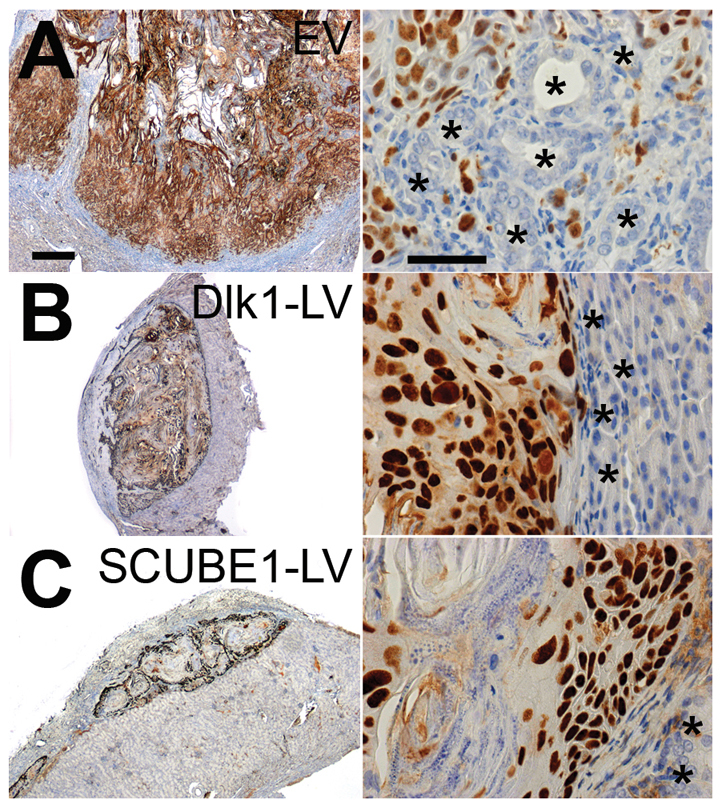
Human prostatic cancer-associated fibroblasts (CAFs) can elicit malignant changes in initiated but non-tumorigenic human prostate epithelium, demonstrating that they possess pro-tumorigenic properties. We set out to reduce the pro-tumorigenic activity of patient CAFs using the Dlk1 and SCUBE1 molecules that we had previously identified in prostate development. Our hypothesis was that mesenchymally expressed molecules might reduce CAF pro-tumorigenic activity, either directly or indirectly. We isolated primary prostatic CAFs and characterised their expression of CAF markers, expression of Notch2, Dlk1 and SCUBE1 transcripts, and confirmed their ability to stimulate BPH1 epithelial cell proliferation. Next, we expressed Dlk1 or SCUBE1 in CAFs and determined their effects upon tumorigenesis in vivo following recombination with BPH1 epithelia and xenografting in SCID mice. Tumour size was reduced by about 75% and BPH1 proliferation was reduced by about 50% after expression of Dlk1 or SCUBE1 in CAFs, and there was also a reduction in invasion of BPH1 epithelia into the host kidney. Inhibition of Notch signalling, using inhibitor XIX, led to a reduction in BPH1 cell proliferation in CAF-BPH1 co-cultures, whereas inhibition of Dlk1 in NIH3T3-conditioned media led to an increase in BPH1 growth. Our results suggest that pro-tumorigenic CAF activity can be reduced by the expression of developmental pathways.
人前列腺癌相关成纤维细胞(CAFs)可诱导起始但非致瘤性人前列腺上皮发生恶性转化,表明其具有促瘤特性。我们着手使用先前在前列腺发育中鉴定的 Dlk1 和 SCUBE1 分子来降低患者 CAFs 的促瘤活性。我们的假设是,间充质表达的分子可能直接或间接地降低 CAF 的促瘤活性。我们分离了原发性前列腺 CAFs 并对其 CAF 标志物表达、Notch2、Dlk1 和 SCUBE1 转录本表达进行了特征分析,并证实了它们刺激 BPH1 上皮细胞增殖的能力。接下来,我们在 CAFs 中表达 Dlk1 或 SCUBE1,并在与 BPH1 上皮细胞重组后,在 SCID 小鼠中进行体内肿瘤发生测定,确定其对肿瘤发生的影响。CAFs 中表达 Dlk1 或 SCUBE1 后,肿瘤大小减少约 75%,BPH1 增殖减少约 50%,BPH1 上皮细胞侵入宿主肾脏也减少。使用抑制剂 XIX 抑制 Notch 信号通路会导致 CAF-BPH1 共培养物中的 BPH1 细胞增殖减少,而在 NIH3T3 条件培养基中抑制 Dlk1 会导致 BPH1 生长增加。我们的结果表明,通过表达发育途径可以降低促瘤性 CAF 活性。