Department of Neurobiology, Hadassah-Hebrew University Medical Center, Jerusalem, Israel.
PLoS One. 2012;7(11):e48597. doi: 10.1371/journal.pone.0048597. Epub 2012 Nov 14.
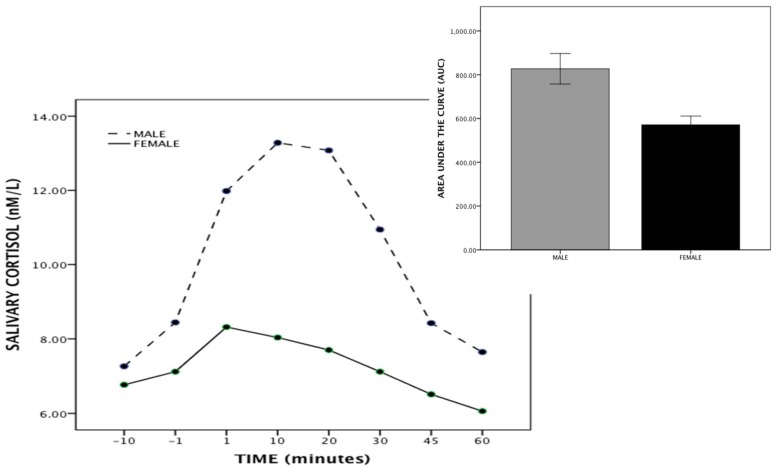
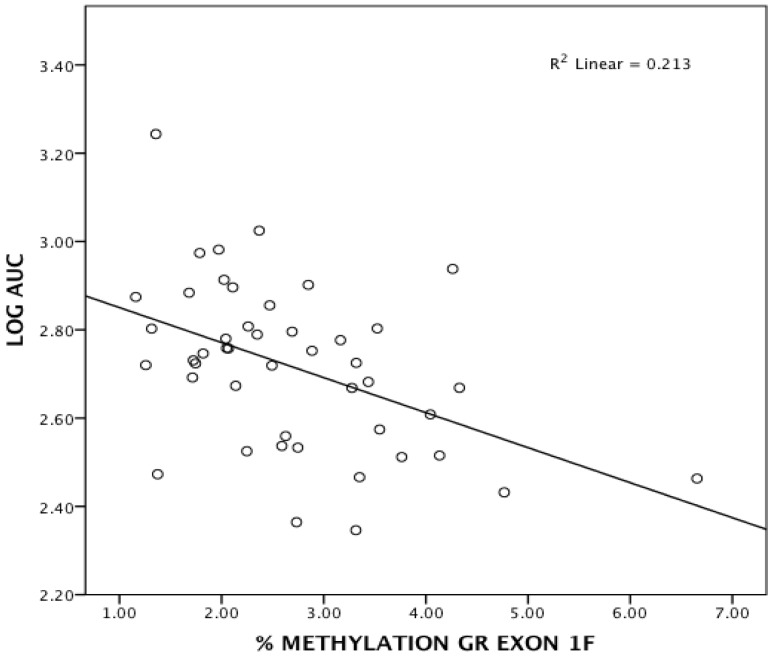
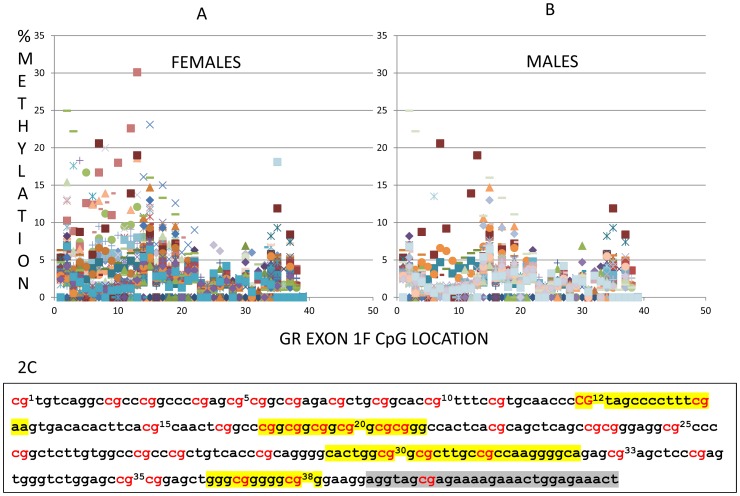
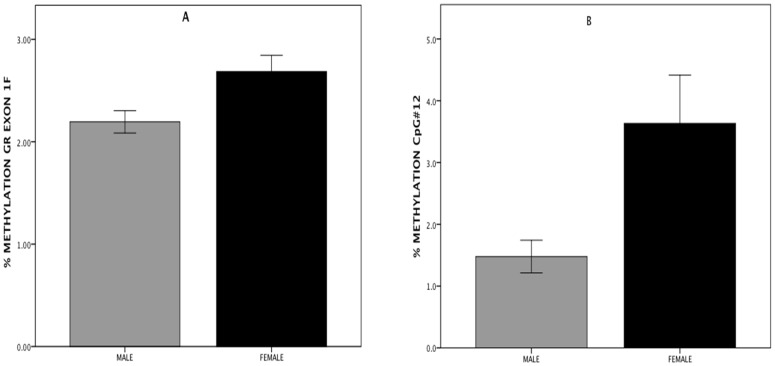
Evidence suggests that the reactivity of the Hypothalamus-Pituitary-Adrenal axis (HPAA) is modulated by both genetic and environmental variables. Of special interest are the underlying molecular mechanisms driving gender differences to psychosocial stressors. Epigenetic mechanisms that sculpt the genome are ideal candidates for mediating the effects of signals on the HPAA. In the current study, we analyzed by pyrosequencing, bisulfite-treated buccal DNA from male and female university students who participated in the Trier Social Stress Test (TSST). A linear regression model was used to ascertain the effects of sex, CpG methylation and genes on stress response. Total cortisol output (area under the curve, AUC) was significantly predicted by glucocorticoid receptor (NR3C1) exon 1F methylation (averaged across 39 CpG sites) solely in female subjects. A single CpG site located in the exon 1F noncanonical nerve growth factor-inducible protein A (NGFI-A) transcription factor was a highly significant predictor of AUC in female subjects. Additionally, variations in the estrogen receptor alpha (ESR1) and the serotonin transporter promoter (5-HTTLPR) genes were independent additive predictors of AUC. The full model accounted for half of the variance (50.06%) in total cortisol output. Notably, this is the first demonstration that epigenetic changes at the GR exon 1F correlate with HPAA reactivity. These findings have important implications for understanding the molecular mechanisms underlying gender differences in stress-related disorders and underscore the unique value of modeling both epigenetic and genetic information in conferring vulnerability to stress.
有证据表明,下丘脑-垂体-肾上腺轴 (HPAA) 的反应性受到遗传和环境变量的调节。特别值得关注的是驱动性别差异对心理社会应激源的潜在分子机制。塑造基因组的表观遗传机制是介导信号对 HPAA 影响的理想候选者。在当前的研究中,我们通过焦磷酸测序分析了参加特里尔社会应激测试 (TSST) 的男性和女性大学生的口腔颊部经亚硫酸氢盐处理的 DNA。线性回归模型用于确定性别、CpG 甲基化和基因对应激反应的影响。仅在女性受试者中,糖皮质激素受体 (NR3C1) 外显子 1F 甲基化(平均 39 个 CpG 位点)显著预测了总皮质醇输出(曲线下面积,AUC)。位于外显子 1F 中非典型神经生长因子诱导蛋白 A (NGFI-A) 转录因子中的单个 CpG 位点是女性受试者 AUC 的高度显著预测因子。此外,雌激素受体 alpha (ESR1) 和 5-羟色胺转运蛋白启动子 (5-HTTLPR) 基因的变异是 AUC 的独立附加预测因子。完整模型解释了总皮质醇输出的一半方差(50.06%)。值得注意的是,这是首次证明 GR 外显子 1F 的表观遗传变化与 HPAA 反应性相关。这些发现对于理解应激相关障碍中性别差异的分子机制具有重要意义,并强调了在赋予对压力的易感性方面同时建模表观遗传和遗传信息的独特价值。