Department of Pharmacology, Program in Pharmacogenomics, College of Medicine, The Ohio State University, Columbus, OH, USA.
Biol Psychiatry. 2013 Mar 15;73(6):546-54. doi: 10.1016/j.biopsych.2012.09.028. Epub 2012 Nov 13.
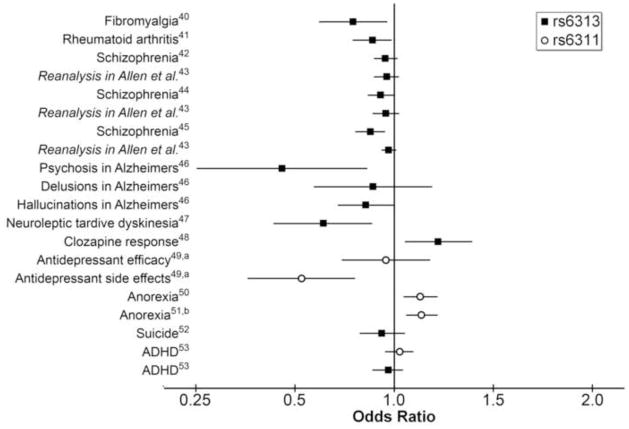
The 5-hydroxytryptamine 2A receptor, encoded by HTR2A, is a major postsynaptic target for serotonin in the human brain and a therapeutic drug target. Despite hundreds of genetic associations investigating HTR2A polymorphisms in neuropsychiatric disorders and therapies, the role of genetic HTR2A variability in health and disease remains uncertain.
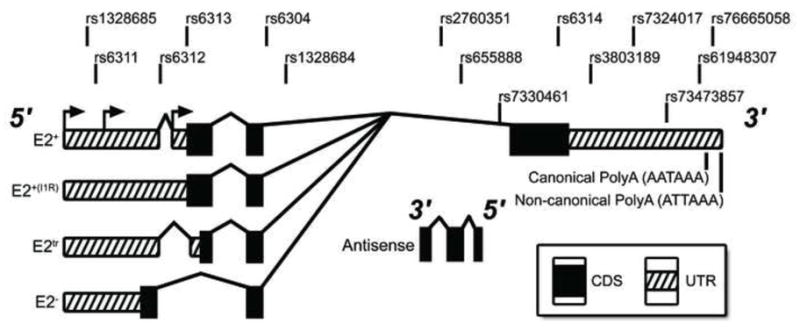
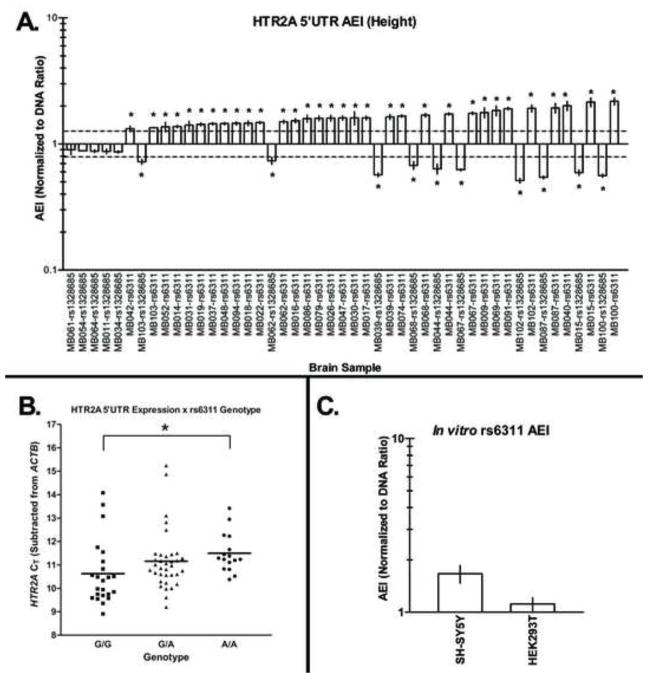
To discover and characterize regulatory HTR2A variants, we sequenced whole transcriptomes from 10 human brain regions with massively parallel RNA sequencing and measured allelic expression of multiple HTR2A messenger (m)RNA transcript variants. Following discovery of functional variants, we further characterized their impact on genetic expression in vitro.
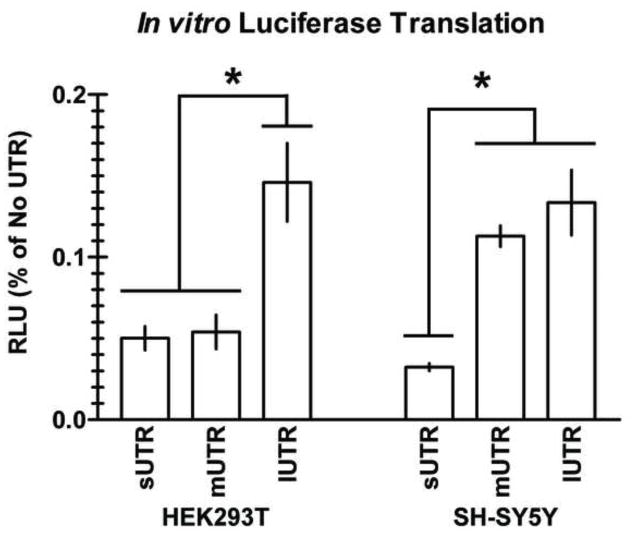
Three polymorphisms modulate the use of novel alternative exons and untranslated regions (UTRs), changing expression of RNA and protein. The frequent promoter variant rs6311, widely implicated in human neuropsychiatric disorders, decreases usage of an upstream transcription start site encoding a longer 5'UTR with greater translation efficiency. rs76665058, located in an extended 3'UTR and unique to individuals of African descent, modulates allelic HTR2A mRNA expression. The third single nucleotide polymorphism, unannotated and present in only a single subject, directs alternative splicing of exon 2. Targeted analysis of HTR2A in the Sequenced Treatment Alternatives to Relieve Depression (STAR*D) study reveals associations between functional variants and depression severity or citalopram response.
Regulatory polymorphisms modulate HTR2A mRNA expression in an isoform-specific manner, directing the usage of novel untranslated regions and alternative exons. These results provide a foundation for delineating the role of HTR2A and serotonin signaling in central nervous system disorders.
5-羟色胺 2A 受体(HTR2A)编码的 5-羟色胺 2A 受体是人类大脑中 5-羟色胺的主要突触后靶点,也是治疗药物的靶点。尽管有数百项遗传关联研究调查了神经精神障碍和治疗中 HTR2A 多态性,但遗传 HTR2A 变异性在健康和疾病中的作用仍不确定。
为了发现和描述调控 HTR2A 变体,我们使用大规模平行 RNA 测序对 10 个人脑区域的全转录组进行测序,并测量了多种 HTR2A 信使(m)RNA 转录变体的等位基因表达。在发现功能变体后,我们进一步研究了它们在体外对基因表达的影响。
三个多态性调节了新型选择性外显子和非翻译区(UTR)的使用,改变了 RNA 和蛋白质的表达。广泛参与人类神经精神障碍的常见启动子变体 rs6311 降低了编码具有更高翻译效率的较长 5'UTR 的上游转录起始位点的使用。位于扩展 3'UTR 中的 rs76665058 仅存在于非洲裔个体中,调节 HTR2A mRNA 的等位基因表达。第三个单核苷酸多态性,未注释且仅存在于一个个体中,指导外显子 2 的选择性剪接。针对抑郁缓解的序列治疗替代方案(STAR*D)研究中的 HTR2A 进行的靶向分析显示,功能性变体与抑郁严重程度或西酞普兰反应之间存在关联。
调控多态性以特定异构体的方式调节 HTR2A mRNA 表达,指导新型非翻译区和选择性外显子的使用。这些结果为描绘 HTR2A 和 5-羟色胺信号在中枢神经系统疾病中的作用奠定了基础。