University of California-San Francisco School of Medicine, San Francisco, CA, USA.
Am J Obstet Gynecol. 2013 May;208(5):343-53. doi: 10.1016/j.ajog.2012.11.013. Epub 2012 Nov 15.
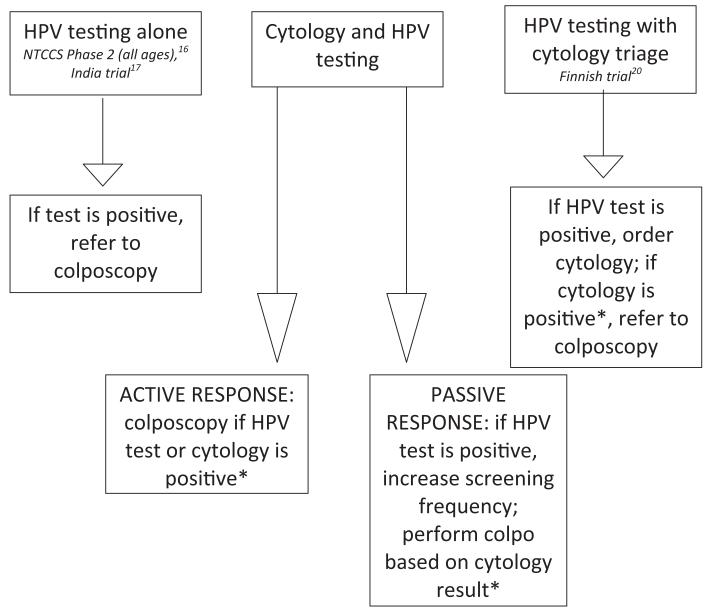
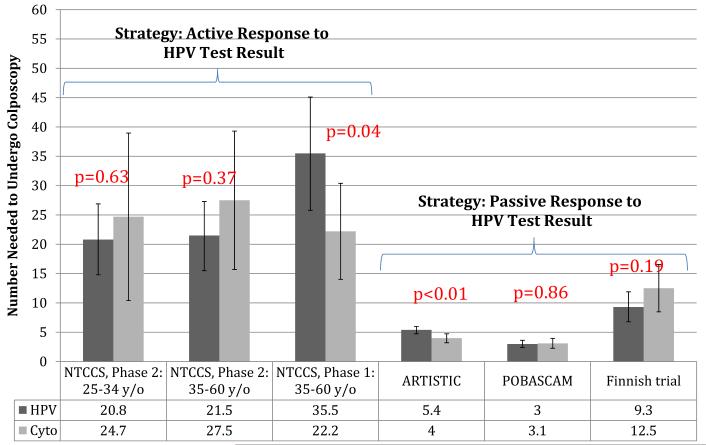
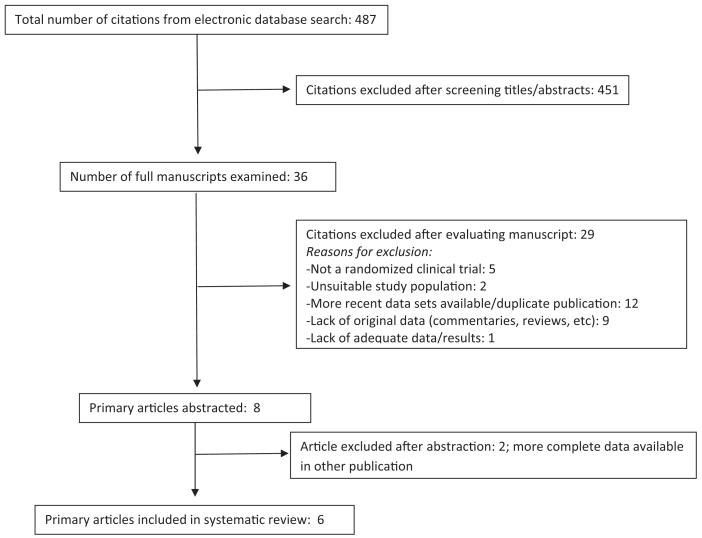
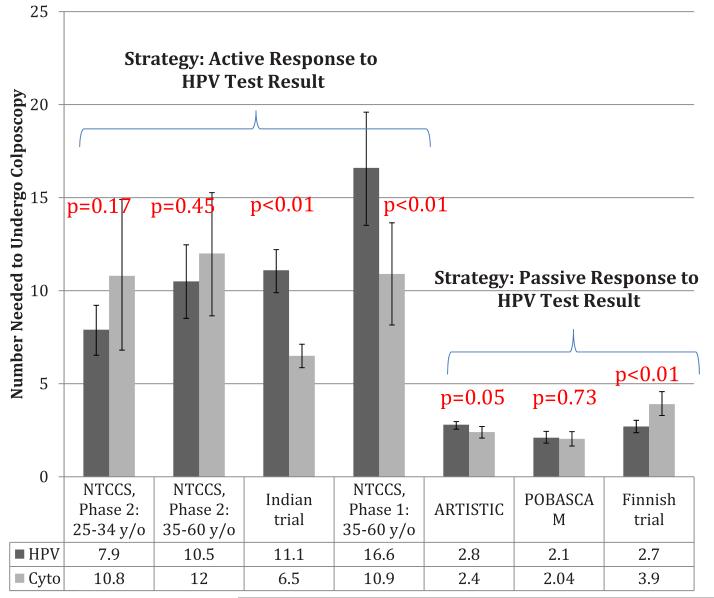
Our objective was to assess the sensitivity and specificity of human papillomavirus (HPV) testing for cervical cancer screening in randomized trials. We conducted a systematic literature search of the following databases: MEDLINE, CINAHL, EMBASE, and Cochrane. Eligible studies were randomized trials comparing HPV-based to cytology-based screening strategies, with disease status determined by colposcopy/biopsy for participants with positive results. Disease rates (cervical intraepithelial neoplasia [CIN]2 or greater and CIN3 or greater), sensitivity, and positive predictive value were abstracted or calculated from the articles. Six studies met inclusion criteria. Relative sensitivities for detecting CIN3 or greater of HPV testing-based strategies vs cytology ranged from 0.8 to 2.1. The main limitation of our study was that testing methodologies and screening/management protocols were highly variable across studies. Screening strategies in which a single initial HPV-positive test led to colposcopy were more sensitive than cytology but resulted in higher colposcopy rates. These results have implications for cotesting with HPV and cytology as recommended in the United States.
我们的目的是评估人乳头瘤病毒(HPV)检测在随机试验中用于宫颈癌筛查的敏感性和特异性。我们对以下数据库进行了系统的文献检索:MEDLINE、CINAHL、EMBASE 和 Cochrane。合格的研究是将 HPV 为基础的与细胞学为基础的筛查策略进行比较的随机试验,对于阳性结果的参与者,通过阴道镜检查/活检确定疾病状态。从文章中提取或计算了疾病发生率(宫颈上皮内瘤变[CIN]2 或更高级别和 CIN3 或更高级别)、敏感性和阳性预测值。六项研究符合纳入标准。HPV 检测为基础的策略与细胞学相比,检测 CIN3 或更高级别病变的相对敏感性范围为 0.8 至 2.1。我们研究的主要局限性是,检测方法学和筛查/管理方案在研究之间差异很大。在筛查策略中,单次初始 HPV 阳性检测导致阴道镜检查的策略比细胞学更敏感,但导致更高的阴道镜检查率。这些结果对美国推荐的 HPV 和细胞学联合检测有影响。