Heinrich Pette Institute, Leibniz Institute for Experimental Virology, Martinistrasse 52, D-20251 Hamburg, Germany.
Nucleic Acids Res. 2013 Jan 7;41(1):206-19. doi: 10.1093/nar/gks1069. Epub 2012 Nov 17.
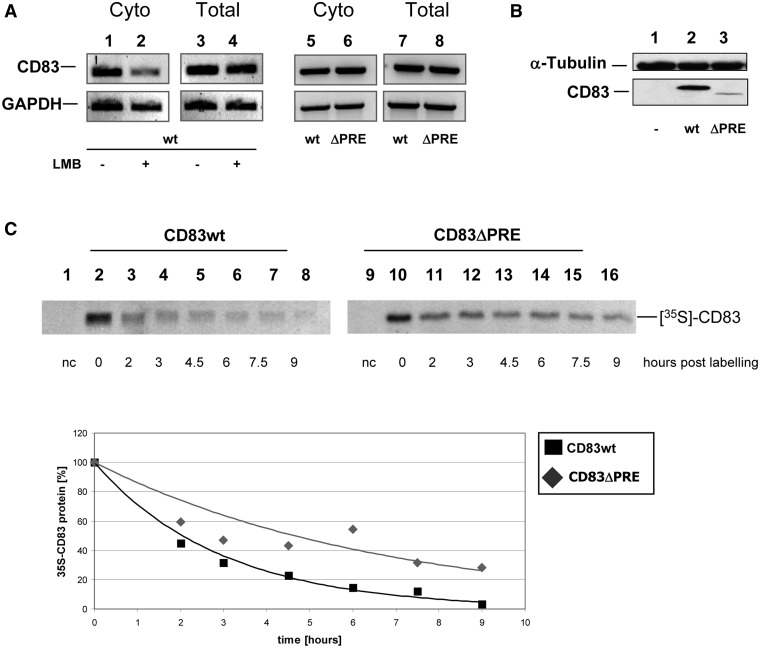
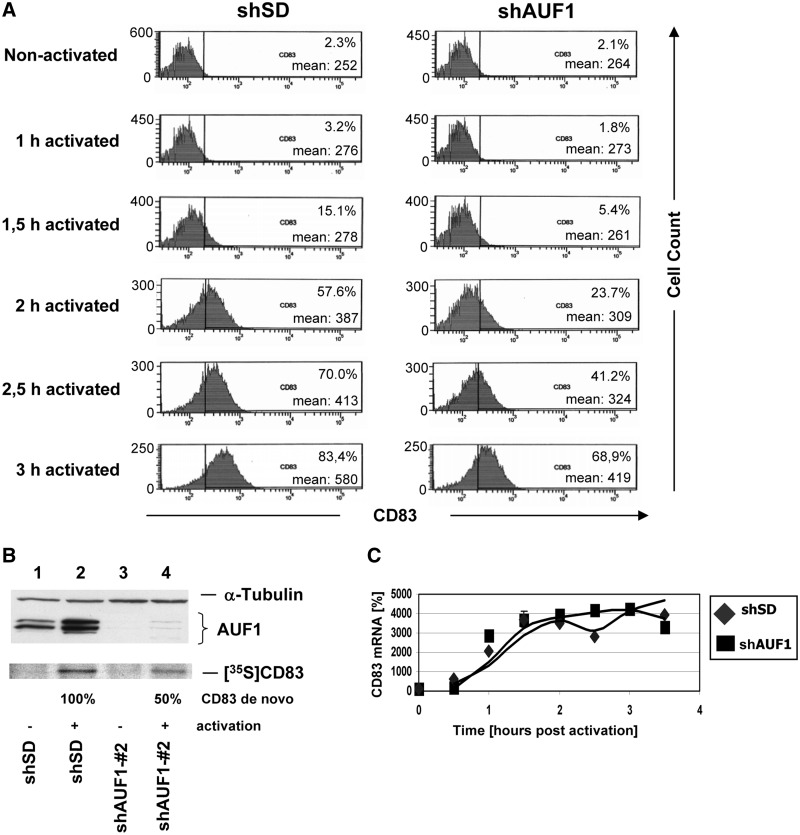
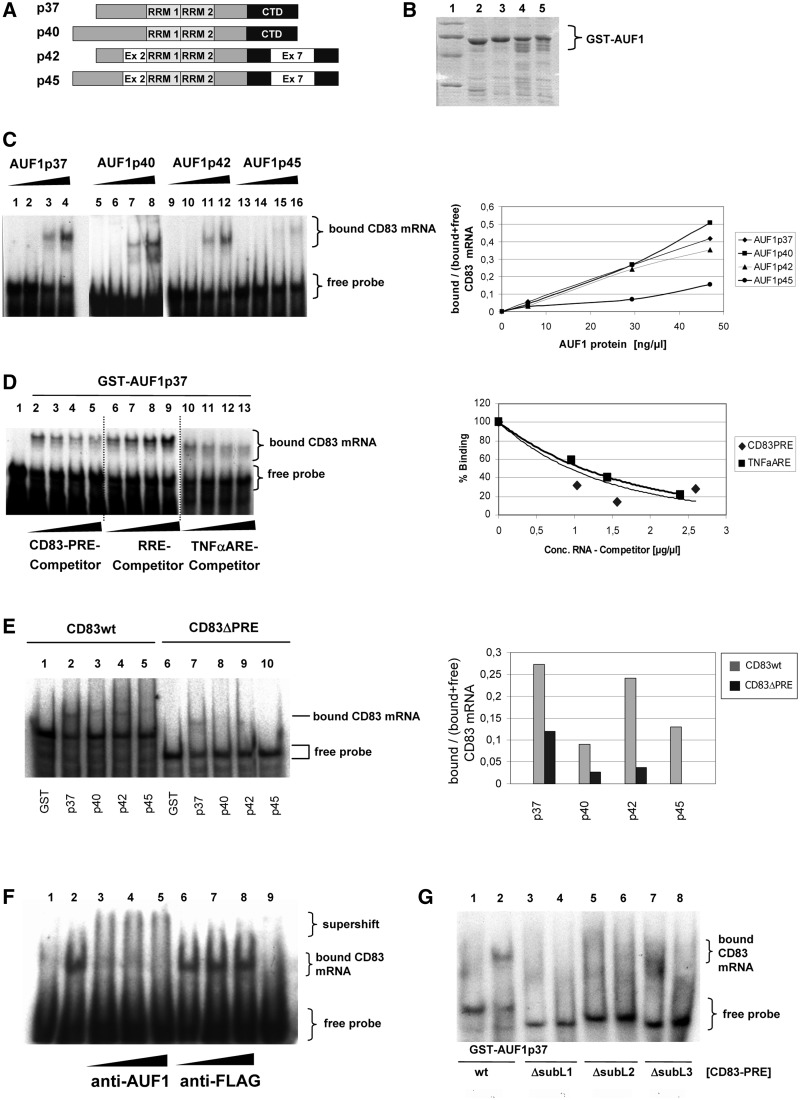
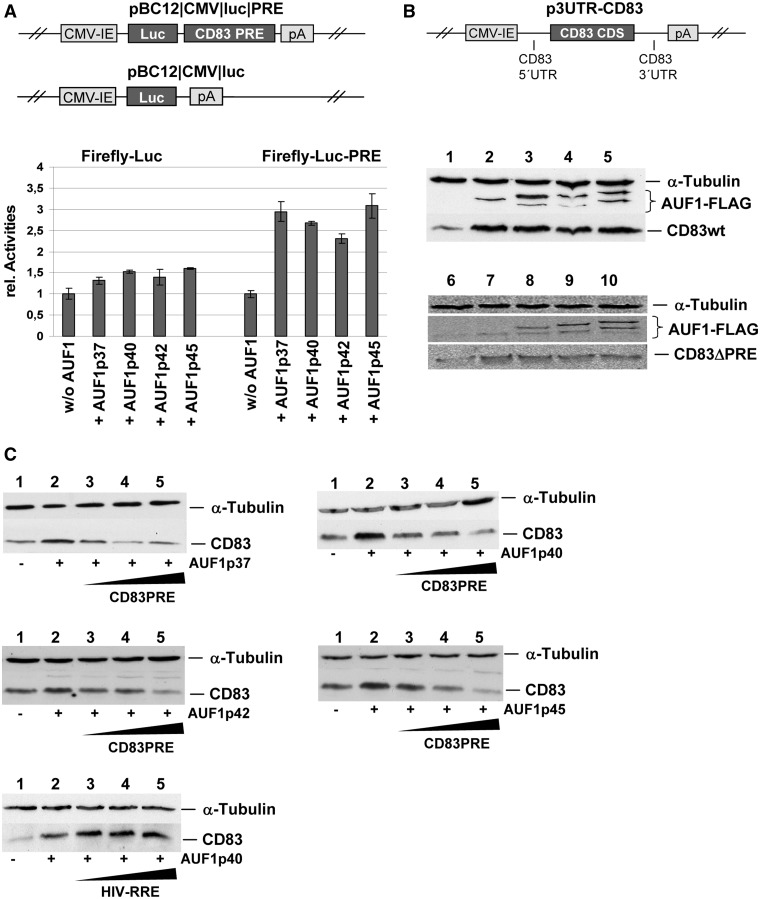
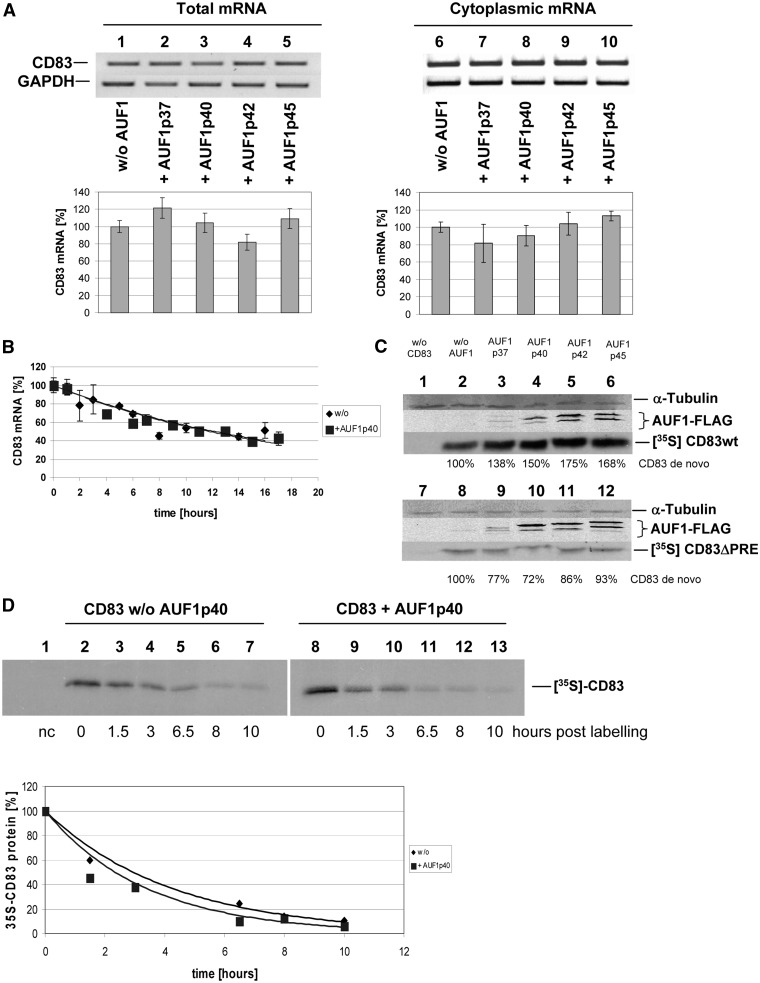
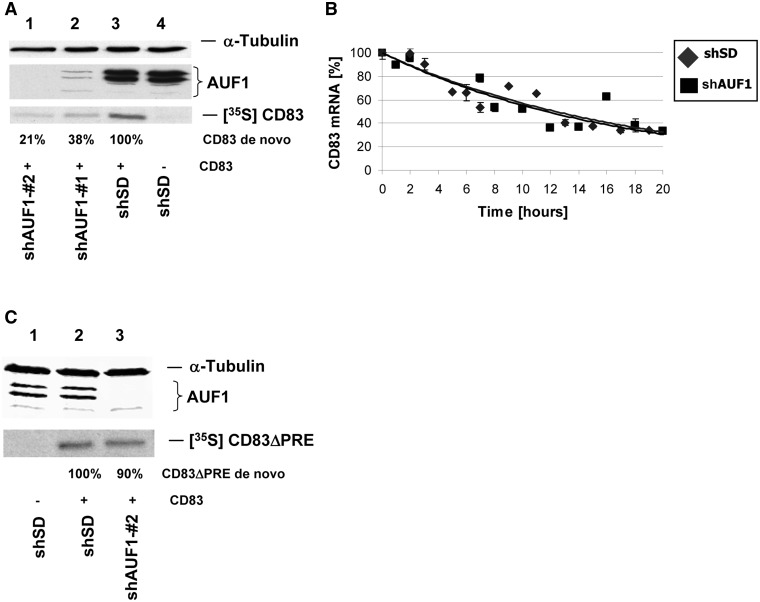
Mature dendritic cells (DC), activated lymphocytes, mononuclear cells and neutrophils express CD83, a surface protein apparently necessary for effective DC-mediated activation of naïve T-cells and T-helper cells, thymic T-cell maturation and the regulation of B-cell activation and homeostasis. Although a defined ligand of CD83 remains elusive, the multiple cellular subsets expressing CD83, as well as its numerous potential implications in immunological processes suggest that CD83 plays an important regulatory role in the mammalian immune system. Lately, nucleocytoplasmic translocation of CD83 mRNA was shown to be mediated by direct interaction between the shuttle protein HuR and a novel post-transcriptional regulatory element (PRE) located in the CD83 transcript's coding region. Interestingly, this interaction commits the CD83 mRNA to efficient nuclear export through the CRM1 protein translocation pathway. More recently, the cellular phosphoprotein and HuR ligand ANP32B (APRIL) was demonstrated to be directly involved in this intracellular transport process by linking the CD83 mRNA:HuR ribonucleoprotein (RNP) complex with the CRM1 export receptor. Casein kinase II regulates this process by phosphorylating ANP32B. Here, we identify another RNA binding protein, AUF1 (hnRNP D) that directly interacts with CD83 PRE. Unlike HuR:PRE binding, this interaction has no impact on intracellular trafficking of CD83 mRNA-containing complexes; but it does regulate translation of CD83 mRNA. Thus, our data shed more light on the complex process of post-transcriptional regulation of CD83 expression. Interfering with this process may provide a novel strategy for inhibiting CD83, and thereby cellular immune activation.
成熟树突状细胞 (DC)、活化的淋巴细胞、单核细胞和中性粒细胞表达 CD83,这是一种表面蛋白,显然对于有效的 DC 介导的幼稚 T 细胞和 T 辅助细胞的激活、胸腺 T 细胞成熟以及 B 细胞激活和稳态的调节是必需的。尽管 CD83 的明确配体仍然难以捉摸,但表达 CD83 的多种细胞亚群,以及其在免疫过程中的众多潜在影响表明,CD83 在哺乳动物免疫系统中发挥着重要的调节作用。最近,已经表明 CD83 mRNA 的核质易位是由穿梭蛋白 HuR 与位于 CD83 转录本编码区中的新型转录后调节元件 (PRE) 之间的直接相互作用介导的。有趣的是,这种相互作用使 CD83 mRNA 通过 CRM1 蛋白易位途径有效地进行核输出。最近,细胞磷蛋白和 HuR 配体 ANP32B (APRIL) 通过将 CD83 mRNA:HuR 核糖核蛋白 (RNP) 复合物与 CRM1 出口受体连接,被证明直接参与这个细胞内运输过程。酪蛋白激酶 II 通过磷酸化 ANP32B 来调节这个过程。在这里,我们鉴定了另一种 RNA 结合蛋白 AUF1 (hnRNP D),它与 CD83 PRE 直接相互作用。与 HuR:PRE 结合不同,这种相互作用对包含 CD83 mRNA 的复合物的细胞内运输没有影响;但它确实调节 CD83 mRNA 的翻译。因此,我们的数据为 CD83 表达的转录后调节的复杂过程提供了更多的信息。干扰这个过程可能为抑制 CD83 提供一种新的策略,从而抑制细胞免疫激活。