Department of Biology, American University of Beirut, Beirut, Lebanon.
PLoS Pathog. 2012;8(11):e1003029. doi: 10.1371/journal.ppat.1003029. Epub 2012 Nov 15.
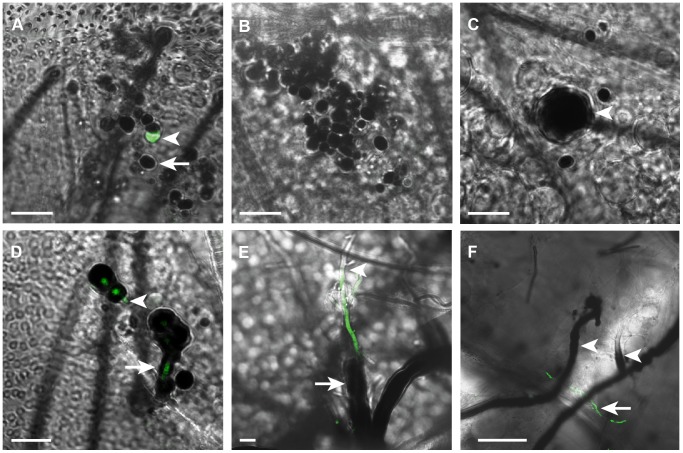
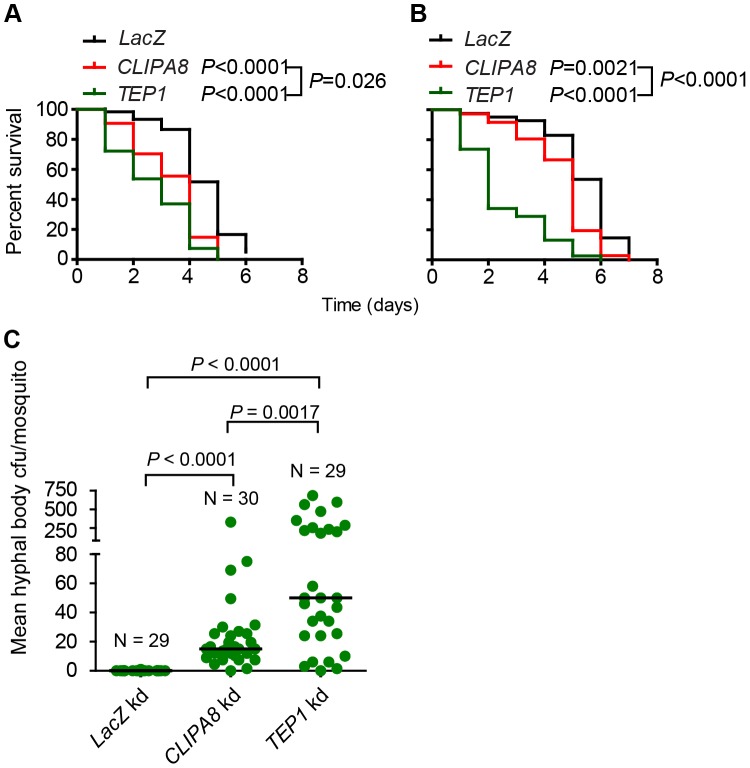
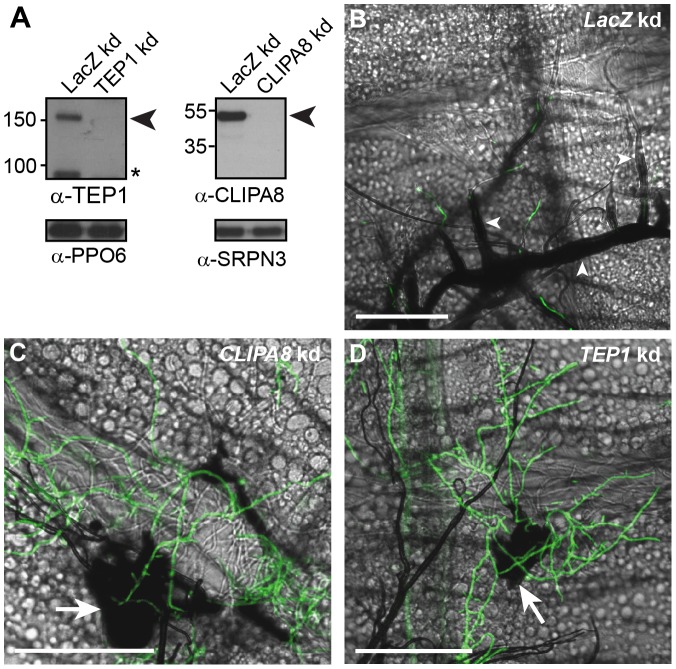
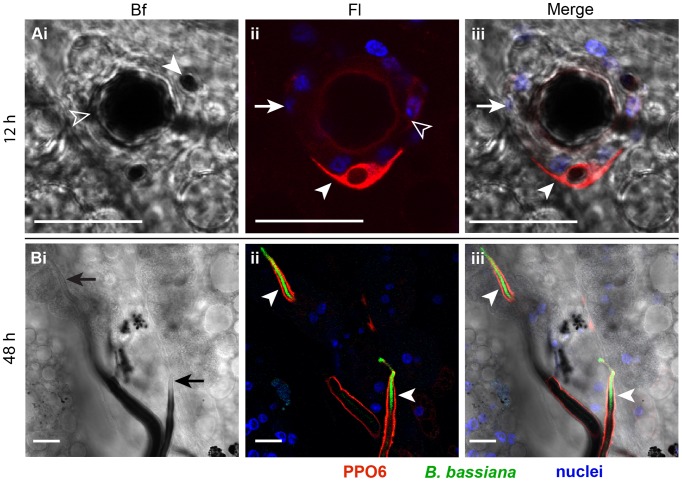
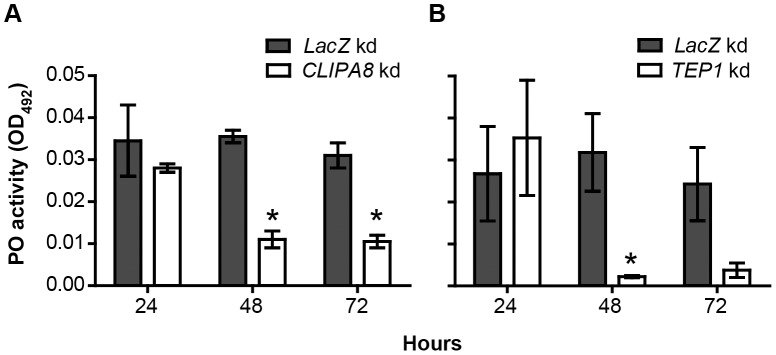
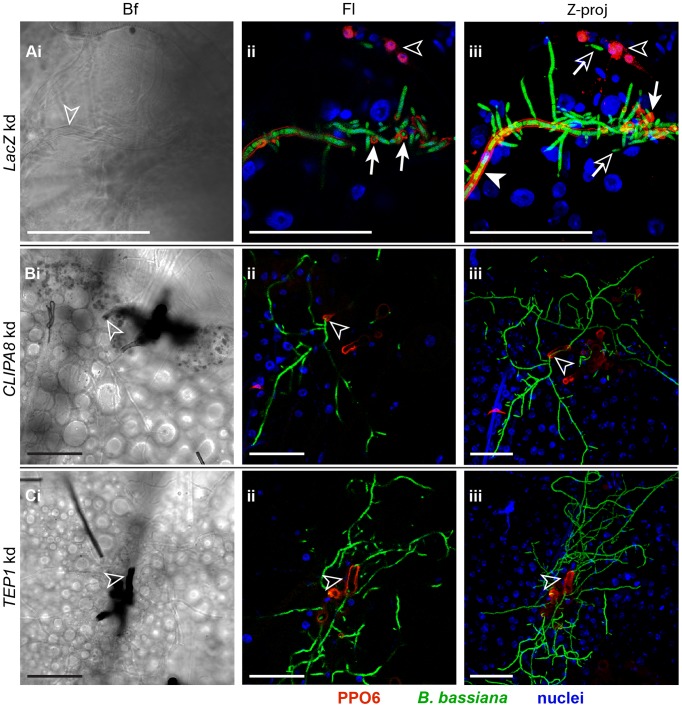
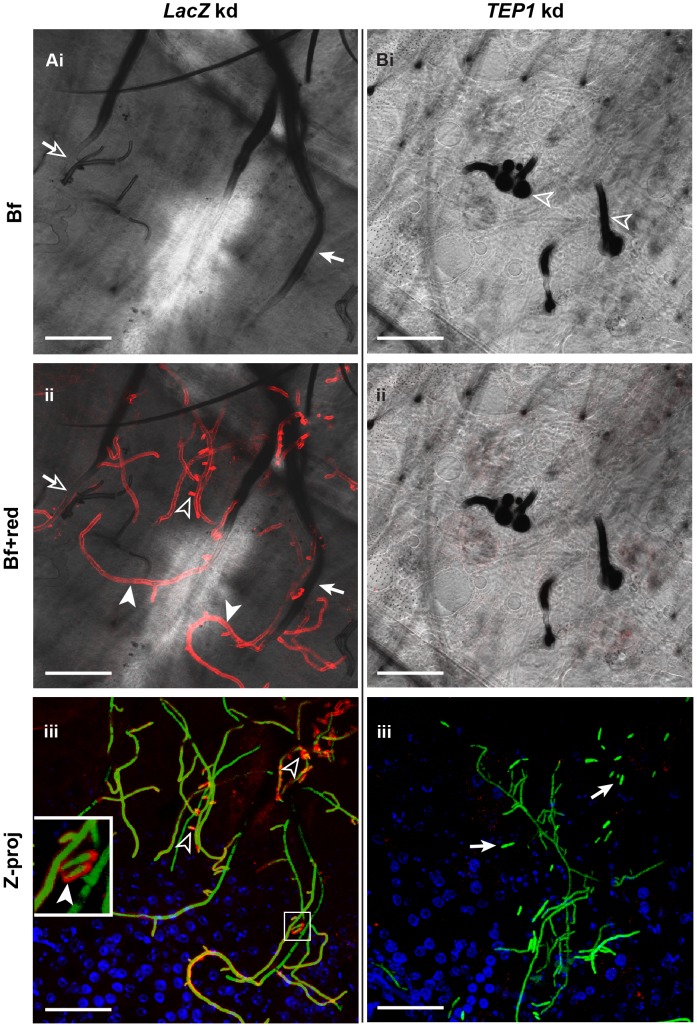
Mosquito immunity studies have focused mainly on characterizing immune effector mechanisms elicited against parasites, bacteria and more recently, viruses. However, those elicited against entomopathogenic fungi remain poorly understood, despite the ubiquitous nature of these microorganisms and their unique invasion route that bypasses the midgut epithelium, an important immune tissue and physical barrier. Here, we used the malaria vector Anopheles gambiae as a model to investigate the role of melanization, a potent immune effector mechanism of arthropods, in mosquito defense against the entomopathogenic fungus Beauveria bassiana, using in vivo functional genetic analysis and confocal microscopy. The temporal monitoring of fungal growth in mosquitoes injected with B. bassiana conidia showed that melanin eventually formed on all stages, including conidia, germ tubes and hyphae, except the single cell hyphal bodies. Nevertheless, melanin rarely aborted the growth of any of these stages and the mycelium continued growing despite being melanized. Silencing TEP1 and CLIPA8, key positive regulators of Plasmodium and bacterial melanization in A. gambiae, abolished completely melanin formation on hyphae but not on germinating conidia or germ tubes. The detection of a layer of hemocytes surrounding germinating conidia but not hyphae suggested that melanization of early fungal stages is cell-mediated while that of late stages is a humoral response dependent on TEP1 and CLIPA8. Microscopic analysis revealed specific association of TEP1 with surfaces of hyphae and the requirement of both, TEP1 and CLIPA8, for recruiting phenoloxidase to these surfaces. Finally, fungal proliferation was more rapid in TEP1 and CLIPA8 knockdown mosquitoes which exhibited increased sensitivity to natural B. bassiana infections than controls. In sum, the mosquito melanization response retards significantly B. bassiana growth and dissemination, a finding that may be exploited to design transgenic fungi with more potent bio-control activities against mosquitoes.
蚊虫免疫研究主要集中于描述针对寄生虫、细菌以及最近的病毒的免疫效应机制。然而,尽管这些微生物无处不在,且其独特的入侵途径绕过了中肠上皮这一重要的免疫组织和物理屏障,但针对昆虫病原真菌的免疫反应仍知之甚少。在这里,我们使用疟蚊 Anopheles gambiae 作为模型,通过体内功能遗传分析和共聚焦显微镜,研究了黑化这一有效的节肢动物免疫效应机制在蚊虫防御昆虫病原真菌绿僵菌 Beauveria bassiana 中的作用。在注射绿僵菌分生孢子的蚊子中,对真菌生长的时间监测表明,黑色素最终在所有阶段形成,包括分生孢子、芽管和菌丝,除了单细胞菌丝体。然而,黑色素很少能阻止这些阶段中的任何一个的生长,并且即使被黑化,菌丝仍继续生长。沉默 A. gambiae 中 Plasmodium 和细菌黑化的关键正调控因子 TEP1 和 CLIPA8,完全消除了菌丝上的黑色素形成,但对萌发的分生孢子或芽管没有影响。检测到一层围绕萌发分生孢子但不围绕菌丝的血细胞表明,早期真菌阶段的黑化是细胞介导的,而晚期阶段的黑化是依赖于 TEP1 和 CLIPA8 的体液反应。显微镜分析显示,TEP1 与菌丝表面特异性结合,并且需要 TEP1 和 CLIPA8 将酚氧化酶招募到这些表面。最后,TEP1 和 CLIPA8 敲低的蚊子中真菌增殖更快,与对照相比,这些蚊子对天然绿僵菌感染的敏感性增加。总之,蚊子的黑化反应显著减缓了绿僵菌的生长和传播,这一发现可能被用来设计具有更强生物控制活性的转基因真菌来对抗蚊子。