Department of Biology, Wilfrid Laurier University 75 University Ave. W, Waterloo, Ontario, N2L 3C5, Canada ; Center for Tropical Forest Science - Arnold Arboretum Asia Program, Harvard University Boston, Massachusetts, 02131.
Ecol Evol. 2012 Nov;2(11):2682-94. doi: 10.1002/ece3.383. Epub 2012 Sep 27.
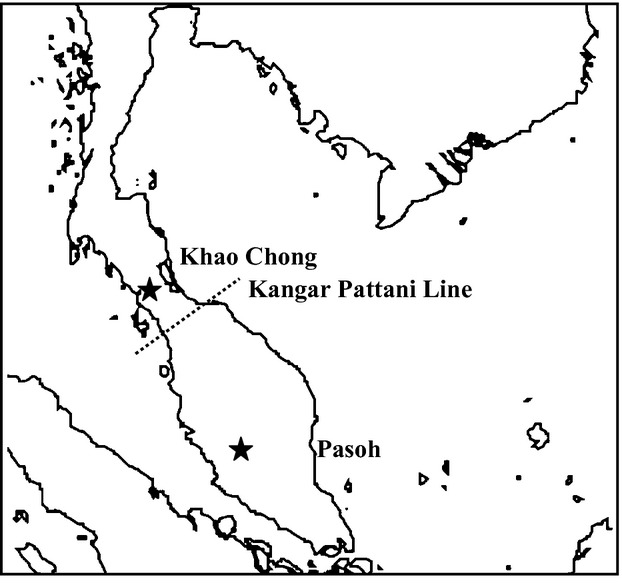
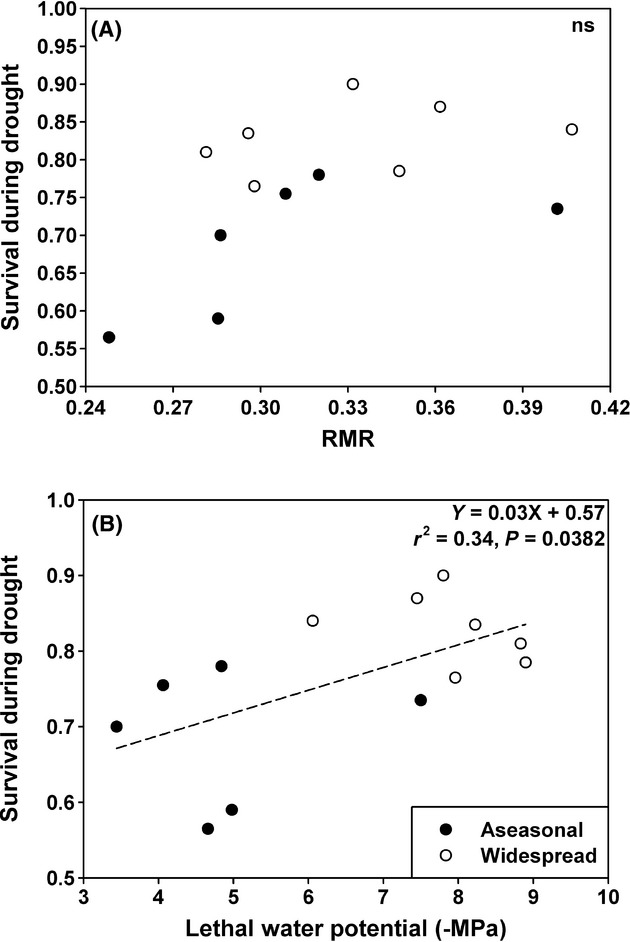
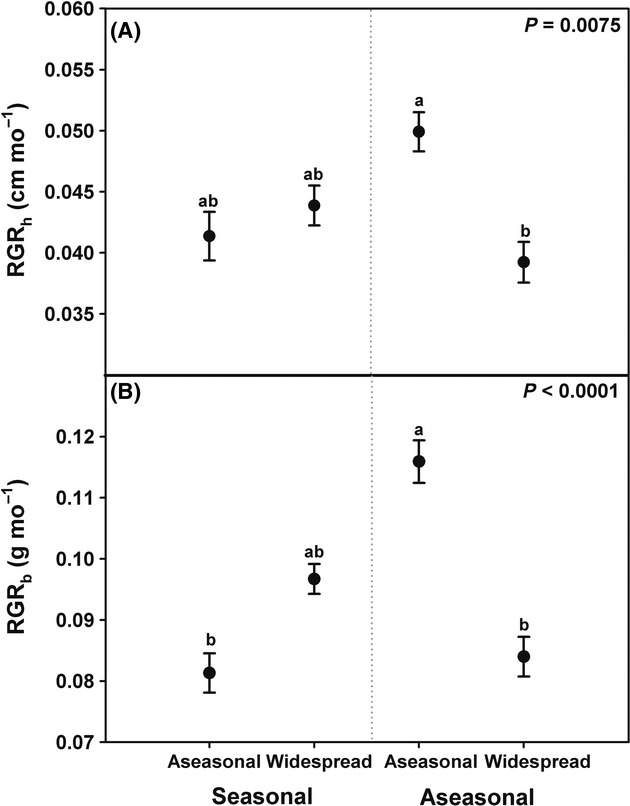
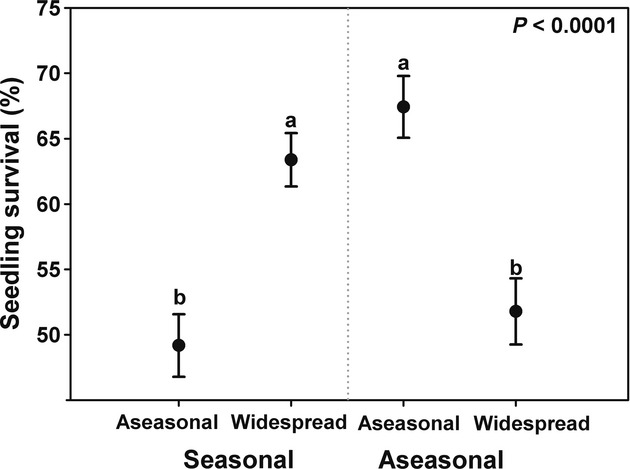
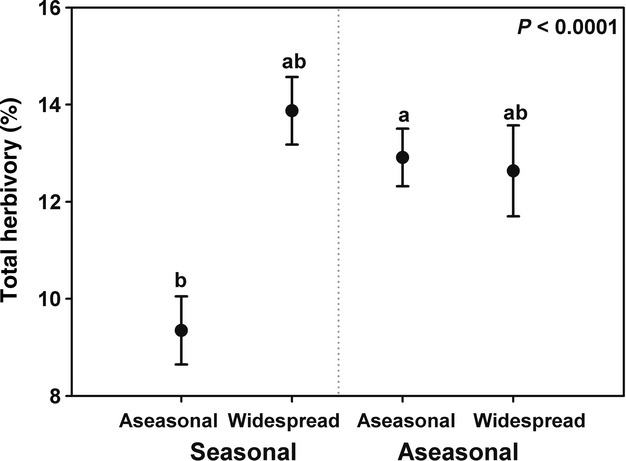
Drought and pests are primary abiotic and biotic factors proposed as selective filters acting on species distributions along rainfall gradients in tropical forests and may contribute importantly to species distributional limits, performance, and diversity gradients. Recent research demonstrates linkages between species distributions along rainfall gradients and physiological drought tolerance; corresponding experimental examinations of the contribution of pest pressure to distributional limits and potential interactions between drought and herbivory are limited. This study aims to quantitate differential performance and herbivory as a function of species range limits across a climatic and floristic transition in Southeast Asia. Khao Chong Botanical Garden, Thailand and Pasoh Forest Reserve, Malaysia straddle the Kangar-Pattani Line. A reciprocal transplantation across a seasonality gradient was established using two groups of species ("widespread" taxa whose distributions include seasonally dry forests and "aseasonal" taxa whose distributions are limited to aseasonal forests). Growth, biomass allocation, survival, and herbivory were monitored for 19 months. Systematic differences in performance were a function of species distribution in relation to rainfall seasonality. In aseasonal Pasoh, aseasonal species had both greater growth and survivorship than widespread species. These differences were not a function of differential herbivory as widespread and aseasonal species experienced similar damage in the aseasonal forest. In seasonally dry Khao Chong, widespread species showed higher survivorship than aseasonal species, but these differences were only apparent during drought. We link this differential performance to physiological mechanisms as well as differential tolerance of biotic pressure during drought stress. Systematic decreases in seedling survival in aseasonal taxa during drought corresponded with previously documented physiological differences and may be exacerbated by herbivore damage. These results have important implications for tropical diversity and community composition in light of predicted increases in the frequency and severity of drought in hyperdiverse tropical forests.
干旱和虫害被认为是影响热带雨林中物种沿降雨量梯度分布的主要非生物和生物因素,它们可能对物种分布极限、表现和多样性梯度有重要贡献。最近的研究表明,物种沿降雨量梯度的分布与生理干旱耐受性之间存在联系;相应地,关于虫害压力对分布极限的贡献以及干旱和食草作用之间潜在相互作用的实验检验是有限的。本研究旨在量化在东南亚气候和植物区系转变过程中,物种分布极限的差异表现和食草作用。泰国考冲植物园和马来西亚巴索保护区横跨廊开-北大年线。通过一个季节性梯度的相互移植,建立了两组物种(“广泛分布”类群,其分布包括季节性干旱森林,和“非季节性”类群,其分布仅限于非季节性森林)。对 19 个月的生长、生物量分配、存活和食草作用进行了监测。表现的系统差异是物种分布与降雨量季节性的函数。在非季节性的巴索,非季节性物种的生长和存活率都高于广泛分布的物种。这些差异不是食草作用差异的结果,因为广泛分布和非季节性的物种在非季节性森林中受到相似的损害。在季节性干旱的考冲,广泛分布的物种的存活率高于非季节性物种,但这些差异仅在干旱期间出现。我们将这种差异表现与生理机制以及干旱胁迫下生物压力的差异耐受性联系起来。在非季节性分类群中,幼苗存活率在干旱期间系统性下降,这与之前记录的生理差异相对应,并且可能因食草动物的损害而加剧。这些结果对于热带多样性和群落组成具有重要意义,因为在高度多样化的热带森林中,干旱的频率和严重程度预计会增加。