Laboratoire associé au Centre National de Référence Escherichia coli et Shigelles, Service de Microbiologie, Hôpital Robert-Debré (AP-HP), Université Denis Diderot, Sorbonne, Paris Cité, Paris, F-75505, France.
BMC Infect Dis. 2012 Nov 21;12:315. doi: 10.1186/1471-2334-12-315.
The increasing incidence of community acquired infection due to Extended-Spectrum Beta-Lactamase (ESBL) -Producing Enterobacteriaceae represent a great concern because there are few therapeutic alternatives. The fecal flora of children in the community can represent a reservoir for ESBLs genes which are located on highly transmissible plasmids and the spread of these genes among bacterial pathogens is concerning. Because intestinal carriage is a key factor in the epidemiology of ESBL-producing Enterobacteriaceae, the study of the prevalence of these resistant bacteria and risk factors in young children is of particular interest.
We assessed the prevalence and risk factors of community-acquired faecal carriage of extended-spectrum-β-lactamase (ESBL)-producing Enterobacteriaceae in children aged from 6 to 24 months, by means of rectal swabbing in community pediatric practices. Child's lifestyle and risk factors for carriage of resistant bacteria were noted.
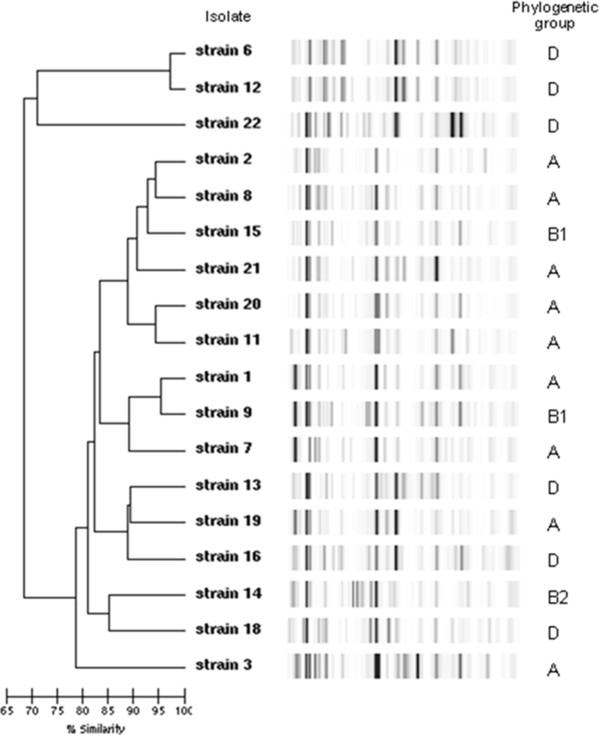
Among the 411 children enrolled, 4.6% carried ESBL-producing Enterobacteriaceae. CTX-M-1, CTX-M-15 and CTX-M-14 were the predominant ESBLs. The 18 E. coli isolates were genetically heterogeneous. Recent third-generation oral-cephalosporin exposure was associated with a higher risk of ESBL carriage (AOR=3.52, 95% CI[1.06-11.66], p=0.04).
The carriage rate of ESBL-producing Enterobacteriacae in young children in the French community setting is noteworthy, underlining the importance of this population as a reservoir. Exposure to third-generation oral cephalosporins was associated with a significant risk of ESBL carriage in our study. Because of the significant public health implications including the treatment of community-acquired urinary tract infections, the spread of organisms producing ESBLs in the community merits close monitoring with enhanced efforts for surveillance.
社区获得性感染由于产生扩展谱β-内酰胺酶(ESBL)的肠杆菌科细菌不断增加,这是一个令人担忧的问题,因为治疗的选择很少。社区儿童的粪便菌群可能是 ESBL 基因的储存库,这些基因位于高度可传播的质粒上,这些基因在细菌病原体中的传播令人担忧。由于肠道携带是 ESBL 产生肠杆菌科细菌流行病学的关键因素,因此研究这些耐药菌在幼儿中的流行率和危险因素具有特别的意义。
我们通过社区儿科诊所的直肠拭子,评估了 6 至 24 个月大的儿童社区获得性粪便携带产 ESBL 肠杆菌科细菌的流行率和危险因素。记录了儿童的生活方式和携带耐药菌的危险因素。
在 411 名入组儿童中,4.6%携带产 ESBL 肠杆菌科细菌。CTX-M-1、CTX-M-15 和 CTX-M-14 是主要的 ESBL。18 株大肠杆菌分离株具有遗传异质性。最近三代口服头孢菌素暴露与 ESBL 携带的风险增加相关(AOR=3.52,95%CI[1.06-11.66],p=0.04)。
在法国社区环境中,幼儿携带产 ESBL 肠杆菌科细菌的比率值得关注,这突出了这一人群作为储存库的重要性。在我们的研究中,三代口服头孢菌素的暴露与 ESBL 携带的显著风险相关。由于包括治疗社区获得性尿路感染在内的重大公共卫生影响,需要密切监测社区中产生 ESBL 的生物体的传播,并加强监测工作。