Heinrich-Pette-Institute, Leibniz Institute for Experimental Virology, Hamburg, Germany.
PLoS One. 2012;7(11):e49435. doi: 10.1371/journal.pone.0049435. Epub 2012 Nov 20.
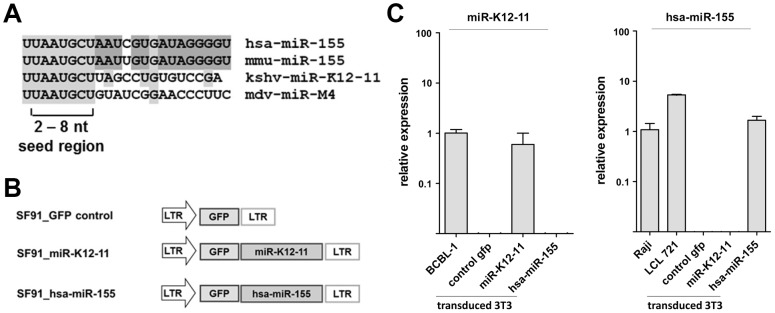
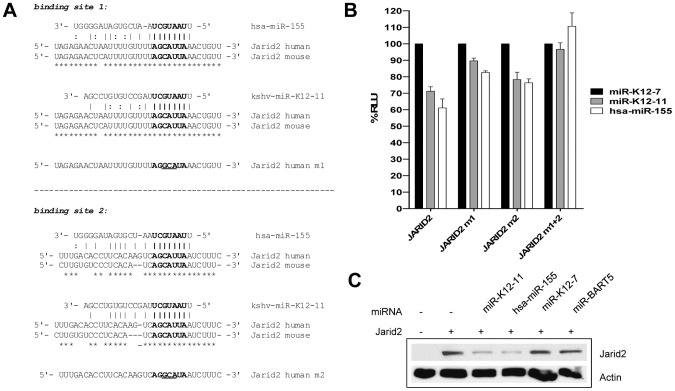
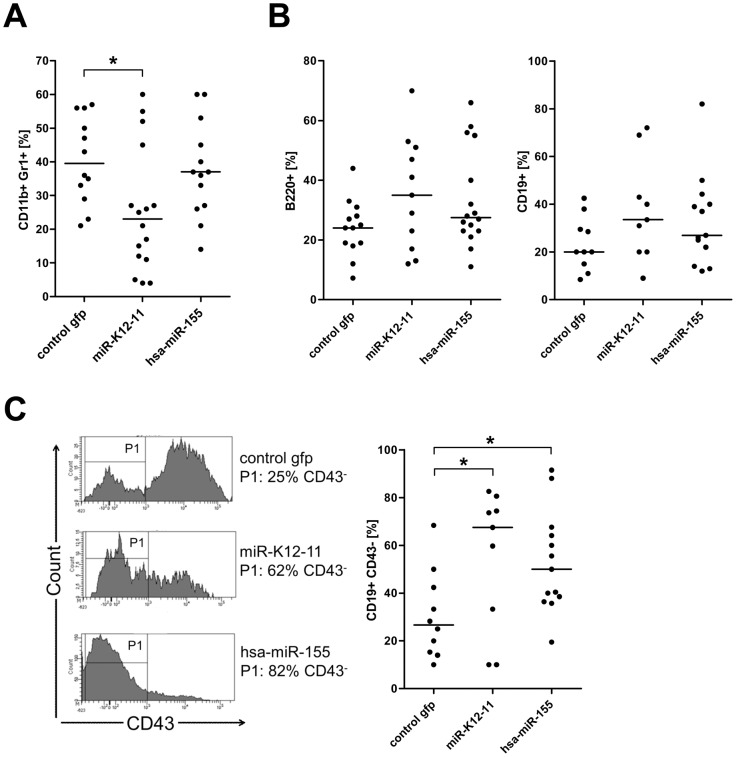
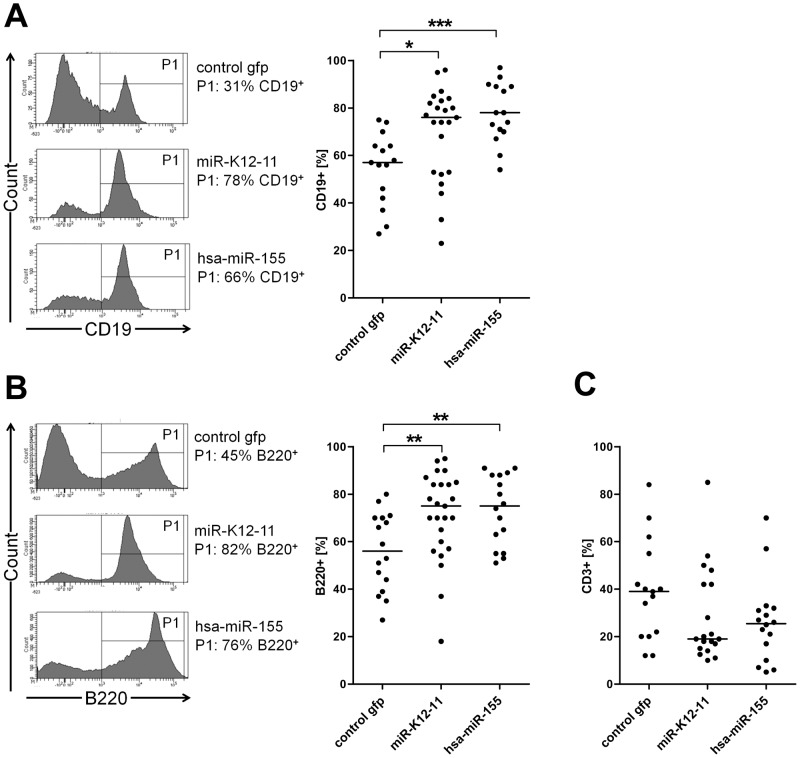
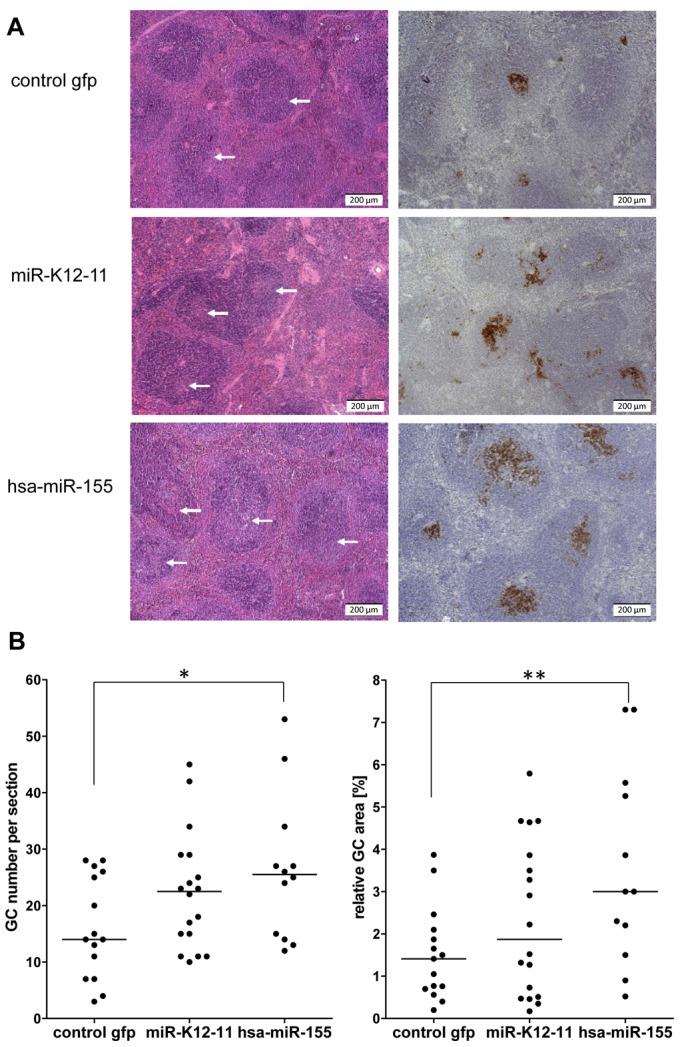
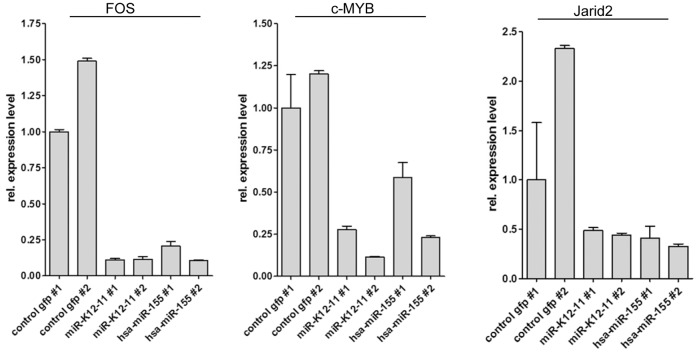
The human gammaherpesvirus Kaposi sarcoma-associated herpesvirus is strongly linked to neoplasms of endothelial and B-cell origin. The majority of tumor cells in these malignancies are latently infected, and latency genes are consequently thought to play a critical role in virus-induced tumorigenesis. One such factor is kshv-miR-K12-11, a viral microRNA that is constitutively expressed in cell lines derived from KSHV-associated tumors, and that shares perfect homology of its seed sequence with the cellular miR-155. Since miR-155 is overexpressed in a number of human tumors, it is conceivable that mimicry of miR-155 by miR-K12-11 may contribute to cellular transformation in KSHV-associated disease. Here, we have performed a side-by-side study of phenotypic alterations associated with constitutive expression of either human miR-155 or viral miR-K12-11 in bone marrow-derived hematopoietic stem cells. We demonstrate that retroviral-mediated gene transfer and hematopoietic progenitor cell transplantation into C57BL/6 mice leads to increased B-cell fractions in lymphoid organs, as well as to enhanced germinal center formation in both microRNA-expressing mouse cohorts. We furthermore identify Jarid2, a component of Polycomb repressive complex 2, as a novel validated target of miR-K12-11, and confirm its downregulation in miR-K12-11 as well as miR-155 expressing bone marrow cells. Our findings confirm and extend previous observations made in other mouse models, and underscore the notion that miR-K12-11 may have arisen to mimic miR-155 functions in KSHV-infected B-cells. The expression of miR-K12-11 may represent one mechanism by which KSHV presumably aims to reprogram naïve B-cells towards supporting long-term latency, which at the same time is likely to pre-dispose infected lymphocytes to malignant transformation.
人类γ疱疹病毒卡波西肉瘤相关疱疹病毒与内皮细胞和 B 细胞来源的肿瘤密切相关。这些恶性肿瘤中的大多数肿瘤细胞都处于潜伏感染状态,因此潜伏基因被认为在病毒诱导的肿瘤发生中发挥着关键作用。其中一个因素是 kshv-miR-K12-11,这是一种病毒 microRNA,在源自 KSHV 相关肿瘤的细胞系中持续表达,并且其种子序列与细胞 microRNA-155 完全同源。由于 miR-155 在许多人类肿瘤中过度表达,因此可以想象,miR-K12-11 通过模拟 miR-155 可能有助于 KSHV 相关疾病中的细胞转化。在这里,我们对骨髓来源造血干细胞中持续表达人 miR-155 或病毒 miR-K12-11 相关的表型改变进行了并排研究。我们证明,逆转录病毒介导的基因转移和造血祖细胞移植到 C57BL/6 小鼠中,导致淋巴器官中 B 细胞分数增加,并且在表达 microRNA 的两个小鼠队列中均增强生发中心形成。我们还确定了 Jarid2,多梳抑制复合物 2 的一个组成部分,是 miR-K12-11 的一个新的验证靶标,并确认了 miR-K12-11 以及表达 miR-K12-11 的骨髓细胞中的下调。我们的发现证实并扩展了以前在其他小鼠模型中观察到的结果,并强调了 miR-K12-11 可能已经出现以模拟 KSHV 感染的 B 细胞中的 miR-155 功能的观点。miR-K12-11 的表达可能代表了 KSHV 旨在将幼稚 B 细胞重新编程为支持长期潜伏的一种机制,同时也可能使感染的淋巴细胞容易发生恶性转化。