Abteilung für Nephrologie und Dialyse, Univ.-Klinik für Innere Medizin III, Währinger Gürtel 18-20, Wien A-1090, Austria.
Toxins (Basel). 2012 Oct 24;4(11):962-90. doi: 10.3390/toxins4110962.
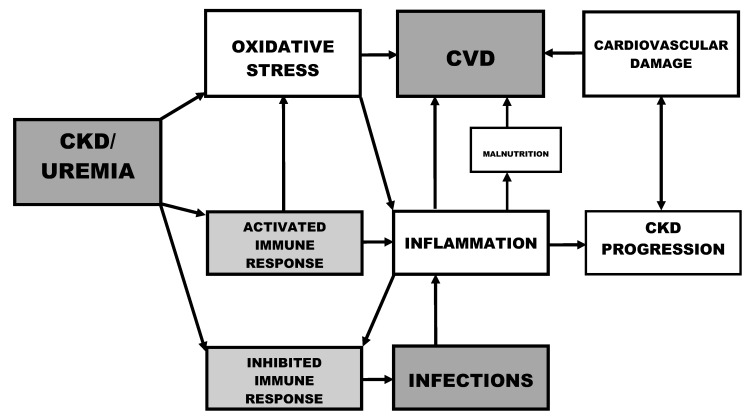
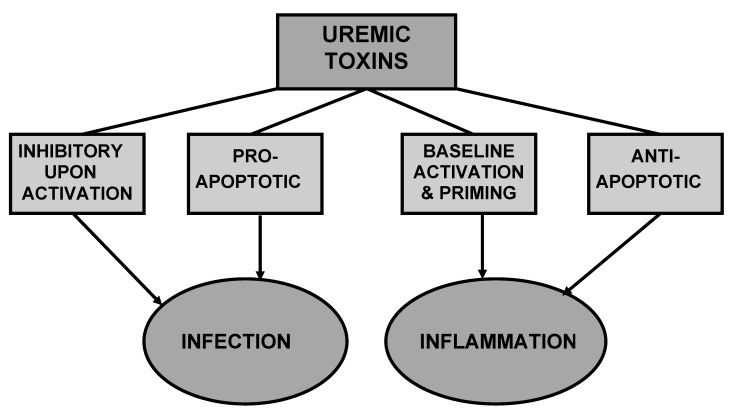
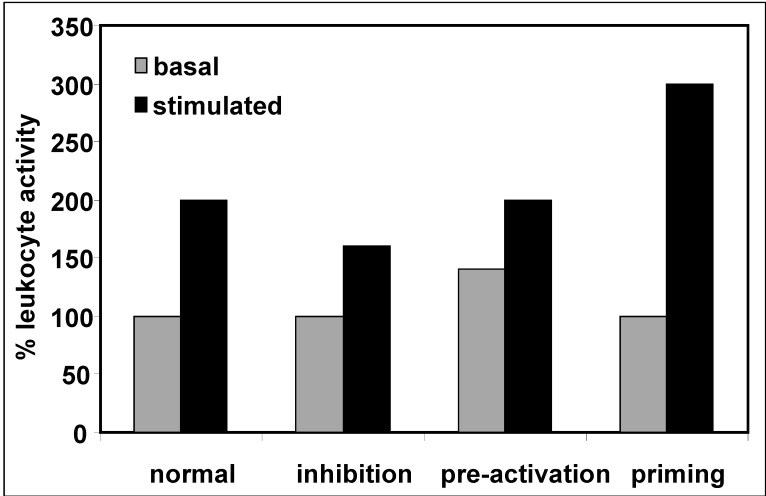
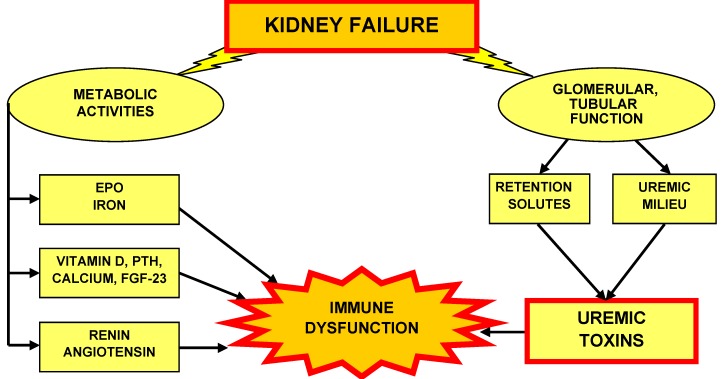
Kidney dysfunction leads to disturbed renal metabolic activities and to impaired glomerular filtration, resulting in the retention of toxic solutes affecting all organs of the body. Cardiovascular disease (CVD) and infections are the main causes for the increased occurrence of morbidity and mortality among patients with chronic kidney disease (CKD). Both complications are directly or indirectly linked to a compromised immune defense. The specific coordinated roles of polymorphonuclear leukocytes (PMNLs), monocytes/macrophages, lymphocytes and antigen-presenting cells (APCs) in maintaining an efficient immune response are affected. Their normal response can be impaired, giving rise to infectious diseases or pre-activated/primed, leading to inflammation and consequently to CVD. Whereas the coordinated removal via apoptosis of activated immune cells is crucial for the resolution of inflammation, inappropriately high apoptotic rates lead to a diminished immune response. In uremia, the balance between pro- and anti-inflammatory and between pro- and anti-apoptotic factors is disturbed. This review summarizes the interrelated parameters interfering with the immune response in uremia, with a special focus on the non-specific immune response and the role of uremic toxins.
肾功能障碍导致肾脏代谢活动紊乱和肾小球滤过功能受损,从而导致有毒溶质的潴留,影响身体的所有器官。心血管疾病 (CVD) 和感染是导致慢性肾脏病 (CKD) 患者发病率和死亡率增加的主要原因。这两种并发症都直接或间接地与免疫防御受损有关。多形核白细胞 (PMNLs)、单核细胞/巨噬细胞、淋巴细胞和抗原呈递细胞 (APCs) 在维持有效免疫反应中的特定协调作用受到影响。它们的正常反应可能会受到损害,导致传染病或预先激活/致敏,从而导致炎症,进而导致 CVD。而通过凋亡清除激活的免疫细胞对于炎症的消退至关重要,过高的凋亡率会导致免疫反应减弱。在尿毒症中,促炎和抗炎、促凋亡和抗凋亡因素之间的平衡被打破。这篇综述总结了尿毒症中干扰免疫反应的相互关联的参数,特别关注非特异性免疫反应和尿毒症毒素的作用。