Department of Biology, Indiana University, Bloomington, IN 47405, USA.
Mol Microbiol. 2013 Jan;87(2):301-17. doi: 10.1111/mmi.12099. Epub 2012 Dec 4.
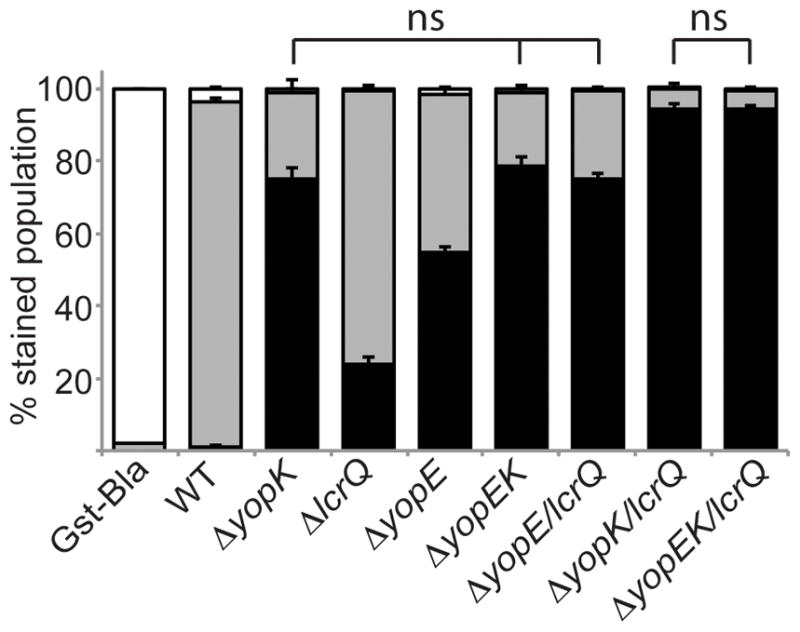
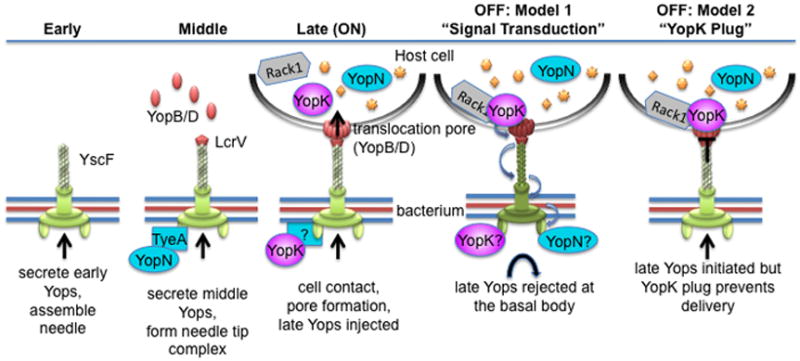
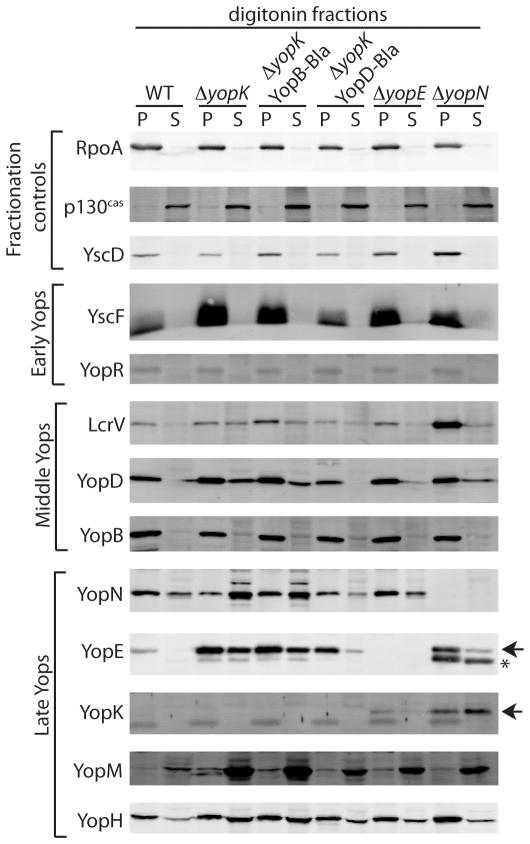
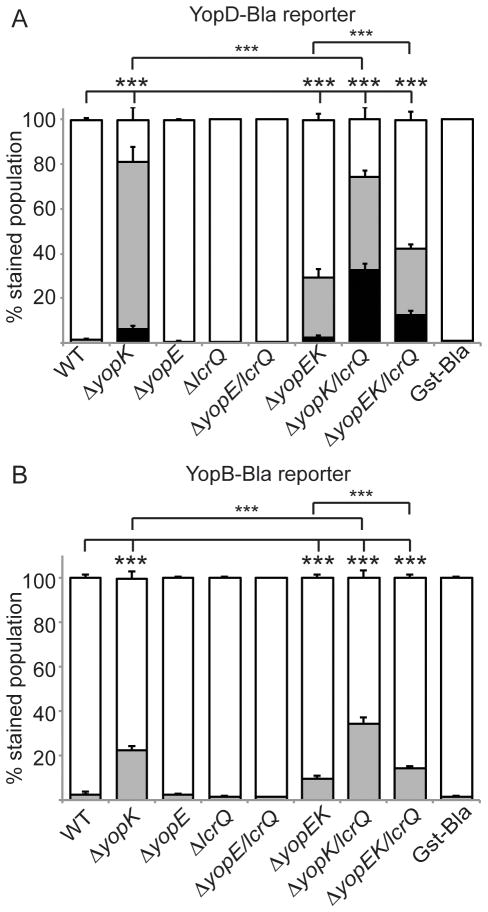
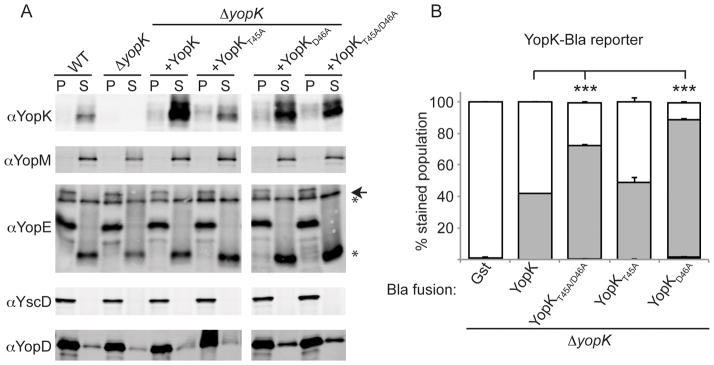
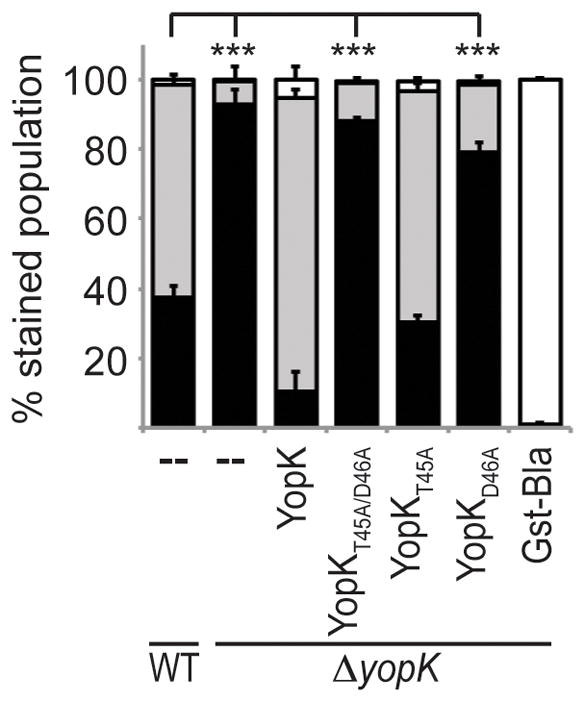
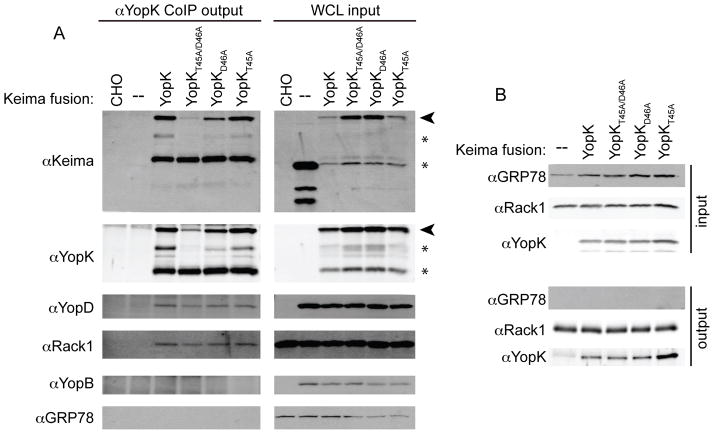
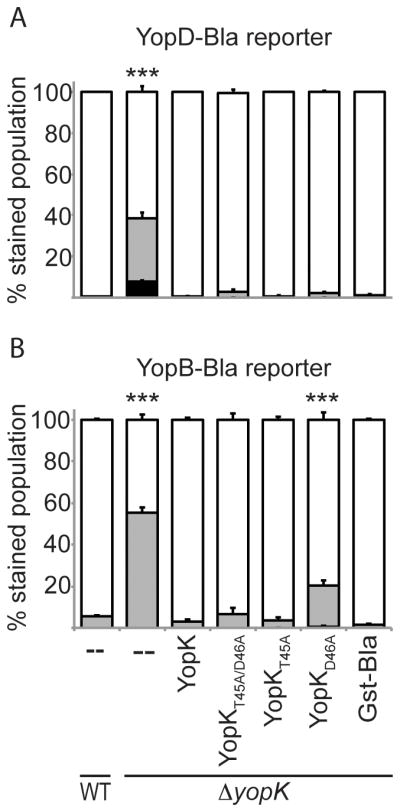
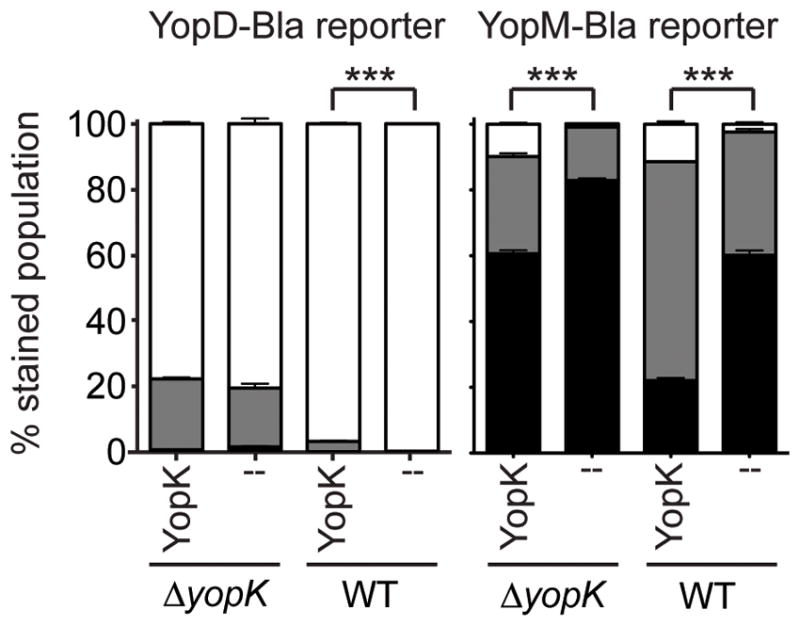
Yersinia pestis, the causative agent of plague, utilizes a type III secretion system (T3SS) to intoxicate host cells. The injection of T3SS substrates must be carefully controlled, and dysregulation leads to altered infection kinetics and early clearance of Y. pestis. While the sequence of events leading up to cell contact and initiation of translocation has received much attention, the regulatory events that take place after effector translocation is less understood. Here we show that the regulator YopK is required to maintain fidelity of substrate specificity, in addition to controlling translocation rate. YopK was found to interact with YopD within targeted cells during Y. pestis infection, suggesting that YopK's regulatory mechanism involves a direct interaction with the translocation pore. In addition, we identified a single amino acid in YopK that is essential for translocation rate regulation but is dispensable for maintaining fidelity of translocation. Furthermore, we found that expression of YopK within host cells was sufficient to downregulate translocation rate, but it did not affect translocation fidelity. Together, our data support a model in which YopK is a bifunctional protein whose activities are genetically and spatially distinct such that fidelity control occurs within bacteria and rate control occurs within host cells.
鼠疫耶尔森氏菌是鼠疫的病原体,它利用 III 型分泌系统(T3SS)使宿主细胞中毒。T3SS 底物的注射必须精心控制,失调会导致感染动力学改变和鼠疫耶尔森氏菌的早期清除。尽管导致细胞接触和起始易位的事件序列受到了广泛关注,但易位后发生的调节事件却知之甚少。在这里,我们表明,除了控制易位速率外,调节剂 YopK 还需要保持底物特异性的保真度。在鼠疫耶尔森氏菌感染期间,发现 YopK 在靶细胞内与 YopD 相互作用,表明 YopK 的调节机制涉及与易位孔的直接相互作用。此外,我们确定了 YopK 中的一个单个氨基酸对于易位速率调节是必不可少的,但对于保持易位的保真度是可有可无的。此外,我们发现宿主细胞内表达 YopK 足以降低易位速率,但不影响易位的保真度。总之,我们的数据支持这样一种模型,即 YopK 是一种双功能蛋白,其活性在遗传和空间上是不同的,因此保真度控制发生在细菌内,而速率控制发生在宿主细胞内。