Division of Molecular Biology, Department of General, Visceral, Vascular and Thoracic Surgery, Charité - Universitätsmedizin Berlin , Charitéplatz 1, 10117 Berlin , Germany.
Biol Open. 2012 Aug 15;1(8):705-10. doi: 10.1242/bio.20121875. Epub 2012 Jun 12.
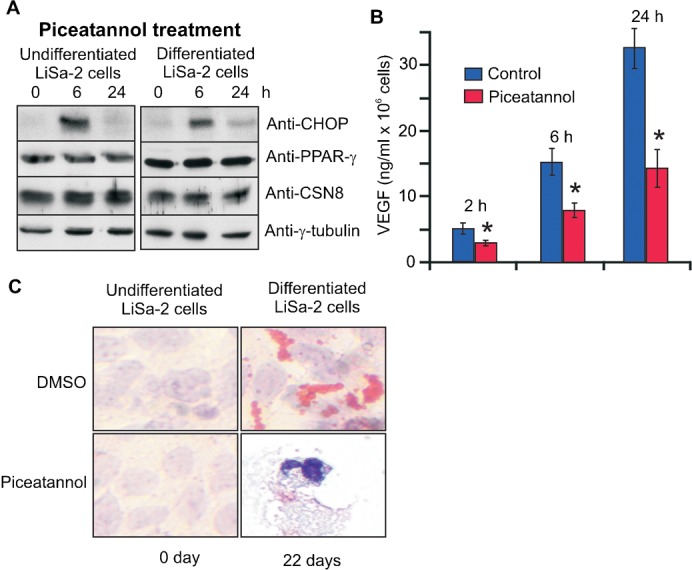
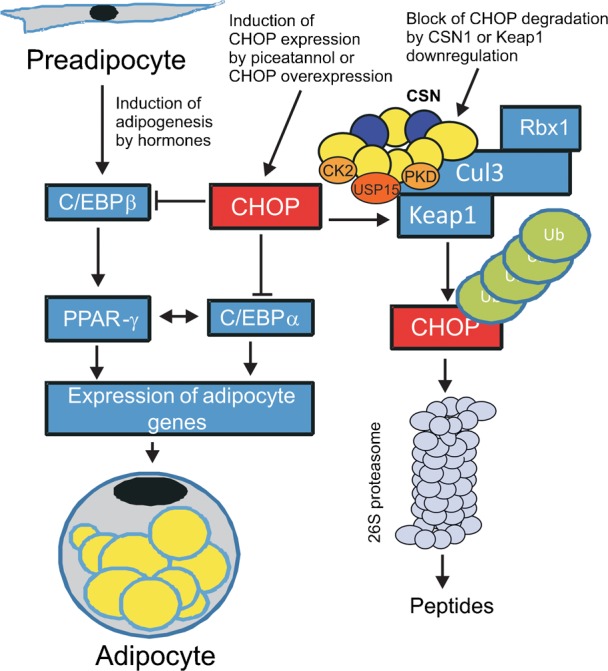
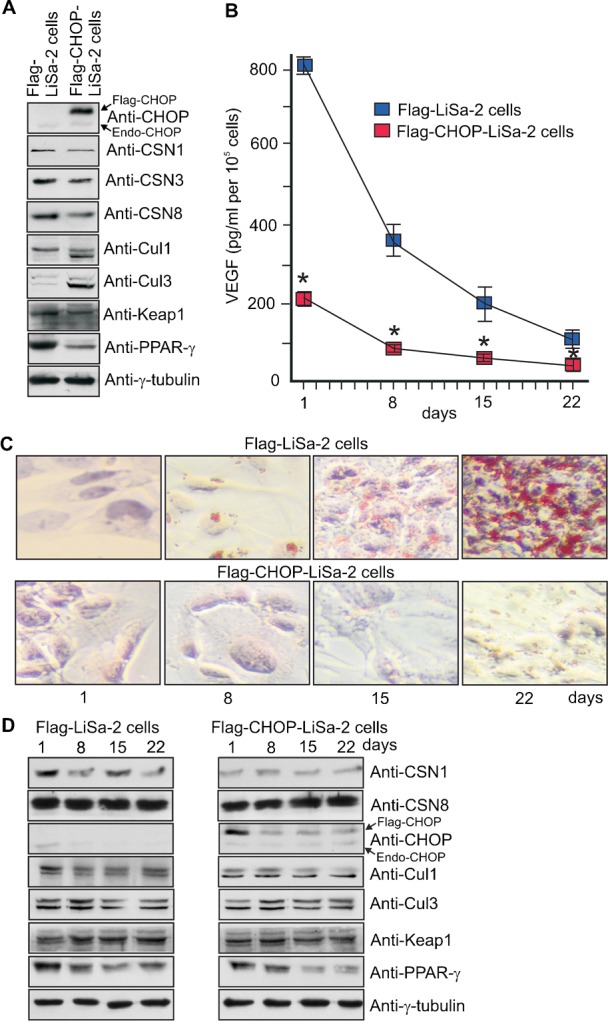
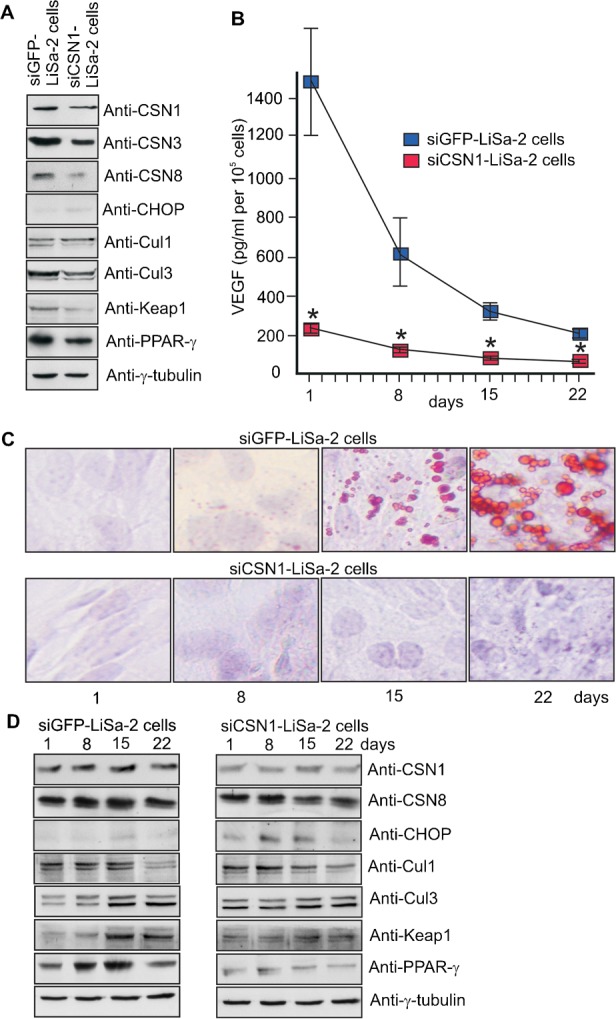
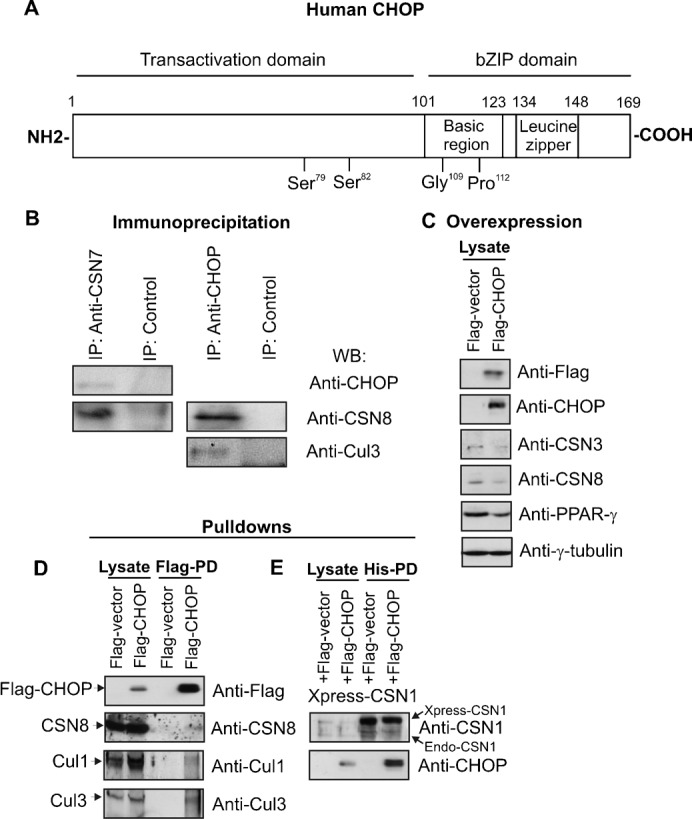
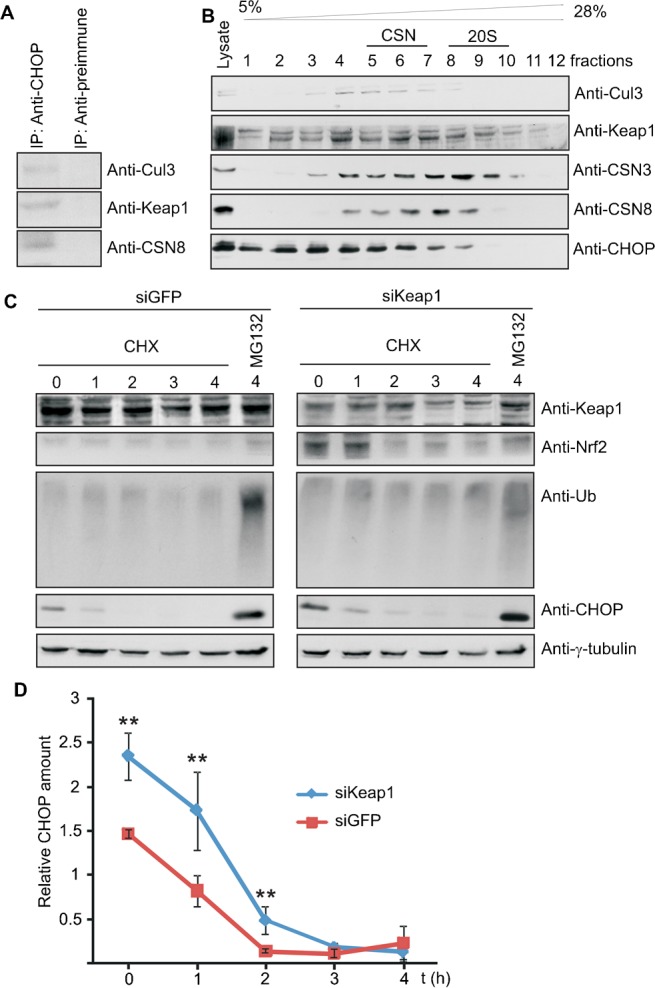
Obesity is one of the most serious health problems of the 21(st) century. It is associated with highly increased risk of type 2 diabetes, high blood pressure, cardiovascular disease as well as several cancers. The expansion of the fat tissue needs the differentiation of preadipocytes to adipocytes, a process called adipogenesis. Dysfunction of adipogenesis is a hallmark of obesity and delineation of underlying mechanisms has high priority for identifying targets for pharmacological intervention. Here we investigate the impact of the COP9 signalosome (CSN), a regulator of cullin-RING ubiquitin ligases (CRLs), and of C/EBP homologous protein (CHOP) on the differentiation of LiSa-2 preadipocytes. CHOP induced by piceatannol or by permanent overexpression in LiSa-2 cells blocks adipocyte differentiation as characterized by inhibited fat droplet formation and vascular endothelial growth factor (VEGF) production. Knockdown of the CSN by permanent downregulation of CSN1 in LiSa-2 cells elevates CHOP and retards adipogenesis. The effect of the CSN knockdown on CHOP stability can be explained by the protection of the CRL component Keap1 by the CSN associated ubiquitin-specific protease 15 (USP15). Pulldowns and glycerol gradients reveal that CHOP interacts with a supercomplex consisting of the CSN, cullin 3 and Keap1. Transient knockdown of Keap1 increases CHOP steady state level and retards its degradation. We conclude that CHOP stability is controlled by a CSN-CRL3(Keap1) complex, which is crucial for adipogenesis. Our data show that CHOP is a distinguished target for pharmacological intervention of obesity.
肥胖是 21 世纪最严重的健康问题之一。它与 2 型糖尿病、高血压、心血管疾病以及多种癌症的风险高度增加有关。脂肪组织的扩张需要前脂肪细胞向脂肪细胞分化,这个过程称为脂肪生成。脂肪生成功能障碍是肥胖的标志,阐明其潜在机制对于确定药物干预的靶点具有重要意义。在这里,我们研究了 COP9 信号体(CSN),一种细胞周期蛋白依赖性激酶 4/6(CDK4/6)抑制剂 palbociclib 的作用及其对 LiSa-2 前脂肪细胞分化的影响。CSN 是一种调节 cullin-RING 泛素连接酶(CRLs)的调节剂,和 C/EBP 同源蛋白(CHOP)对 LiSa-2 细胞中 palbociclib 诱导的脂肪生成的影响。CHOP 通过 piceatannol 或在 LiSa-2 细胞中永久过表达诱导,可抑制脂肪滴形成和血管内皮生长因子(VEGF)的产生,从而阻断脂肪细胞分化。LiSa-2 细胞中 CSN 的永久下调通过下调 CSN1 可升高 CHOP 并延缓脂肪生成。CSN 敲低对 CHOP 稳定性的影响可以通过 CSN 相关泛素特异性蛋白酶 15(USP15)对 CRL 成分 Keap1 的保护来解释。Pulldowns 和甘油梯度显示,CHOP 与由 CSN、cullin 3 和 Keap1 组成的超复合物相互作用。瞬时敲低 Keap1 可增加 CHOP 的稳定水平并延缓其降解。我们得出结论,CHOP 的稳定性由 CSN-CRL3(Keap1)复合物控制,这对于脂肪生成至关重要。我们的数据表明,CHOP 是肥胖症药物干预的一个有区别的靶点。